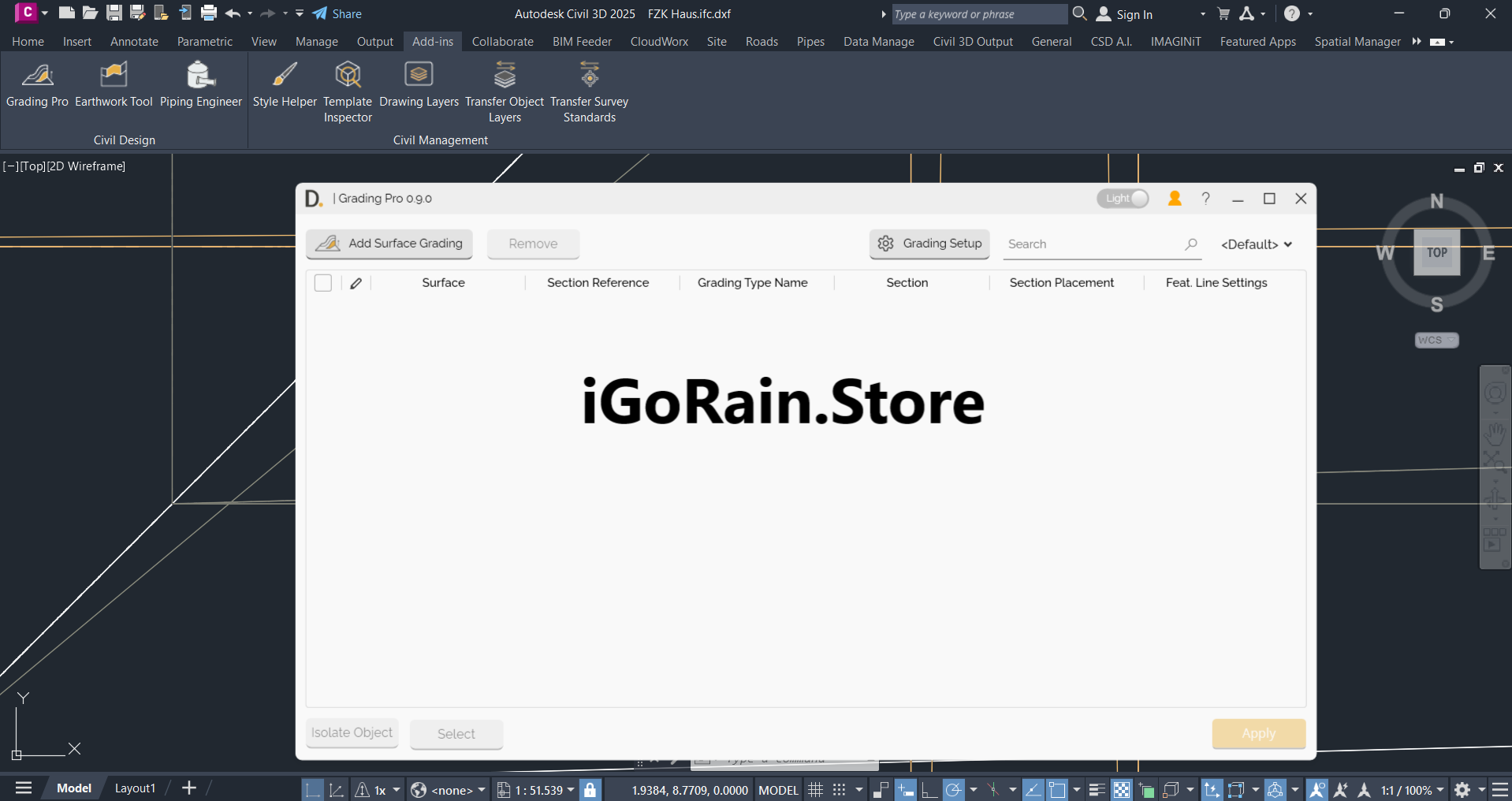
Description
DiCivil 0.9.0 Review: A Complete, Professional Structural Engineering Solution for Modern Civil Projects
Download DiCivil 0.9.0 has become one of the most widely recognized structural engineering and analysis tools for professionals who need accuracy, speed, and reliability. Whether you work on concrete design, steel detailing, structural analysis, or civil engineering documentation, DiCivil Crack download 2026 delivers an integrated set of tools built to streamline workflows and reduce project errors. It has emerged as a trusted solution for engineering firms seeking to modernize their design processes without adopting unnecessarily complex or expensive software systems.
In an industry where precision matters, download DiCivil 2025 stands out for offering dependable analysis tools, smooth workflows, and powerful automation features. This review explores what makes DiCivil valuable for modern engineering teams—including its features, performance, use cases, pros and cons, pricing insights, and why it is considered one of the smartest investments for professional civil and structural engineers.
Introduction
Civil and structural engineering Download DiCivil free 2026 projects demand extreme accuracy, rigorous verification, and efficient modeling workflows. With tightening project deadlines and the increasing need for design documentation, engineers rely heavily on software tools that help them produce safe, compliant, and detailed designs.
DiCivil is a specialized civil engineering software solution created to support tasks such as structural analysis, reinforced concrete detailing, steel design, CAD drawing automation, and engineering calculations. Designed for professionals working on buildings, bridges, foundations, retaining walls, and infrastructural systems, the software offers a powerful suite of tools that simplify everyday engineering tasks.
Unlike overly complex structural engineering packages, DiCivil offers a cleaner, more efficient environment, making it ideal for small firms, large engineering teams, and individual consultants.
Key Features of DiCivil
1. Comprehensive Structural Analysis Tools
DiCivil includes strong analysis capabilities that allow engineers to evaluate:
-
Structural loads
-
Load combinations
-
Deflection and stress
-
Material performance
-
Strength and stability
The software uses industry-standard calculation methods, ensuring results align with engineering codes and local standards.
2. Reinforced Concrete (RC) Design
Reinforced concrete design is one of DiCivil’s strengths. Key features include:
-
Beam, slab, and column reinforcement design
-
Bar scheduling and detailing
-
Automated reinforcement layouts
-
Compliance with standard engineering codes
-
Quick calculation previews
Its RC design module is widely used for residential, commercial, and industrial building projects.
3. Steel Structure Design
DiCivil provides tools for designing:
-
Steel beams
-
Columns
-
Connections
-
Trusses
-
Bracing systems
Engineers can run load checks, verify capacities, and generate structural details with minimal manual effort.
4. Foundation Design Capabilities
Foundation design features include:
-
Isolated footing design
-
Combined footing analysis
-
Raft foundation evaluations
-
Bearing capacity checks
-
Settlement calculations
These tools help engineers produce safe and reliable substructure designs.
5. Drawing Generation & CAD Support
DiCivil automatically generates CAD-ready drawings, including:
-
Reinforcement details
-
Structural layouts
-
Plan and section views
-
Construction-ready details
This significantly reduces drafting time and ensures consistency across all sheets.
6. Intuitive Interface & Simple Workflows
Engineers appreciate DiCivil because it avoids unnecessary tool clutter. The interface is:
-
Minimal
-
Organized
-
Easy to understand
-
Quick to navigate
This simplicity makes the software accessible even to engineers who are new to structural design software.
7. Code Compliance Tools
DiCivil supports multiple international engineering codes, ensuring structural outputs are safe and compliant. This makes the tool valuable for firms working across different regions.
8. Reporting & Documentation
DiCivil automatically produces:
-
Detailed structural reports
-
Reinforcement schedules
-
Calculation summaries
-
Material quantity reports
This helps reduce documentation errors and accelerates client-ready output.
Practical Use Cases
1. Residential & Commercial Building Design
Structural engineers use DiCivil for:
-
Concrete frame buildings
-
Steel structures
-
Load-bearing walls
-
Combined foundation systems
Its efficient RC and steel design tools speed up project delivery for architects and engineering consultants.
2. Infrastructure & Public Works Projects
For transportation and municipal engineering teams, DiCivil supports:
-
Culvert structures
-
Retaining walls
-
Pedestrian bridges
-
Utility structures
These workflows benefit from the software’s simple load analysis features.
3. Industrial Engineering
DiCivil is used to design:
-
Industrial sheds
-
Beam–column assemblies
-
Steel platforms
-
Heavy-load structures
The software handles both simple and complex steel elements.
4. Educational Institutions
Universities and engineering training programs value DiCivil’s ease of use for teaching structural analysis and RC/steel design fundamentals.
5. Consultancy & Freelance Engineering
For consultants and small engineering firms, DiCivil is ideal because:
-
It simplifies calculations
-
Produces drawings quickly
-
Reduces manual errors
-
Offers great value for money
It becomes an all-purpose engineering toolkit for daily structural tasks.
Performance Analysis
Speed & Efficiency
DiCivil performs calculations rapidly, even for complex loads or multiple structural elements. Engineers report significantly faster workflows compared to manual calculations or basic drafting tools.
Accuracy
Built on validated engineering methodologies, DiCivil provides results that are consistent with:
-
Local building codes
-
Design standards
-
Engineering textbooks
Accuracy is one of the software’s strongest attributes.
Stability
The software is lightweight and stable, even when generating detailed CAD documentation or running several analysis tasks simultaneously.
Ease of Learning
Compared to other structural analysis programs, DiCivil has:
-
A shorter learning curve
-
Simplified design modules
-
Clear input/output workflows
Engineers can become productive within days.
Pros & Cons
Pros
-
Precise structural calculations
-
Supports reinforced concrete and steel design
-
Easy CAD drawing generation
-
Fast, efficient, and stable performance
-
Ideal for small and large engineering teams
-
Short learning curve
-
Strong documentation features
-
Cost-effective compared to major competitors
Cons
-
Limited advanced finite element tools compared to high-end platforms
-
Focused primarily on common civil/structural elements
-
Best suited for small to mid-scale projects rather than mega-structures
Pricing & Plans
DiCivil is typically offered as a commercial license. Pricing often varies depending on:
-
Region or country
-
Software version
-
License type (single-user or multi-user)
-
Any available enterprise or educational packages
Engineers appreciate that the pricing is more affordable than other high-end structural engineering software, making DiCivil a practical and budget-friendly choice for many firms.
Final Verdict
DiCivil stands out as a dependable, accurate, and user-friendly software for civil and structural engineers who need high-quality calculations and reliable design tools. From reinforced concrete detailing to steel structure design and foundation analysis, the software covers essential engineering workflows with precision and ease.
Its balanced combination of power and simplicity makes it especially suitable for small firms, consultants, and educational institutions. If you’re looking for engineering software that boosts productivity, reduces errors, and supports safe, compliant structural design, DiCivil is an excellent choice.



Reviews
There are no reviews yet.