Description
ENVI LiDAR Download Review: Advanced LiDAR Processing and 3D Analysis for Geospatial Professionals
Summary
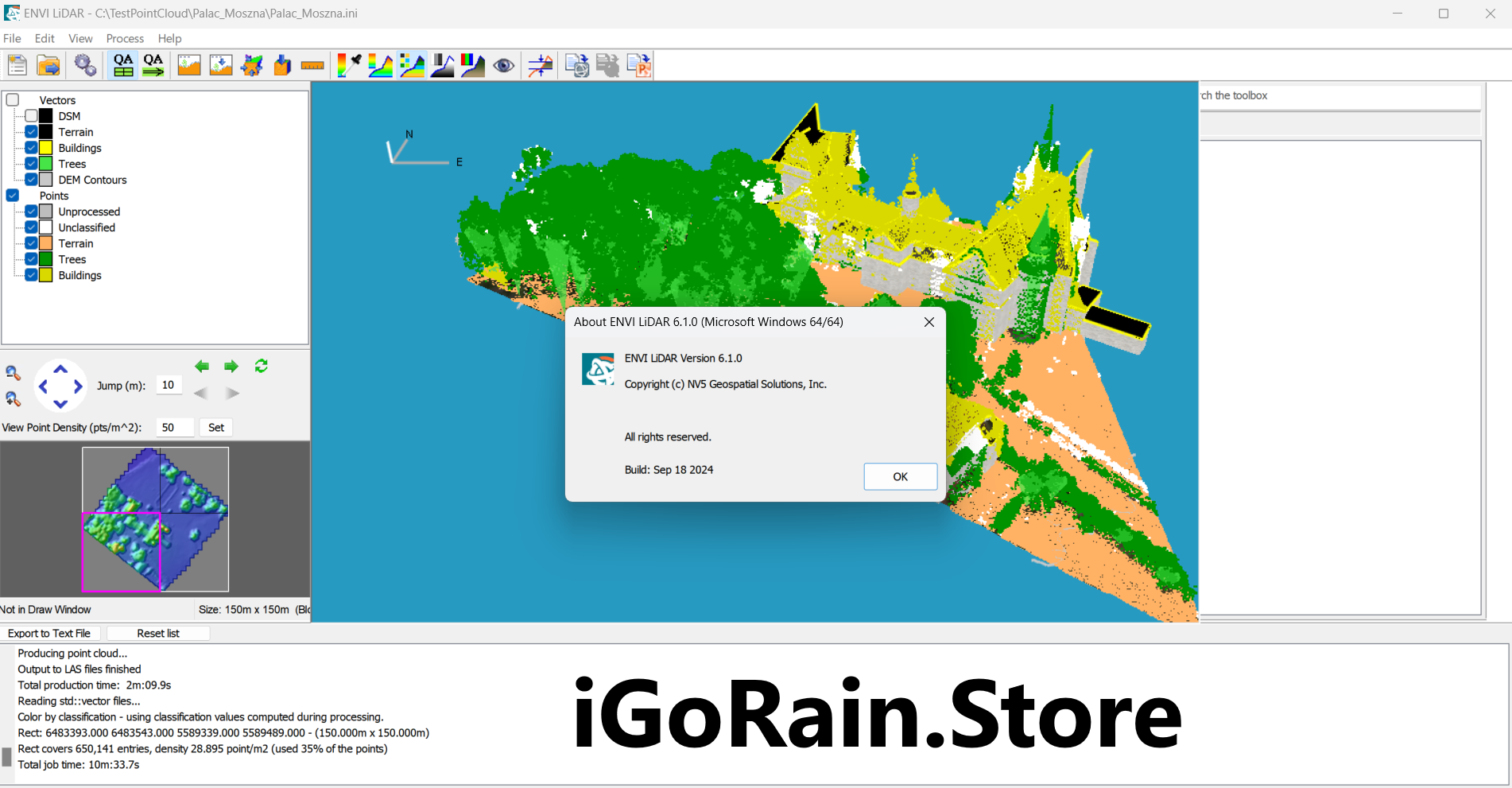
ENVI LiDAR is a powerful geospatial data processing Download Envi Lidar software designed to transform raw LiDAR point cloud data into meaningful, accurate, and actionable Envi Lidar crack download information. Built for professionals working in remote sensing, mapping, surveying, forestry, urban planning, and environmental analysis, ENVI LiDAR free download provides a robust toolkit for extracting terrain, vegetation, and infrastructure insights from complex LiDAR datasets.
What sets ENVI LiDAR apart is its balance between analytical depth and practical usability. The software enables users to process massive point clouds, classify features, generate digital elevation models, and integrate LiDAR outputs with multispectral and hyperspectral imagery—all within a consistent workflow. For organizations relying on precise spatial data, ENVI LiDAR delivers reliability, scalability, and professional-grade results.
This review takes a comprehensive look at ENVI LiDAR, covering its core features, real-world applications, performance, strengths, limitations, and overall value for geospatial and remote sensing professionals.
Introduction to ENVI LiDAR
LiDAR technology has become essential for capturing high-resolution, three-dimensional representations of the Earth’s surface. From airborne laser scanning to terrestrial and mobile LiDAR systems, the volume and complexity of LiDAR data continue to grow. Processing this data efficiently and accurately requires specialized software.
ENVI LiDAR was developed to address this exact need. It provides an end-to-end solution for working with LiDAR point clouds, enabling users to classify, analyze, and visualize 3D data with confidence. Designed as part of a professional geospatial workflow, ENVI LiDAR integrates seamlessly with raster-based analysis, making it particularly valuable for multidisciplinary projects.
Rather than focusing solely on visualization, ENVI LiDAR emphasizes analytical accuracy, reproducibility, and real-world applicability—qualities that are critical for decision-making and reporting.
Key Features of ENVI LiDAR
Comprehensive Point Cloud Processing
ENVI LiDAR supports large-scale point cloud datasets collected from airborne, mobile, and terrestrial LiDAR systems. Users can efficiently manage millions to billions of points while maintaining performance and data integrity.
Core processing capabilities include:
-
Point cloud import and management
-
Noise filtering and data cleaning
-
Automated and manual point classification
-
Attribute-based point analysis
These tools allow users to convert raw LiDAR data into structured, usable information.
Advanced Feature Extraction and Classification
Accurate feature extraction is one of ENVI LiDAR’s strongest capabilities. The software includes algorithms designed to classify ground, vegetation, buildings, and other objects with high reliability.
Key classification benefits include:
-
Terrain and non-terrain separation
-
Vegetation height and density analysis
-
Building and infrastructure identification
-
Custom classification workflows
This level of control supports both standardized mapping outputs and specialized research applications.
Digital Terrain and Surface Modeling
ENVI LiDAR enables the generation of high-quality terrain products directly from classified point clouds.
Common outputs include:
-
Digital Terrain Models (DTMs)
-
Digital Surface Models (DSMs)
-
Canopy Height Models (CHMs)
-
Contour maps and elevation derivatives
These products are essential for topographic analysis, flood modeling, urban planning, and environmental studies.
Seamless Integration with Raster Analysis
One of the defining strengths of ENVI LiDAR is its integration with raster-based geospatial analysis workflows. Users can combine LiDAR-derived products with multispectral and hyperspectral imagery to gain deeper insights.
This integration supports:
-
Land cover classification
-
Change detection
-
Environmental impact assessment
-
Urban growth analysis
By bridging 3D and raster data, ENVI LiDAR enhances the analytical value of geospatial projects.
Visualization and Quality Control Tools
ENVI LiDAR includes visualization tools that help users inspect point clouds, validate classifications, and communicate results effectively. These tools ensure accuracy while improving collaboration with stakeholders.
Practical Use Cases of ENVI LiDAR
Topographic Mapping and Surveying
Surveyors and mapping professionals use ENVI LiDAR to generate precise elevation models and contours for infrastructure projects, land development, and engineering design.
Forestry and Vegetation Analysis
ENVI LiDAR is widely used in forestry applications to analyze canopy height, biomass distribution, and vegetation structure. These insights support sustainable forest management and ecological research.
Urban Planning and Smart Cities
Urban planners leverage ENVI LiDAR to model buildings, roads, and terrain in three dimensions. This supports zoning analysis, infrastructure planning, and urban resilience studies.
Environmental and Coastal Studies
Environmental scientists use ENVI LiDAR to study erosion, flood risk, watershed behavior, and habitat change. The software’s analytical accuracy supports evidence-based decision-making.
Disaster Risk Assessment and Management
ENVI LiDAR plays a critical role in disaster preparedness and response by providing accurate terrain and surface models for flood modeling, landslide analysis, and emergency planning.
Performance Analysis
Accuracy and Analytical Reliability
ENVI LiDAR is recognized for its analytical rigor. When properly configured, its classification and modeling outputs align well with real-world conditions and professional standards.
Handling of Large Datasets
The software is optimized to handle large LiDAR datasets efficiently. This makes it suitable for regional-scale projects and high-resolution airborne surveys.
Workflow Efficiency
ENVI LiDAR streamlines complex workflows by combining point cloud processing, feature extraction, and terrain modeling in one environment. This reduces dependency on multiple tools and minimizes data transfer errors.
Learning Curve
While ENVI LiDAR is designed for professional users, it does require familiarity with LiDAR concepts and geospatial analysis. Experienced remote sensing professionals will find the workflow intuitive, while new users may require initial training.
Pros and Cons
Pros
-
Professional-grade LiDAR processing and analysis
-
Strong classification and feature extraction tools
-
Seamless integration with raster-based workflows
-
Suitable for large and complex datasets
-
High analytical accuracy and reliability
-
Trusted in geospatial and environmental applications
Cons
-
Requires understanding of LiDAR and geospatial principles
-
Advanced workflows may take time to master
-
Best suited for professional and institutional users
Pricing and Licensing Overview
ENVI LiDAR is typically offered under professional licensing models designed for commercial organizations, research institutions, and government agencies. Pricing may vary based on:
-
License type and duration
-
Included modules and capabilities
-
Support and maintenance options
Given its advanced capabilities, ENVI LiDAR is positioned as a premium solution that delivers long-term value through accuracy and efficiency.
User Experience and Industry Perception
Professionals using ENVI LiDAR often highlight its dependable results and analytical depth. Users appreciate the ability to move from raw point clouds to validated terrain products within a single workflow.
Many organizations also note improved collaboration between remote sensing, GIS, and environmental teams due to consistent data outputs and integrated analysis capabilities.
Final Verdict
ENVI LiDAR is a robust, professional-grade software solution for LiDAR data processing and 3D geospatial analysis. Its advanced classification algorithms, terrain modeling tools, and seamless integration with raster analysis make it a strong choice for organizations that depend on accurate spatial information.
While it is best suited for experienced users, the software rewards that expertise with reliable results, scalable performance, and defensible analytical outputs.
For surveyors, remote sensing specialists, environmental scientists, and urban planners, ENVI LiDAR represents a valuable investment in high-quality LiDAR data processing.

Reviews
There are no reviews yet.