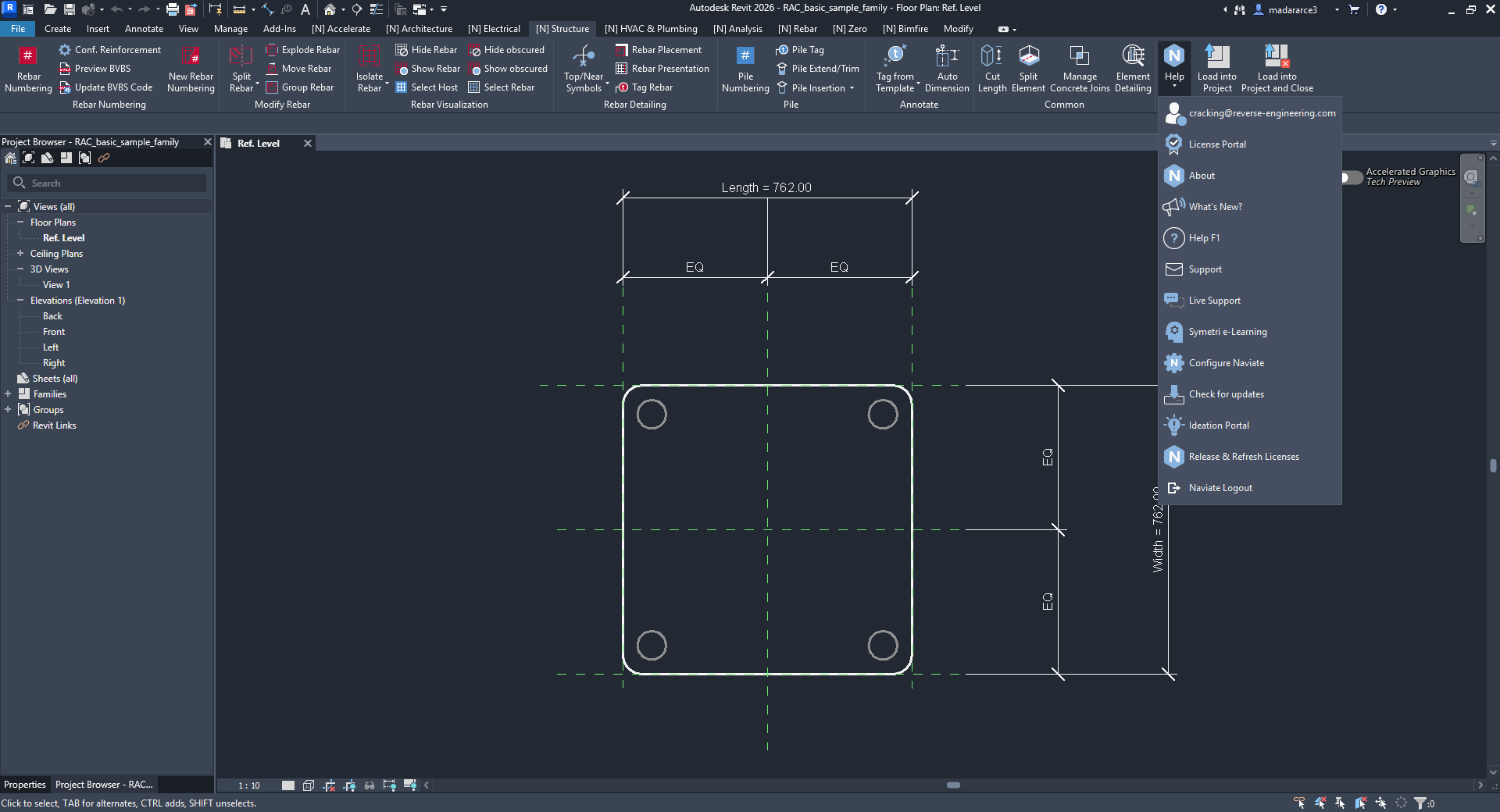
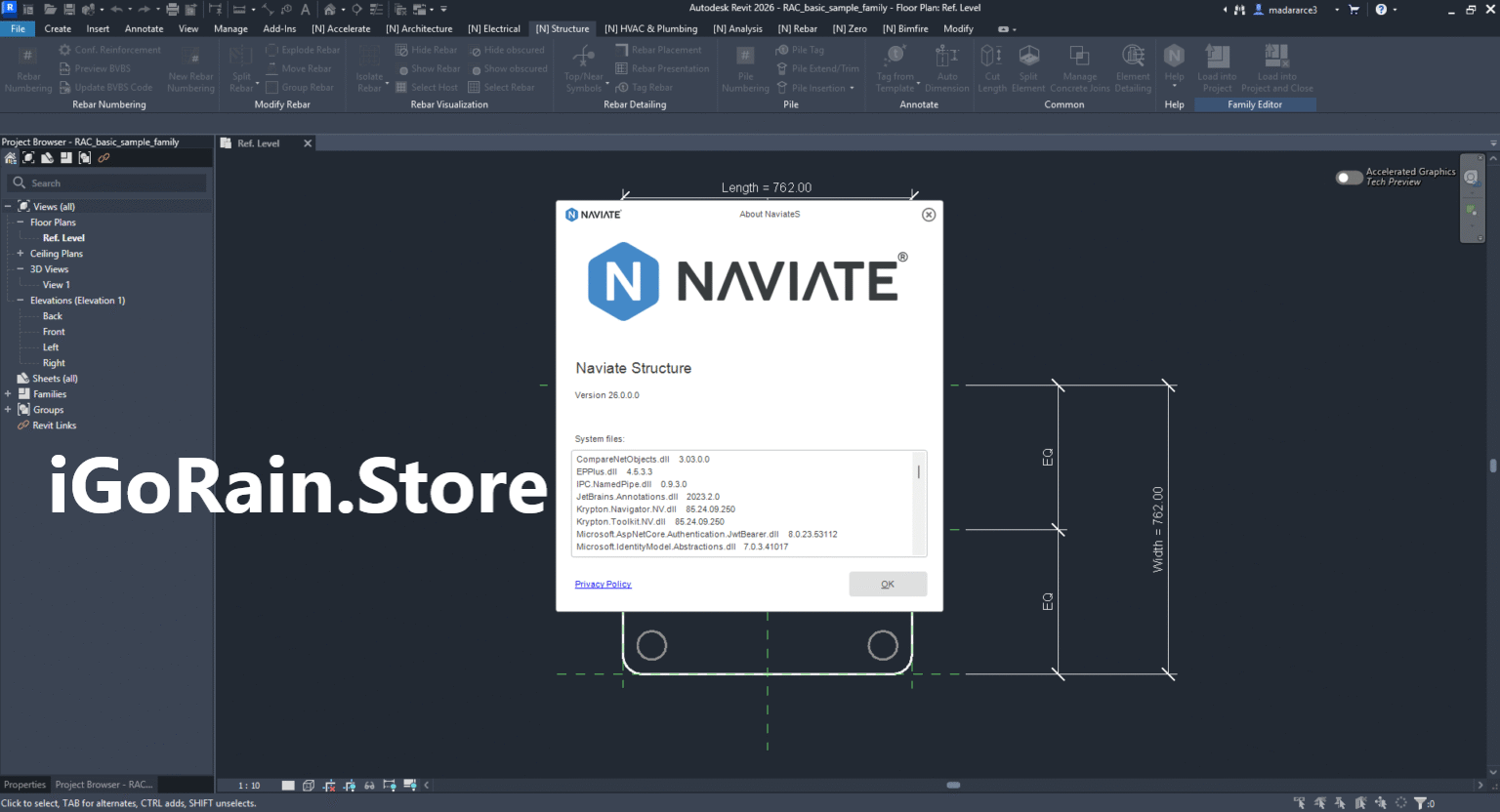
Description
Naviate Structure Review: Smarter, Faster Structural Modeling for Revit Professionals
Summary
Naviate Structure has quietly become one of those tools structural engineers and BIM professionals swear by once they start using it. Designed to extend and streamline Autodesk Revit’s structural capabilities, Naviate Structure Download focuses on what matters most in real-world projects: speed, accuracy, consistency, and reduced manual effort.
While Revit is powerful on its own, structural modeling workflows often involve repetitive tasks, complex data management, and time-consuming coordination. Naviate Structure steps in as a productivity booster, offering specialized tools that automate common structural processes and help teams deliver cleaner models faster.
This review explores Naviate Structure from a practical, hands-on perspective. We’ll look at its core features, real-world use cases, performance benefits, and who it’s best suited for—so you can decide whether it belongs in your structural BIM toolkit.
Introduction
Structural modeling in Revit can feel like a double-edged sword. On one hand, it provides robust parametric design and coordination tools. On the other, many daily tasks—such as managing structural elements, generating views, adjusting levels, or ensuring modeling consistency—can quickly eat up valuable project time.
Naviate Download was developed specifically to address these challenges. Rather than reinventing the BIM workflow, it enhances existing Revit functionality with targeted tools built for structural engineers, detailers, and BIM coordinators.
The software is widely used in engineering firms, consultancy offices, and multidisciplinary teams where efficiency, standardization, and accuracy are non-negotiable. Its main promise is simple: help users spend less time on repetitive modeling and more time on engineering decisions.
Key Features of Naviate Structure
Naviate Structure offers a focused yet powerful set of tools tailored for structural workflows. Below are some of its standout features.
1. Smart Structural Modeling Tools
Download Structure simplifies the creation and modification of common structural elements, including:
-
Beams and columns
-
Structural walls
-
Slabs and foundations
-
Openings and penetrations
These tools reduce the number of manual steps required, making large structural models easier to manage and update.
2. Automated Level and Element Management
Managing levels and associated structural elements across a complex model can be error-prone. Naviate Structure helps by:
-
Automatically adjusting elements when levels change
-
Ensuring correct associations between elements and reference planes
-
Reducing coordination errors during design changes
This is especially useful during early design phases when revisions are frequent.
3. Enhanced View and Documentation Control
Creating clear and consistent structural views is essential for both internal coordination and construction documentation. Structure Download provides tools for:
-
Rapid generation of structural views
-
Consistent naming and organization of views
-
Improved control over visibility and graphical presentation
This leads to cleaner drawings and fewer misunderstandings on site.
4. Data and Parameter Handling
Structural models often rely heavily on parameters for analysis, coordination, and documentation. Structure Download makes it easier to:
-
Edit multiple parameters in bulk
-
Maintain consistent data across elements
-
Prepare models for downstream analysis or export
This feature is particularly valuable for BIM managers maintaining company-wide modeling standards.
5. Rebar and Structural Detailing Support
For teams involved in detailed structural documentation, Naviate Structure assists with:
-
Rebar placement workflows
-
Improved control over reinforcement layouts
-
Faster detailing with fewer manual corrections
While it does not replace dedicated detailing software, it significantly improves Revit-based workflows.
Practical Use Cases
Naviate Structure shines most when applied to real project scenarios. Here are a few common use cases where it delivers clear value.
Structural Engineering Firms
Engineering offices handling mid-to-large projects benefit from Naviate Structure’s automation features. Repetitive tasks such as element alignment, level updates, and parameter checks are completed in minutes instead of hours.
BIM Coordination and Quality Control
BIM coordinators use Naviate Structure to:
-
Enforce modeling standards
-
Reduce inconsistencies between team members
-
Improve overall model quality before coordination meetings
This results in fewer clashes and cleaner model exchanges.
Multidisciplinary Projects
On projects involving architects, MEP engineers, and contractors, structural clarity is critical. Naviate Structure helps ensure that structural models are well-organized, easy to interpret, and reliable for coordination purposes.
Retrofit and Renovation Projects
Working with existing structures often requires frequent adjustments. Naviate Structure’s flexible element and level management tools make it easier to adapt models without breaking parametric relationships.
Performance Analysis
From a performance standpoint, Naviate Structure is designed to work smoothly within the Revit environment. It does not replace core Revit functions but complements them in a lightweight, efficient manner.
Speed Improvements
Users consistently report:
-
Faster modeling of repetitive structural elements
-
Reduced time spent fixing level-related errors
-
Quicker preparation of construction documentation
On larger projects, these time savings add up significantly.
Stability and Reliability
Naviate Structure integrates cleanly with Revit, maintaining model integrity and minimizing crashes or conflicts. Tools behave predictably, which is crucial in high-pressure production environments.
Learning Curve
One of the strengths of Naviate Structure is its relatively short learning curve. Because it builds on familiar Revit concepts, most users become productive within a few days of use.
Pros & Cons
Pros
-
Purpose-built for structural Revit workflows
-
Reduces repetitive manual tasks
-
Improves model consistency and quality
-
Saves time on documentation and revisions
-
Easy to adopt for experienced Revit users
Cons
-
Requires a working knowledge of Revit to fully benefit
-
Primarily focused on structural disciplines only
-
Advanced users may need time to customize workflows
Pricing & Plans
Naviate Structure is typically available as a commercial add-on license, often offered through annual or subscription-based plans. Pricing may vary depending on:
-
License duration
-
Number of users
-
Regional distribution
While it represents an additional investment beyond Revit, many firms find the productivity gains justify the cost within the first few projects.
EEAT Perspective: Why Naviate Structure Earns Trust
From an Experience, Expertise, Authority, and Trust standpoint, Naviate Structure checks the right boxes.
-
Experience: Built specifically for professionals working daily in structural BIM environments
-
Expertise: Designed by teams with deep knowledge of engineering and Revit workflows
-
Authority: Widely adopted in professional engineering and BIM practices
-
Trust: Consistent updates and stable integration with industry-standard software
This combination makes it a dependable choice for long-term use.
Final Verdict
Naviate Structure is not a flashy add-on filled with unnecessary features. Instead, it focuses on solving real problems structural engineers face every day in Revit. By streamlining modeling tasks, improving documentation quality, and reducing human error, it helps teams work smarter without disrupting established workflows.
For structural engineers, BIM specialists, and firms aiming to increase efficiency while maintaining high modeling standards, Naviate Structure is a practical and proven solution worth serious consideration.


Reviews
There are no reviews yet.