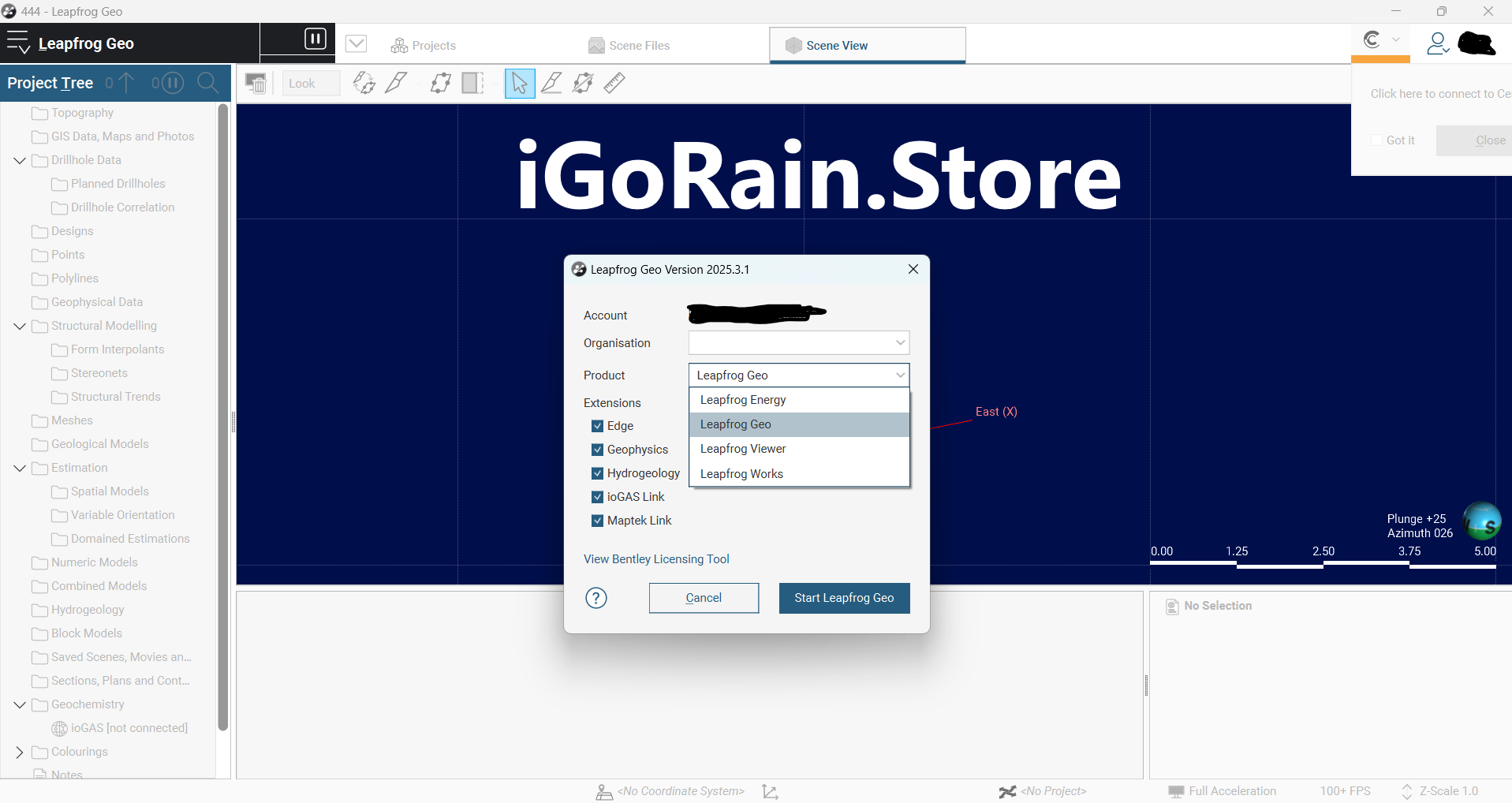
Description
Leapfrog Geo Review – Powerful 3D Geological Modeling Software for Modern Exploration
When it comes to geological modeling and subsurface interpretation, accuracy and speed can define the success of an entire project. Leapfrog Geo has earned a strong reputation as one of the most advanced 3D geological modeling software solutions used by geologists, mining engineers, and exploration teams worldwide. Built for rapid data interpretation and dynamic modeling, Leapfrog Geo transforms complex geological data into clear, actionable 3D models.
Developed by Seequent, Leapfrog Geo is widely trusted in industries such as mining, groundwater management, geothermal energy, and environmental studies. It enables professionals to visualize subsurface geology with confidence, reduce uncertainty, and make better decisions faster.
In this comprehensive review, we’ll explore Leapfrog Geo’s features, real-world applications, performance insights, pros and cons, pricing considerations, and why it remains a leading choice for geological modeling software.
Introduction to Leapfrog Geo
Leapfrog Geo is a cutting-edge 3D geological modeling software designed to help geoscientists build accurate subsurface models quickly and efficiently. Unlike traditional modeling tools that rely on manual workflows, Leapfrog Geo uses implicit modeling techniques to automate complex geological interpretations.
This approach allows users to:
- Build geological models in real time
- Update models dynamically as new data arrives
- Visualize complex structures in 3D
- Reduce interpretation errors
For exploration teams working with drilling data, geophysical surveys, and surface mapping, Leapfrog Geo provides a unified platform for understanding the subsurface.
Key Features of Leapfrog Geo
1. Implicit Geological Modeling
One of Leapfrog Geo’s standout features is its implicit modeling engine.
Instead of manually drawing geological boundaries, users can:
- Input drillhole data
- Define geological trends
- Automatically generate surfaces
The software interprets the data and creates smooth, geologically realistic models.
Benefits include:
- Faster model creation
- Reduced human bias
- Consistent geological interpretations
2. Real-Time Model Updates
In exploration projects, new data is constantly being added. Leapfrog Geo allows:
- Instant updates to models when new drill data is imported
- Dynamic recalculation of geological surfaces
- Continuous refinement without rebuilding models from scratch
This real-time capability is a major advantage in fast-paced exploration environments.
3. Advanced Data Integration
Leapfrog Geo supports a wide range of data types, including:
- Drillhole data
- GIS datasets
- Topographic surfaces
- Geophysical data
- Structural measurements
By integrating multiple data sources, users gain a more complete understanding of subsurface conditions.
4. High-Quality 3D Visualization
Visualization is critical for communicating geological insights.
Leapfrog Geo offers:
- Interactive 3D modeling environment
- Cross-section generation
- Volume calculations
- High-resolution rendering
These tools help teams present findings clearly to stakeholders, investors, and decision-makers.
5. Resource Estimation Support
While Leapfrog Geo itself focuses on geological modeling, it integrates seamlessly with resource estimation workflows.
Users can:
- Prepare models for block modeling
- Export data to mine planning software
- Improve accuracy in resource calculations
This makes it a key component in the mining project lifecycle.
6. Structural Modeling Tools
Geological structures such as faults, folds, and veins are complex.
Leapfrog Geo includes tools to:
- Model fault networks
- Simulate folding patterns
- Represent vein systems accurately
This level of detail is essential for mineral exploration and structural geology analysis.
Practical Use Cases of Leapfrog Geo
1. Mineral Exploration Projects
A mining company exploring a new deposit typically deals with scattered drillhole data.
Using Leapfrog Geo:
- Drill data is imported and visualized
- Geological units are modeled automatically
- Mineralization zones are identified
- Exploration targets are refined
This reduces uncertainty and helps prioritize drilling efforts.
2. Groundwater and Environmental Studies
Hydrogeologists use Leapfrog Geo to understand subsurface water flow.
Applications include:
- Aquifer modeling
- Contamination tracking
- Environmental impact assessments
The ability to visualize underground water systems improves decision-making for sustainable resource management.
3. Geothermal Energy Exploration
In geothermal projects, understanding subsurface heat distribution is critical.
Leapfrog Geo helps by:
- Modeling geological layers
- Identifying heat reservoirs
- Supporting drilling decisions
This leads to more efficient energy extraction and reduced exploration risk.
4. Infrastructure and Engineering Projects
Large infrastructure projects often require subsurface analysis.
Engineers use Leapfrog Geo to:
- Assess ground stability
- Model soil and rock layers
- Identify potential hazards
This ensures safer construction planning and reduces unexpected issues during development.
Performance Analysis
User Interface and Ease of Use
Leapfrog Geo offers a modern, intuitive interface designed for geoscientists.
Key highlights:
- Drag-and-drop data import
- Interactive 3D workspace
- Logical workflow structure
- Minimal manual drawing required
Even though the software handles complex data, the user experience remains efficient and accessible.
Speed and Processing Power
Leapfrog Geo is optimized for performance.
- Rapid model generation
- Efficient handling of large datasets
- Real-time updates without lag
Compared to traditional geological modeling tools, it significantly reduces processing time.
Accuracy and Reliability
Accuracy is where Leapfrog Geo truly excels.
- Implicit modeling reduces interpretation errors
- Data-driven workflows improve reliability
- Continuous updates ensure models remain current
For industries where decisions involve millions of dollars, this level of precision is invaluable.
Pros and Cons of Leapfrog Geo
Pros
- Fast and automated geological modeling
- Real-time data updates
- High-quality 3D visualization tools
- Supports multiple data types
- Reduces manual workload
- Trusted in mining and geoscience industries
Cons
- Premium pricing may not suit small teams
- Requires training for advanced features
- High-performance hardware recommended for large projects
Despite these limitations, its benefits make it a top-tier solution for professional users.
Pricing & Plans
Leapfrog Geo is offered as a commercial licensed software, with pricing based on:
- Subscription or perpetual license options
- Additional modules and integrations
- Support and maintenance services
Given its advanced capabilities, it is positioned as an enterprise-grade solution for professional geoscience applications.
Organizations should view it as an investment in data accuracy, project efficiency, and risk reduction.
Why Leapfrog Geo Stands Out in Geological Modeling Software
The geological modeling software market includes several tools, but Leapfrog Geo stands out due to:
- Its unique implicit modeling technology
- Real-time data handling capabilities
- Strong industry adoption
- Continuous innovation from its developer
It enables geoscientists to focus more on interpretation and less on manual modeling tasks.
EEAT Perspective: Why Professionals Trust Leapfrog Geo
Leapfrog Geo aligns strongly with Google EEAT principles:
- Experience: Widely used in real-world exploration projects
- Expertise: Designed specifically for geoscientists and engineers
- Authority: Recognized as a leading geological modeling platform
- Trust: Delivers reliable, data-driven results
For a software selling store, offering Leapfrog Geo signals quality and credibility to professional buyers.
Final Verdict: Is Leapfrog Geo Worth It?
Leapfrog Geo is not just another geological modeling tool—it is a transformative platform that changes how geoscientists interpret and visualize subsurface data.



Reviews
There are no reviews yet.