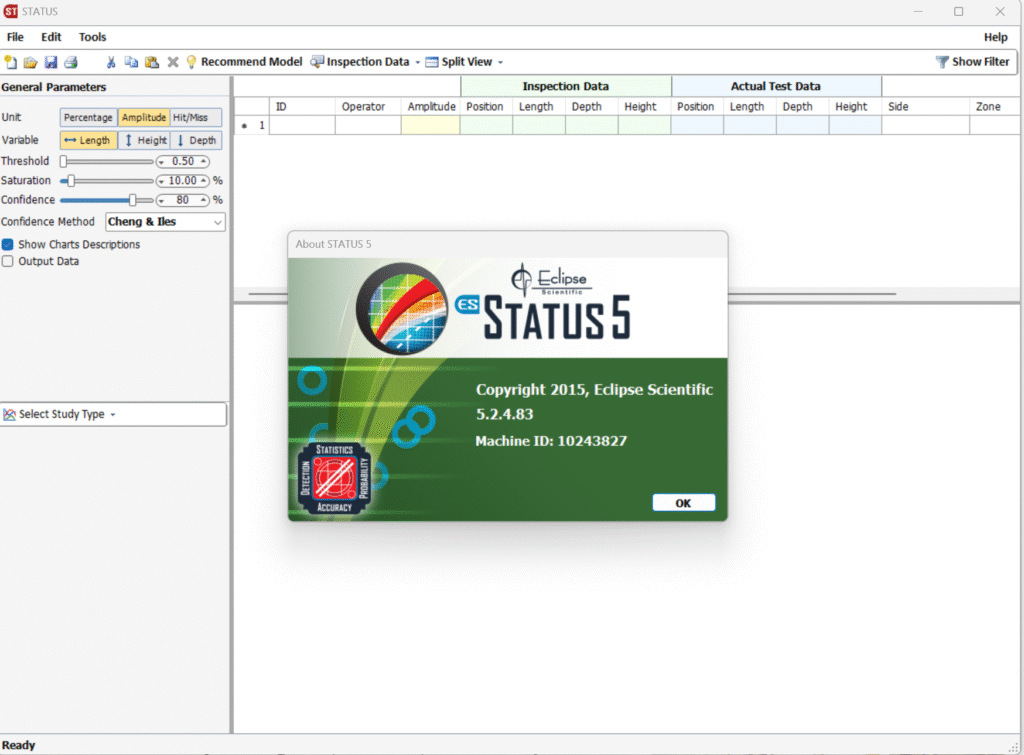
Description
Eclipse Scientific Status Review 2026: Advanced NDT Data Analysis and Inspection Management Software
Eclipse Scientific Status – Quick Overview
Eclipse Scientific Status is a specialized non-destructive testing (NDT) software solution designed to streamline inspection workflows, improve data interpretation, and support high-accuracy analysis across industrial sectors. Built for inspectors, engineers, and quality assurance teams, the platform helps organizations manage inspection data efficiently while maintaining compliance with industry standards.
Companies involved in aerospace manufacturing, oil and gas infrastructure, power generation, and heavy industrial fabrication often face challenges related to large inspection datasets, traceability requirements, and reporting consistency. Eclipse Scientific Status aims to address these concerns by offering advanced visualization tools, organized data management capabilities, and inspection-focused analytical features.
For professionals seeking reliable NDT software capable of improving productivity and inspection confidence, Eclipse Scientific Status presents a practical solution tailored to demanding industrial environments.
Introduction
Non-destructive testing plays a critical role in ensuring the integrity, safety, and longevity of industrial assets. Whether inspecting aircraft components, pressure vessels, pipelines, or structural welds, organizations rely heavily on accurate data analysis and reporting.
Traditional inspection methods often involve fragmented workflows, manually compiled reports, and difficulties managing extensive datasets. As inspection technologies evolve, the demand for intelligent software platforms capable of centralizing and simplifying these processes continues to grow.
Eclipse Scientific Status was developed to support modern inspection environments by enabling technicians and engineers to efficiently process inspection information, interpret results, and document findings in a structured manner.
Rather than functioning as a simple reporting application, the software is designed to become an integral component of the overall inspection ecosystem.
Key Features of Eclipse Scientific Status
1. Advanced Inspection Data Visualization
One of the strongest aspects of Eclipse Scientific Status is its ability to transform complex inspection data into understandable visual formats.
Users can review inspection information through graphical displays that help identify anomalies, trends, and potential defects more effectively.
Benefits include:
- Faster interpretation of inspection results
- Improved defect characterization
- Enhanced decision-making processes
- Reduced likelihood of overlooked indications
Visualization tools are particularly valuable when working with ultrasonic testing datasets or large-volume inspection projects.
2. Centralized Data Management
Managing inspection records from multiple projects can quickly become overwhelming.
Eclipse Scientific Status helps organizations maintain organized inspection archives by offering centralized storage capabilities.
Users can:
- Access historical inspections
- Compare previous datasets
- Track inspection progress
- Maintain long-term traceability
For companies operating under strict quality control programs, having immediate access to archived inspection information can significantly reduce administrative workload.
3. Comprehensive Reporting Tools
Inspection reports are often required for regulatory audits, customer approvals, and internal quality assurance reviews.
The software provides tools that assist inspectors in creating professional reports containing:
- Inspection summaries
- Defect locations
- Measurement information
- Evaluation results
- Supporting images
- Technical observations
Standardized reporting improves communication between inspectors, project managers, clients, and certification authorities.
4. User-Friendly Interface
Industrial software occasionally suffers from overly technical interfaces that increase training requirements.
Eclipse Scientific Status attempts to simplify daily workflows through an intuitive layout.
Users typically appreciate:
- Easy navigation
- Logical menu structures
- Streamlined workflows
- Reduced learning curves
New technicians can often become productive faster compared to traditional data-processing systems.
5. Support for Modern NDT Environments
Industries continue to adopt sophisticated inspection technologies.
Eclipse Scientific Status is designed to complement advanced NDT methodologies and inspection systems commonly used in sectors such as:
- Aerospace
- Nuclear energy
- Oil and gas
- Manufacturing
- Transportation
- Petrochemical facilities
Its flexibility allows inspection teams to integrate software-driven analysis into existing operational procedures.
Practical Use Cases
Aerospace Component Inspection
Aircraft manufacturers operate under stringent safety standards.
Inspectors routinely examine turbine blades, fuselage sections, landing gear components, and structural assemblies.
Using Eclipse Scientific Status, engineering teams can:
- Analyze inspection data efficiently
- Compare findings against historical records
- Produce certification-ready reports
- Improve maintenance planning
The result is a more streamlined quality assurance process.
Pipeline Integrity Management
Pipeline operators inspect thousands of kilometers of infrastructure annually.
Inspection teams often struggle with organizing massive quantities of ultrasonic and corrosion monitoring data.
Eclipse Scientific Status enables operators to:
- Track defect growth over time
- Store inspection histories
- Generate maintenance recommendations
- Prioritize repair activities
This contributes to improved operational reliability.
Eclipse Scientific Status Developer
Eclipse Scientific Status 5.2.3.83 Download
Manufacturing Quality Control
Manufacturers producing critical components must document inspection outcomes thoroughly.
Examples include:
- Pressure vessels
- Forged components
- Welded structures
- Industrial machinery
Inspection departments benefit from software that reduces manual documentation tasks while maintaining data consistency.
Power Generation Facilities
Power plants conduct regular inspections to monitor aging equipment.
Typical assets include:
- Boilers
- Heat exchangers
- Steam piping
- Reactor systems
Software-assisted analysis helps engineers identify degradation patterns earlier and schedule maintenance proactively.
Real-World Benefits Experienced by Inspection Teams
Organizations adopting dedicated inspection management software often report several operational improvements.
Reduced Report Preparation Time
Manual report generation can consume hours for each inspection project.
Automated templates and organized datasets help teams complete reports significantly faster.
Improved Data Accessibility
Searching through spreadsheets, paper documents, and disconnected storage systems creates inefficiencies.
Centralized databases simplify access to inspection histories.
This becomes especially important during audits.
Better Collaboration
Inspection projects frequently involve multiple stakeholders.
Examples include:
- Field inspectors
- Engineering consultants
- Asset owners
- Maintenance managers
Having standardized information available in a common platform improves communication.
Increased Confidence in Inspection Decisions
Advanced visualization capabilities provide engineers with more detailed insights into inspection findings.
This can lead to better-informed repair decisions and more accurate risk assessments.
Performance Analysis
Processing Efficiency
Inspection projects often involve extensive datasets generated by sophisticated testing equipment.
Eclipse Scientific Status is designed to handle inspection information efficiently, reducing delays associated with manual processing.
Organizations managing recurring inspections may notice productivity gains over time.
Scalability
The software appears suitable for both smaller inspection service providers and larger industrial enterprises.
Scalable data management features allow users to expand inspection programs without creating excessive administrative burdens.
Reliability
Reliability is essential in industries where inspection decisions directly impact safety.
Maintaining structured records and minimizing data handling errors contributes to improved inspection consistency.
While software performance depends on hardware environments and implementation practices, dedicated inspection platforms generally outperform generic office applications for NDT-related tasks.
Pros and Cons
Pros
Specialized for NDT Applications
Unlike general-purpose reporting software, Eclipse Scientific Status focuses specifically on inspection and evaluation workflows.
Improved Reporting Capabilities
Standardized documentation reduces inconsistencies.
Enhanced Data Visualization
Graphical tools support faster interpretation.
Better Traceability
Historical inspection data remains accessible.
Supports Industrial Compliance Efforts
Useful for organizations operating under regulated environments.
Cons
Limited Appeal Outside NDT Industries
Businesses unrelated to industrial inspection may not benefit significantly from its specialized features.
Training May Still Be Required
Advanced inspection analysis functions can require onboarding for inexperienced users.
Pricing Information Is Not Widely Publicized
Prospective customers may need to contact authorized distributors or vendors for detailed licensing information.
Pricing and Plans
At the time of writing, publicly available pricing information for Eclipse Scientific Status is limited.
Software costs in the industrial inspection sector often depend on factors such as:
- Number of users
- Licensing model
- Technical support packages
- Enterprise deployment requirements
- Additional modules
Organizations interested in implementation are encouraged to request a customized quotation based on their inspection workload and operational needs.
Why Eclipse Scientific Status Stands Out
Many inspection teams continue relying on spreadsheets and fragmented reporting systems.
As inspection demands increase, these traditional methods become less practical.
Eclipse Scientific Status distinguishes itself through several important strengths:
- Inspection-focused design philosophy
- Efficient management of complex datasets
- Professional reporting capabilities
- Improved collaboration among stakeholders
- Long-term inspection traceability
For industries where asset integrity and regulatory compliance are critical, investing in dedicated analysis software can deliver measurable operational advantages.
Final Verdict
Eclipse Scientific Status is a capable inspection management and NDT analysis platform aimed at organizations that require accurate data interpretation, efficient reporting, and dependable record management. Its combination of visualization tools, centralized data handling, and inspection-oriented workflows makes it particularly valuable for aerospace companies, pipeline operators, manufacturers, and power generation facilities.
Although pricing details are not openly published, the software’s specialized capabilities may justify the investment for businesses seeking to modernize inspection processes and improve overall quality assurance performance.
Companies looking to enhance non-destructive testing workflows, reduce administrative overhead, and strengthen inspection traceability should consider evaluating Eclipse Scientific Status to determine how it fits within their operational requirements.



Reviews
There are no reviews yet.