Description
MAXQDA Software Review: A Complete Qualitative Data Analysis Solution for Researchers and Analysts
Summary
MAXQDA is a powerful qualitative and mixed-methods data analysis software designed for researchers, academics, market analysts, and organizations that work with complex textual, multimedia, and survey data. It provides a structured environment for coding, organizing, and interpreting large volumes of qualitative information efficiently. With its advanced analytical tools, intuitive interface, and strong visualization capabilities, MAXQDA stands out as a leading solution in the field of qualitative research software. This review explores its features, real-world applications, performance, strengths, limitations, and overall value for professionals seeking reliable data analysis tools.
Introduction
In today’s data-driven environment, qualitative research plays a crucial role in understanding human behavior, market trends, academic theories, and organizational insights. However, handling unstructured data such as interviews, focus group transcripts, surveys, audio files, and documents can be challenging without specialized tools.
MAXQDA is developed to address this challenge by offering a structured, efficient, and highly organized environment for qualitative and mixed-methods data analysis. It is widely used in academia, healthcare research, social sciences, business intelligence, and policy development.
Unlike basic text analysis tools, MAXQDA combines coding, categorization, visualization, and interpretation features in a single platform. This makes it a comprehensive solution for professionals who need deep insights from non-numerical data.
Key Features
MAXQDA offers a broad set of features designed to support every stage of qualitative research.
1. Advanced Coding System
MAXQDA allows users to code text, audio, video, and images. Researchers can assign labels, categories, and themes to specific segments of data, making it easier to identify patterns and relationships.
2. Mixed Methods Integration
The software supports both qualitative and quantitative analysis. Users can integrate statistical data with textual insights, enabling a more complete research approach.
3. Document Management
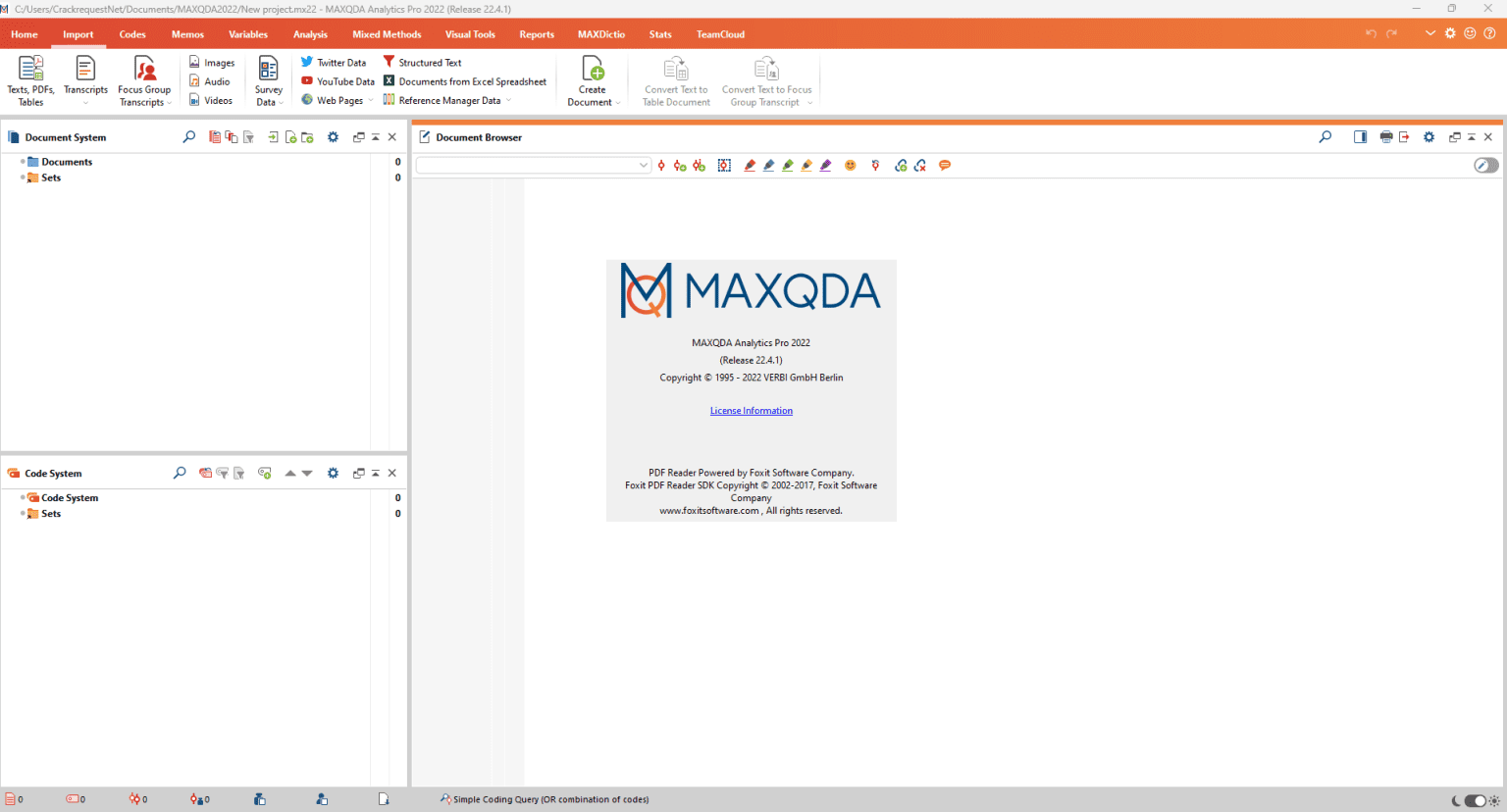
It supports importing and organizing multiple data types, including PDFs, Word files, Excel sheets, transcripts, and multimedia files. The document system ensures structured and accessible data handling.
4. Visualization Tools
MAXQDA includes a variety of visualization options such as:
- Code maps
- Concept maps
- Word clouds
- Matrices
- Charts and graphs
These tools help researchers interpret complex relationships within data quickly.
5. Team Collaboration Features
Multiple researchers can work on the same project using shared coding systems and synchronized updates. This is especially useful for academic research teams and corporate analysis groups.
6. Transcription and Media Analysis
Users can transcribe audio and video files directly within the platform. This feature simplifies the process of converting interviews and recordings into analyzable text.
7. AI-Assisted Tools
Modern versions include AI-powered assistance for summarizing data, identifying themes, and accelerating coding processes. This improves efficiency and reduces manual workload.
8. Survey Data Analysis
MAXQDA supports importing survey data from platforms like Excel or CSV files, allowing users to analyze open-ended responses alongside structured data.
Practical Use Cases
MAXQDA is widely used across multiple industries due to its flexibility and depth of analysis capabilities.
Academic Research
Universities and scholars use MAXQDA for:
- Thesis and dissertation analysis
- Ethnographic studies
- Sociological and psychological research
- Literature reviews
It helps researchers organize interview data and extract meaningful themes efficiently.
Market Research
Businesses use MAXQDA to analyze:
- Customer feedback
- Product reviews
- Focus group discussions
- Brand perception studies
This helps companies improve product strategies and customer experience.
Healthcare and Medical Research
Medical researchers use MAXQDA to analyze:
- Patient interviews
- Clinical trial feedback
- Healthcare service evaluations
It supports evidence-based decision-making in healthcare systems.
Government and Policy Analysis
Policy makers rely on MAXQDA to evaluate:
- Public opinion surveys
- Policy impact studies
- Social research data
This ensures informed decision-making in governance.
Corporate Strategy and HR
Organizations use it for:
- Employee satisfaction studies
- Internal feedback analysis
- Organizational behavior research
Performance Analysis
MAXQDA is known for its stable performance and ability to handle large datasets without significant slowdowns. It is optimized for both small-scale academic projects and large enterprise-level research studies.
Speed and Efficiency
The software performs well when processing large volumes of text and multimedia data. Coding and retrieval functions are responsive, even with complex datasets.
User Interface
The interface is structured and research-oriented. While it may take some time for beginners to learn, it becomes intuitive with regular use.
Data Handling Capability
MAXQDA supports a wide range of file formats, making it highly versatile. It efficiently manages thousands of documents within a single project without data loss or corruption.
Reliability
The software is stable during long research sessions, with minimal crashes or performance issues reported by users.
Learning Curve
Although powerful, MAXQDA requires some training for first-time users. Once users understand coding systems and workflows, productivity significantly improves.
Pros and Cons
Pros
- Comprehensive qualitative and mixed-methods analysis tools
- Strong coding and categorization system
- Supports multiple data formats including multimedia
- Advanced visualization and mapping tools
- Useful for both individual and team research projects
- AI-assisted features improve productivity
- Reliable performance with large datasets
Cons
- Requires time to learn advanced features
- Premium pricing may be challenging for small users
- Interface can feel complex for beginners
- Some features may be more advanced than needed for simple projects
Pricing and Plans
MAXQDA is typically offered through license-based pricing. Different plans are available depending on user type and usage requirements.
Individual License
Designed for independent researchers, students, and professionals working on personal projects.
Academic License
Offered at discounted rates for students, educators, and research institutions. This is the most commonly used plan in universities.
Team and Institutional Licenses
Suitable for organizations and research teams requiring collaboration features and multiple user access.
Subscription and Perpetual Options
Depending on the provider, users may choose between subscription-based access or one-time purchase licenses.
While MAXQDA is not the cheapest tool in the market, its depth of features and research capabilities justify its pricing for serious users.
Final Verdict
MAXQDA is a highly capable qualitative data analysis software that offers everything needed for modern research workflows. From coding interviews to analyzing multimedia content and generating visual insights, it provides a complete research ecosystem.
Its strength lies in its flexibility, depth, and ability to handle complex datasets across multiple disciplines. While it may require some learning effort, the long-term benefits in productivity and research quality are significant.
For academic researchers, market analysts, healthcare professionals, and organizations dealing with qualitative data, MAXQDA stands as a reliable and professional-grade solution.
Conclusion
If your work involves analyzing interviews, documents, surveys, or multimedia research data, MAXQDA provides a structured and efficient way to transform raw information into meaningful insights. Exploring its features can significantly improve research accuracy, depth, and productivity, making it a strong choice for anyone serious about qualitative data analysis.




Reviews
There are no reviews yet.