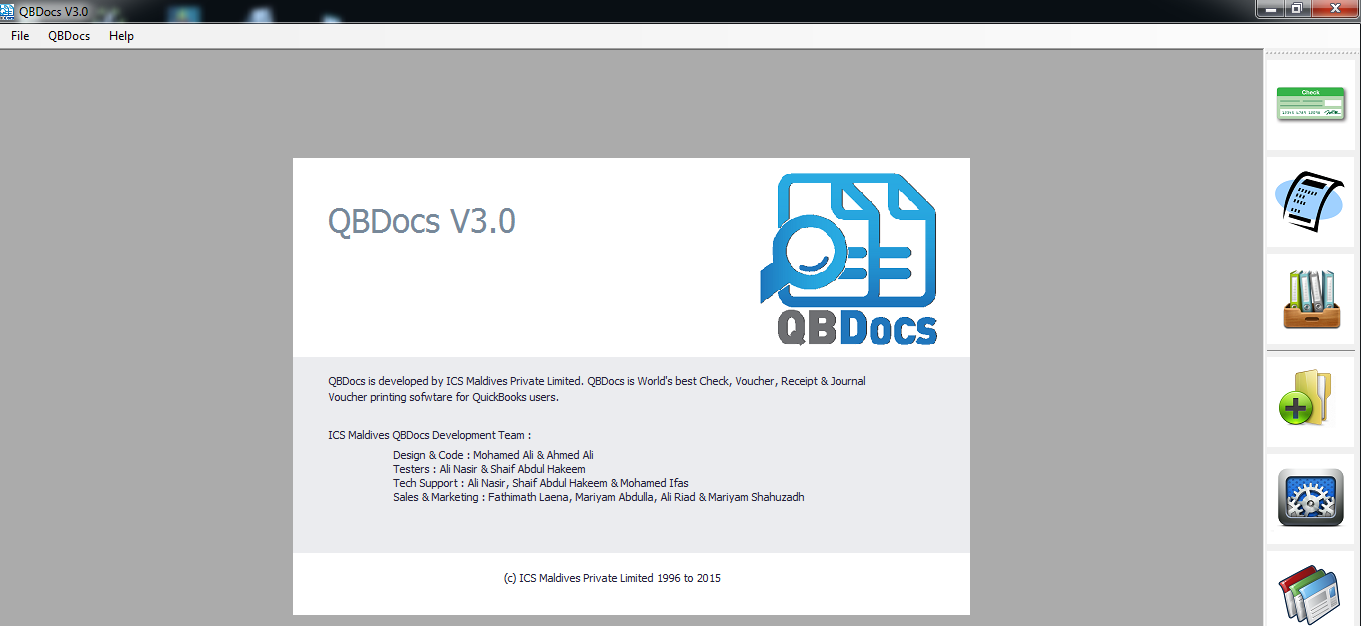
Description
QBdocs 3.0: The Smart Document Management Solution for QuickBooks Users
Quick Summary
Managing invoices, receipts, QBdocs 3.0 purchase orders, contracts, and customer records can quickly become overwhelming, especially for businesses that rely on QuickBooks for accounting. While QuickBooks excels at financial management, many organizations need a reliable way to organize supporting documents alongside their accounting data. That’s where QBdocs 4.0 comes into play.
QBdocs is a document management solution designed specifically for QuickBooks users, allowing businesses to securely store, organize, retrieve, and link important files directly to accounting transactions. Instead of searching through folders, emails, or filing cabinets, users can instantly access supporting documents from within their accounting workflow.
Whether you’re an accountant managing multiple clients, a small business owner handling daily bookkeeping, or a finance department processing thousands of transactions, QBdocs helps simplify document organization while improving productivity and compliance.
In this comprehensive QBdocs review, we’ll examine its features, performance, practical applications, advantages, limitations, pricing considerations, and why it has become a valuable addition to many QuickBooks-based businesses.
Introduction
Modern businesses generate thousands of digital documents every year QBdocs 3.0 Vendor invoices, employee records, contracts, tax forms, customer agreements, and payment receipts all require proper organization.
Unfortunately, storing these documents separately from accounting software often creates unnecessary delays. Employees waste valuable time searching through shared folders, cloud storage platforms, or paper files whenever they need supporting documentation.
QBdocs addresses this challenge by integrating document management with QuickBooks workflows. Instead of switching between multiple applications, users can attach, categorize, search, and retrieve files directly alongside accounting records.
The result is faster bookkeeping, better collaboration, easier audits, and more organized financial documentation.
For organizations looking to modernize their accounting document workflow, QBdocs provides an efficient and practical solution.
Key Features of QBdocs
QuickBooks Integration
One of QBdocs’ strongest advantages is its close integration with QuickBooks.
Users can associate documents with:
- Customers
- Vendors
- Employees
- Invoices
- Bills
- Purchase Orders
- Checks
- Payments
- Journal Entries
- Financial transactions
This creates a centralized workspace where financial data and supporting documents remain connected.
Secure Document Storage
QBdocs allows businesses to securely store important files in one organized location.
Supported document types typically include:
- PDF files
- Microsoft Word documents
- Excel spreadsheets
- Images
- Scanned receipts
- Contracts
- Tax documents
- Email attachments
Centralized storage reduces lost paperwork while improving document accessibility.
Fast Search Capabilities
One of the biggest productivity improvements comes from QBdocs’ intelligent search functions.
Users can locate documents by:
- Customer name
- Vendor
- Invoice number
- Keywords
- Document type
- Transaction history
- Dates
- Categories
Instead of manually browsing folders, files become searchable within seconds.
Document Scanning
Paper documents can be scanned directly into the system.
Businesses can digitize:
- Vendor invoices
- Customer contracts
- Expense receipts
- Tax paperwork
- Employee forms
This supports paperless office initiatives while reducing physical storage requirements.
File Attachment Management
Users can attach multiple files to a single QuickBooks transaction.
For example:
A purchase order may include:
- Original quotation
- Supplier invoice
- Shipping documents
- Product images
- Delivery confirmation
Everything stays connected for future reference.
User Permissions
QBdocs offers permission settings that help control document access.
Administrators can assign different levels of access based on employee roles.
This improves security while maintaining compliance with internal policies.
Organized Folder Structure
Documents can be categorized using logical folder systems and indexing.
Examples include:
- Accounts Payable
- Accounts Receivable
- Human Resources
- Customer Files
- Vendor Records
- Tax Documents
- Legal Contracts
Proper organization simplifies long-term document management.
Practical Use Cases
Small Business Accounting
Small businesses often struggle to manage invoices and receipts across multiple locations.
QBdocs keeps everything connected to accounting transactions, reducing confusion during bookkeeping and tax preparation.
Accounting Firms
Accounting professionals managing several clients benefit from centralized document access.
Instead of requesting paperwork repeatedly, accountants can quickly retrieve supporting files linked to financial records.
This saves considerable time during client engagements.
Audit Preparation
Audits often require immediate access to supporting documentation.
With QBdocs, businesses can quickly locate:
- Vendor invoices
- Expense receipts
- Purchase orders
- Customer contracts
- Tax records
This reduces audit preparation time significantly.
Accounts Payable Departments
Finance teams processing hundreds of invoices every month can streamline approval workflows.
Documents remain attached to transactions, making invoice verification much faster.
Manufacturing Companies
Manufacturers often maintain documentation for:
- Purchase orders
- Inventory records
- Supplier agreements
- Shipping paperwork
- Production documents
QBdocs helps organize these records alongside accounting data.
Professional Service Firms
Law firms, consulting companies, marketing agencies, and engineering firms frequently manage client documentation alongside billing records.
QBdocs simplifies both financial recordkeeping and document retrieval.
Real-World User Experience
Imagine a growing wholesale company processing hundreds of supplier invoices every month.
Before implementing QBdocs, employees stored documents across email inboxes, shared drives, and filing cabinets. Finding a single invoice could take several minutes, especially during audits or vendor disputes.
After implementing QBdocs, every invoice became linked directly to the corresponding QuickBooks transaction.
When a supplier requested payment verification, staff simply opened the transaction and viewed the attached invoice instantly.
This eliminated unnecessary searching while improving customer service, vendor communication, and accounting efficiency.
Many organizations report similar productivity improvements after integrating document management into their accounting workflow.
Performance Analysis
Ease of Use
QBdocs provides an intuitive interface that complements existing QuickBooks workflows.
Users familiar with QuickBooks generally experience a relatively short learning curve.
Speed
Document retrieval is one of the software’s strongest performance areas.
Instead of navigating multiple storage locations, users can access files almost instantly from linked transactions.
Reliability
Businesses depend on consistent document availability.
QBdocs is designed to maintain organized document repositories that remain accessible whenever accounting records are reviewed.
Productivity Improvements
Organizations using QBdocs often experience benefits such as:
- Reduced administrative work
- Faster invoice processing
- Simplified document retrieval
- Improved collaboration
- Better accounting accuracy
- Less duplicate paperwork
These efficiencies contribute to significant long-term time savings.
Scalability
As businesses grow, document volumes increase rapidly.
QBdocs scales effectively for organizations managing thousands of accounting documents across multiple departments.
Benefits of Using QBdocs
Businesses adopting QBdocs often gain several operational advantages:
- Faster document retrieval
- Better QuickBooks integration
- Centralized document management
- Reduced paper storage
- Improved accounting workflows
- Easier compliance preparation
- More organized financial records
- Increased employee productivity
- Better collaboration between departments
- Simplified audit support
These improvements help businesses spend less time searching for information and more time focusing on strategic work.
Pros and Cons
Pros
- Excellent integration with QuickBooks
- Centralized document storage
- Quick document search capabilities
- Easy attachment of files to transactions
- Supports paperless office workflows
- Improves audit readiness
- User permission controls enhance security
- Suitable for businesses of various sizes
- Reduces manual filing processes
- Improves accounting efficiency
Cons
- Most valuable for organizations already using QuickBooks
- Initial document organization may require setup time
- Employee training may be needed for optimal workflow adoption
- Advanced functionality may exceed the needs of very small businesses
Pricing & Plans
QBdocs pricing may vary depending on licensing options, deployment requirements, and business size.
Organizations interested in implementing QBdocs should evaluate:
- Number of users
- Storage requirements
- Integration needs
- Business size
- Support options
Requesting current pricing information from an authorized software provider is the best way to determine the most suitable licensing option for your organization.
Who Should Use QBdocs?
QBdocs is particularly well suited for:
- Small businesses
- Medium-sized businesses
- Accounting firms
- Bookkeepers
- Financial departments
- Manufacturing companies
- Wholesale distributors
- Professional service providers
- Healthcare practices
- Nonprofit organizations
Any organization using QuickBooks while managing large volumes of supporting documents can benefit from its document management capabilities.
Why QBdocs Stands Out
Unlike generic document storage systems, QBdocs focuses specifically on accounting workflows. By linking documents directly to QuickBooks records, it eliminates the disconnect between financial data and supporting files.
This specialized approach helps businesses improve organization, reduce administrative effort, and enhance overall efficiency. Rather than acting as a standalone storage solution, QBdocs becomes an extension of the accounting process, making everyday tasks faster and more reliable.
Final Verdict
QBdocs is a practical and efficient document management solution for businesses that rely on QuickBooks. By combining secure document storage with seamless accounting integration, it simplifies daily bookkeeping, improves collaboration, and makes retrieving important records quick and hassle-free.
Its robust search capabilities, transaction-based file attachments, document scanning support, and organized storage system make it an excellent choice for companies seeking to modernize their accounting workflows. While implementation may require some initial organization, the long-term gains in productivity, accuracy, and audit readiness make it a worthwhile investment.
If your business regularly handles invoices, receipts, contracts, tax documents, and other financial records within QuickBooks, QBdocs offers a dependable way to keep everything organized in one place. Explore QBdocs to streamline your document management process, reduce administrative overhead, and build a more efficient, paperless accounting environment.




Reviews
There are no reviews yet.