Description
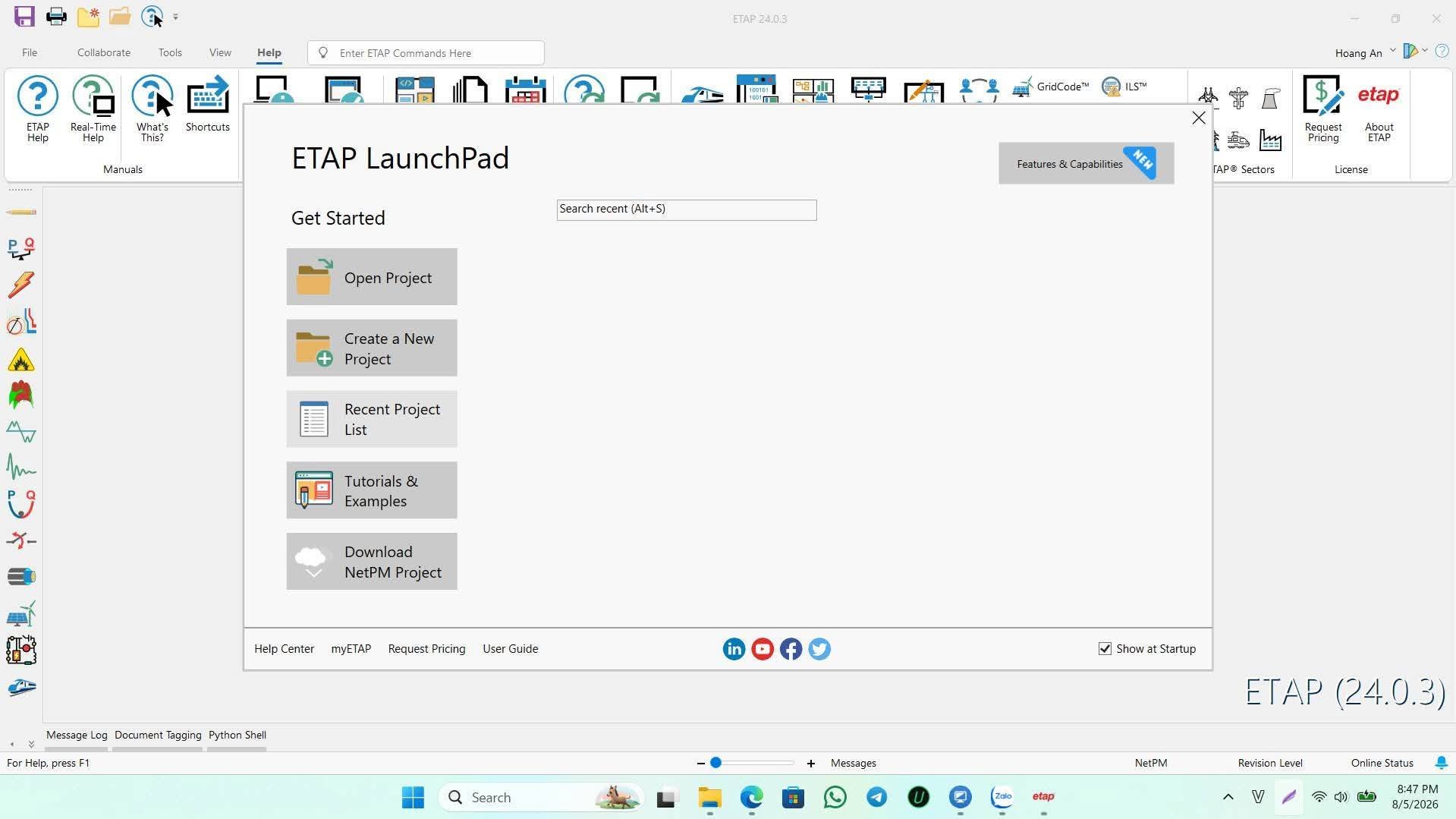
Etap 24.0.3: The Complete Power System Analysis Software for Engineers and Utility Professionals
Power system design and electrical network analysis demand precision, reliability, and compliance with industry standards. Whether you’re designing a new industrial facility, managing a utility grid, or optimizing an existing electrical distribution system, having the right engineering software makes a significant difference. ETAP has earned a strong reputation as one of the leading electrical engineering software solutions for professionals who require accurate modeling, simulation, and analysis.
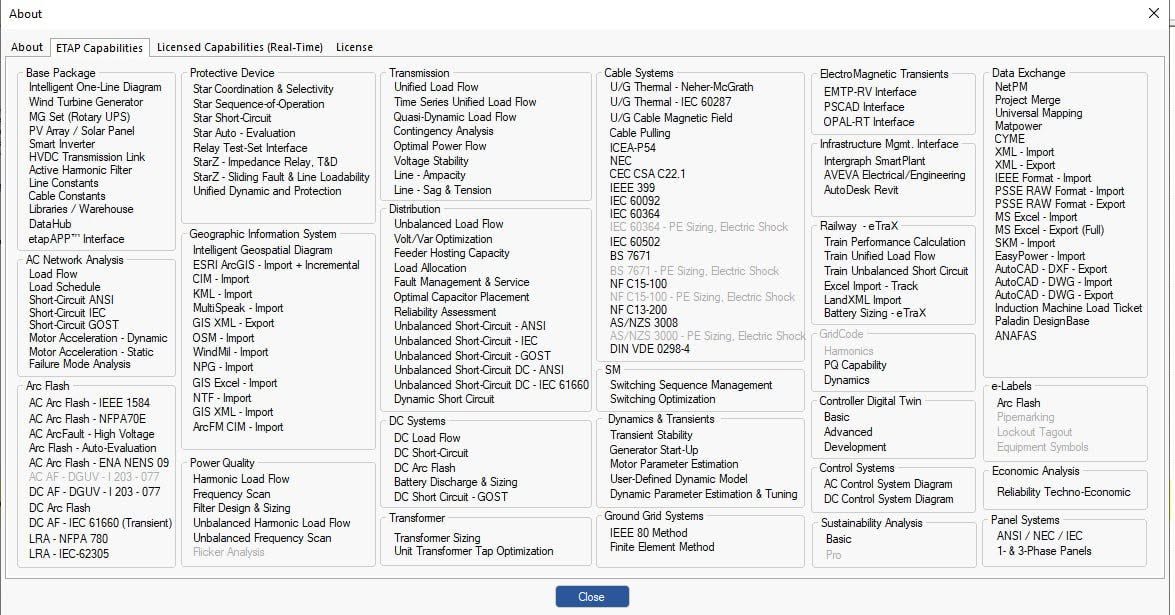
Unlike basic electrical calculation tools, ETAP 24.0.3 provides an integrated platform for power system analysis, protection coordination, arc flash studies, load flow analysis, transient stability, and digital twin capabilities. It is widely used across industries including utilities, manufacturing, oil and gas, renewable energy, transportation, mining, healthcare, and commercial infrastructure.
This comprehensive ETAP 24.0.3 review explores its features, practical applications, performance, strengths, limitations, pricing considerations, and why it continues to be one of the most trusted electrical engineering software platforms available today.
Introduction
ETAP (Electrical Transient Analyzer Program) is an advanced software platform designed specifically for electrical power system design, simulation, monitoring, and optimization. For decades, engineers around the world have relied on ETAP to create highly accurate digital models of electrical networks.
The software helps organizations minimize system failures, improve electrical safety, reduce downtime, and ensure compliance with international electrical standards.
From a small manufacturing plant to national utility companies managing complex transmission networks, ETAP offers scalable solutions that support every stage of an electrical project’s lifecycle.
Instead of relying on spreadsheets or disconnected engineering tools, ETAP combines multiple analytical functions into one intelligent platform.
Key Features of ETAP 24.0.3
Intelligent One-Line Diagram
The ETAP 24.0.3 software allows engineers to build interactive one-line diagrams that serve as the foundation for all system studies.
Benefits include:
- Drag-and-drop electrical components
- Real-time system visualization
- Automatic equipment data management
- Easy project modifications
- Centralized network documentation
This significantly improves engineering efficiency while reducing modeling errors.
Load Flow Analysis
Load flow studies are among ETAP’s most widely used capabilities.
Engineers can evaluate:
- Voltage levels
- Power factor
- Transformer loading
- Feeder performance
- Power losses
- Reactive power flow
These studies help optimize system performance before equipment is installed.
Short Circuit Analysis
ETAP performs comprehensive fault current calculations using recognized international standards.
It supports calculations based on:
- IEC standards
- ANSI standards
- Utility-specific requirements
Engineers can accurately size:
- Circuit breakers
- Protective relays
- Busbars
- Switchgear
- Transformers
Arc Flash Hazard Analysis
Electrical safety has become a major priority for industrial facilities.
ETAP 2026 provides advanced arc flash analysis that helps organizations:
- Identify hazardous locations
- Calculate incident energy
- Define safe working distances
- Generate arc flash labels
- Improve worker protection
This feature is particularly valuable for facilities seeking compliance with electrical safety regulations.
Protection & Coordination
Protection coordination is essential for preventing widespread outages.
ETAP helps engineers:
- Configure protective relays
- Analyze coordination curves
- Optimize breaker settings
- Reduce unnecessary power interruptions
- Improve system reliability
The graphical coordination interface simplifies complex protection studies.
Motor Starting Analysis
Industrial facilities often experience voltage drops when large motors start.
ETAP allows engineers to simulate:
- Static motor starting
- Dynamic motor acceleration
- Starting current
- Voltage dip
- System recovery
This helps prevent equipment damage before commissioning.
Transient Stability Analysis
Power systems constantly experience dynamic events.
ETAP analyzes:
- Generator behavior
- Grid disturbances
- System stability
- Voltage recovery
- Frequency response
These simulations help engineers maintain reliable electrical networks under changing operating conditions.
Renewable Energy Integration
Modern electrical systems increasingly include renewable energy.
ETAP supports modeling for:
- Solar farms
- Wind power plants
- Battery energy storage systems
- Hybrid microgrids
- Distributed generation
This makes the software valuable for organizations transitioning toward cleaner energy.
Digital Twin Technology
One of ETAP’s modern innovations is its Digital Twin capability.
Instead of static models, engineers can create live digital representations of electrical systems.
Advantages include:
- Real-time monitoring
- Predictive maintenance
- Operational optimization
- Improved asset management
- Faster troubleshooting
Digital Twin technology bridges engineering design with day-to-day operations.
Practical Use Cases
Utility Companies
Power utilities use ETAP for:
- Transmission planning
- Distribution analysis
- Fault studies
- Grid modernization
- Reliability improvements
The software enables engineers to simulate future expansion before investing in infrastructure.
Manufacturing Plants
Factories rely on continuous electrical operation.
ETAP assists with:
- Equipment sizing
- Energy optimization
- Backup power planning
- Electrical maintenance
- Safety analysis
Unexpected electrical failures become easier to predict and prevent.
Oil & Gas Facilities
Large energy facilities operate under demanding conditions.
Engineers use ETAP to:
- Improve power reliability
- Coordinate protection systems
- Analyze emergency generators
- Evaluate hazardous electrical conditions
The software helps reduce operational risks while improving uptime.
Commercial Buildings
Hospitals, airports, shopping centers, and office complexes depend on reliable electrical systems.
ETAP supports:
- Emergency power analysis
- Load balancing
- Backup generator studies
- Electrical distribution planning
- Future expansion planning
Renewable Energy Projects
Solar and wind developers use ETAP throughout project development.
Applications include:
- Grid interconnection studies
- Battery storage modeling
- Voltage regulation
- Protection analysis
- Renewable power integration
Real-World User Experience
Many experienced electrical engineers appreciate ETAP because it combines numerous engineering tools into a single professional environment.
During large infrastructure projects, engineers often begin with one-line diagram creation before moving through equipment sizing, load flow studies, protection coordination, and safety analysis—all without rebuilding the model in separate software.
Consulting engineering firms benefit from standardized project templates, while industrial maintenance teams value the software’s ability to keep system documentation synchronized with ongoing modifications.
Although new users may initially find ETAP’s extensive feature set challenging, most report that productivity improves significantly after gaining experience with the interface.
Its comprehensive documentation, engineering libraries, and built-in analysis modules make it a long-term investment for organizations handling complex electrical systems.
Performance Analysis
Performance is one of ETAP’s strongest qualities.
The software is designed to process highly detailed electrical models while maintaining excellent calculation accuracy.
Strengths
- Fast simulation engine
- Accurate engineering calculations
- Professional reporting tools
- Stable handling of large electrical networks
- Extensive equipment libraries
- Integration across multiple engineering workflows
Large industrial projects involving thousands of electrical components can often be analyzed efficiently without requiring multiple software packages.
For engineering consultants working on critical infrastructure, ETAP provides the level of reliability expected from enterprise-grade power system analysis software.
Pros & Cons
Pros
- Comprehensive electrical engineering platform
- Industry-recognized analysis accuracy
- Excellent power system simulation tools
- Advanced arc flash analysis
- Strong protection coordination capabilities
- Digital Twin functionality
- Scalable for projects of all sizes
- Supports renewable energy integration
- Professional reporting features
- Regular software updates and enhancements
Cons
- Premium licensing can be expensive for smaller businesses
- Steeper learning curve for beginners
- Requires engineering knowledge to fully utilize advanced features
- Some complex studies may require higher-end workstation hardware
Pricing & Plans
ETAP pricing is generally tailored to professional engineering organizations rather than individual consumers.
Pricing varies depending on:
- Required analysis modules
- License type
- Number of users
- Enterprise deployment needs
- Industry-specific features
Organizations can typically choose from standalone licenses, network licensing, or enterprise solutions based on their operational requirements.
For the most accurate pricing, businesses should request a customized quotation based on their engineering needs.
Why ETAP Stands Out
Several factors separate ETAP from many competing electrical engineering software solutions.
These include:
- Comprehensive power system modeling
- High engineering accuracy
- Industry-standard calculations
- Continuous product development
- Digital Twin integration
- Wide adoption across multiple industries
- Strong technical support ecosystem
Instead of focusing on only one aspect of electrical design, ETAP delivers an end-to-end engineering platform covering planning, simulation, protection, monitoring, and optimization.
Who Should Use ETAP?
ETAP is particularly suitable for:
- Electrical engineers
- Power system consultants
- Utility companies
- Industrial facilities
- Renewable energy developers
- EPC contractors
- Engineering design firms
- Universities and research institutions
- Large commercial infrastructure projects
Organizations managing complex electrical systems will benefit most from its advanced analytical capabilities.
SEO Highlights
Professionals searching for the following terms will find ETAP especially relevant:
- ETAP power system analysis software
- ETAP electrical engineering software
- Best power system simulation software
- Electrical load flow analysis software
- Arc flash analysis software
- Protection coordination software
- Short circuit analysis software
- Digital twin electrical software
- Industrial electrical system design software
- Electrical network simulation platform
These related keywords naturally reflect ETAP’s capabilities while supporting broader search visibility.
Final Verdict
ETAP remains one of the most powerful and trusted electrical power system analysis software solutions available today. Its ability to combine electrical design, simulation, protection coordination, safety analysis, and digital twin technology into a single platform makes it an invaluable tool for engineers working on projects where accuracy and reliability are essential.
While the software requires an investment in both licensing and training, the long-term benefits often outweigh the initial learning curve. Its advanced modeling capabilities, comprehensive analytical tools, and enterprise-grade performance make it a preferred choice for utilities, industrial plants, engineering consultants, and infrastructure developers worldwide.
If your organization requires professional-grade electrical system analysis, network simulation, or power distribution optimization, ETAP is a platform worth exploring. Evaluate the available modules, identify the features that match your project requirements, and consider implementing ETAP to improve engineering efficiency, enhance electrical safety, and support informed decision-making across every stage of your power system lifecycle.



Reviews
There are no reviews yet.