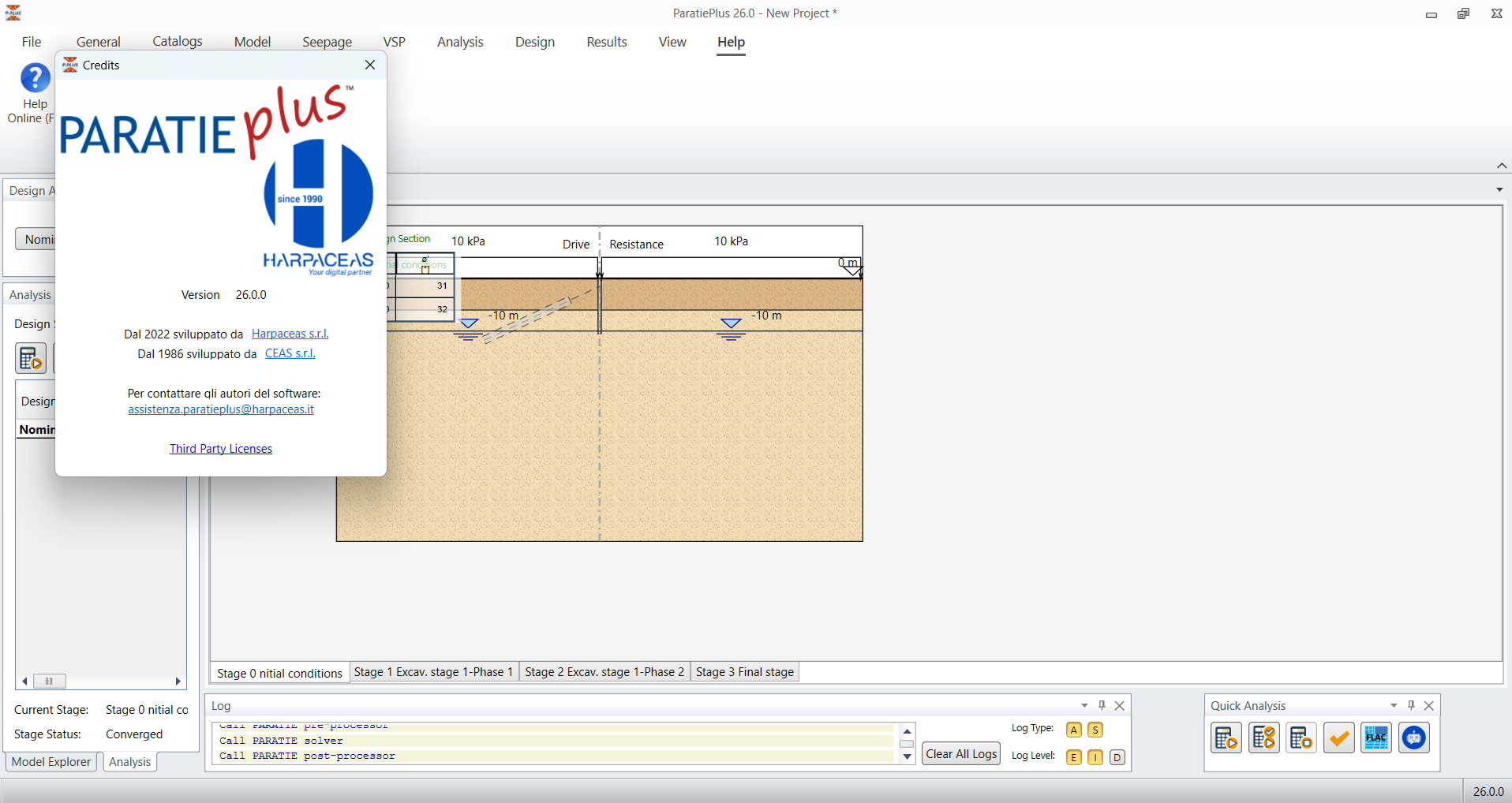
Description
Paratie Plus Software Review: A Practical Solution for Modern Retaining Wall and Structural Design
When engineers and construction professionals work on retaining structures, sheet pile walls, diaphragm walls, and other complex support systems, accurate calculations are only one part of the challenge. The real difficulty is managing soil conditions, structural loads, water pressure, stability checks, and design requirements without wasting time on repetitive manual calculations. This is where Paratie Plus can become a valuable engineering tool.
Designed for professionals involved in geotechnical and structural engineering, Paratie Plus focuses on the analysis and design of retaining structures and excavation support systems. Its purpose is to help engineers evaluate real-world conditions, perform technical calculations, and produce reliable design results in a more organized workflow.
For professionals who regularly deal with excavation pits, retaining walls, sheet piles, anchored structures, and soil-structure interaction, Paratie Plus offers a practical environment for transforming complex engineering problems into manageable design workflows. While the software is specialized rather than aimed at general users, its focused approach can make it particularly useful for engineers who need dependable retaining structure analysis and design support.
Introduction to Paratie Plus
Engineering projects involving excavations and retaining systems often appear straightforward at first. A project may require a simple excavation beside an existing building or a temporary support system for a deep construction site. However, once soil layers, groundwater, surcharge loads, structural elements, and construction stages are considered, the calculations can quickly become complicated.
This is the type of problem that Paratie Plus software is designed to address.
The software is associated with the analysis of retaining structures and geotechnical engineering applications. Depending on the project configuration and available version, users can work with different design parameters and evaluate how a retaining system behaves under different soil and loading conditions.
Instead of relying entirely on spreadsheets and disconnected calculations, engineers can use a dedicated engineering environment to organize project inputs and evaluate design scenarios.
A typical workflow may involve:
- Defining soil and geological parameters
- Establishing excavation geometry
- Entering groundwater conditions
- Applying surcharge and external loads
- Defining structural support elements
- Evaluating stability and structural response
- Reviewing calculated results
- Refining the design when required
This makes Paratie Plus especially relevant for professionals working in geotechnical design, civil engineering, excavation planning, and construction support systems.
Key Features of Paratie Plus
Retaining Structure Analysis
The core purpose of Paratie Plus is the analysis of retaining structures. Engineers can study how retaining systems respond to earth pressure, water pressure, external loads, and construction conditions.
This is important because retaining wall design is rarely based on one simple calculation. A practical design may need to consider:
- Active and passive earth pressures
- Soil stratification
- Groundwater levels
- Excavation depth
- Surcharge loads
- Wall stiffness
- Support or anchoring conditions
- Stability requirements
A specialized program helps bring these considerations into a single engineering workflow.
Support for Complex Excavation Conditions
Deep excavations can be challenging, particularly in urban areas where nearby buildings, roads, and utilities may be affected. Paratie Plus can be useful for evaluating retaining systems in conditions where the designer needs to understand how excavation stages influence the surrounding ground and support structure.
For example, an engineer may need to compare a cantilever wall with an anchored solution. Instead of relying only on theoretical assumptions, different design alternatives can be assessed and reviewed.
Soil and Geological Data Management
Reliable geotechnical design begins with reliable soil information. The software environment allows engineers to work with different soil layers and engineering parameters.
The quality of the final result depends heavily on the input data. Parameters such as cohesion, friction angle, unit weight, and groundwater conditions must be selected carefully based on appropriate geotechnical investigations.
This is one area where experienced users gain the most value from Paratie Plus. The software can perform calculations quickly, but professional judgment remains essential when interpreting soil conditions and selecting design assumptions.
Analysis of Loads and Water Conditions
Water pressure is one of the most important factors in excavation support design. Groundwater can significantly affect lateral pressure and overall wall stability.
Paratie Plus can assist engineers in considering water-related conditions as part of a retaining structure analysis workflow. This is particularly useful for projects involving:
- High groundwater tables
- Excavations near rivers or canals
- Basement construction
- Coastal or saturated soil conditions
- Temporary construction pits
By incorporating these factors into the design process, engineers can better understand the potential impact of changing site conditions.
Construction Stage Evaluation
Many retaining structures do not experience their final loading condition immediately. Excavation occurs in stages, and support systems may be installed progressively.
A design that appears safe in one stage may require additional review during another. For this reason, staged analysis is an important concept in modern excavation engineering.
A practical workflow with Paratie Plus may allow engineers to evaluate how the structure behaves as excavation progresses and as supports are introduced. This provides a more realistic understanding of the construction process than a single final-condition calculation.
Practical Use Cases for Paratie Plus
Deep Excavation Projects
One of the most obvious applications is the design and evaluation of retaining systems for deep excavations.
Consider a basement project in a densely developed urban area. The excavation may be close to existing buildings, roads, or underground utilities. The engineer must consider not only whether the retaining wall remains stable but also how the surrounding ground may respond.
A dedicated retaining wall analysis tool can help engineers compare design alternatives and assess the influence of excavation depth, soil conditions, and support systems.
Sheet Pile Wall Design
Sheet pile walls are commonly used for temporary and permanent applications. They can be found in:
- Waterfront construction
- Road and bridge projects
- Temporary excavation support
- Port development
- Flood protection projects
Paratie Plus can be useful for evaluating the forces acting on these systems and reviewing the required design parameters.
Basement Construction
Modern urban construction often involves multi-level basements. These projects can create significant engineering challenges when the excavation is located close to neighboring properties.
Engineers may use Paratie Plus to analyze retaining wall behavior, groundwater conditions, and excavation stages during the planning and design process.
Temporary Works Engineering
Temporary retaining structures are often designed under demanding time and budget constraints. Engineers need calculations that are efficient but still technically defensible.
Paratie Plus can support temporary works analysis by helping professionals evaluate different support configurations before construction begins.
Geotechnical Design Consultancies
For geotechnical consultants handling multiple projects, a specialized program can improve consistency across design workflows. Instead of rebuilding complex spreadsheet calculations for every project, engineers can use a structured software environment to analyze similar design problems more efficiently.
Performance Analysis and User Experience
The practical value of engineering software is not determined only by the number of features. The most important question is whether the software helps engineers make better decisions with less unnecessary effort.
Paratie Plus is most valuable when used by professionals who already understand the principles of geotechnical and structural engineering. Users familiar with retaining wall design can generally make better use of the software because they understand how to interpret the results and identify unrealistic inputs.
A typical user experience may involve creating a project, defining the soil profile, establishing wall and support parameters, applying loads, and reviewing the calculated output. Once the workflow becomes familiar, repeated project analysis can become considerably more efficient than manual calculations.
Where the Software Can Improve Productivity
Paratie Plus 26 may help reduce:
- Repetitive calculation work
- Manual formula management
- Design comparison time
- Errors caused by disconnected spreadsheets
- Time spent organizing complex project parameters
For an experienced engineer, this can translate into a smoother design process.
However, users should remember that engineering software is not a replacement for site investigation, engineering judgment, or design verification. Poor soil data can still lead to poor results, regardless of the software used.
Pros and Cons of Paratie Plus
Pros
- Specialized for retaining structures and excavation support analysis
- Useful for geotechnical and civil engineering workflows
- Helps organize complex soil and structural parameters
- Can support evaluation of different design conditions
- Useful for deep excavation and temporary works projects
- Reduces dependence on manually constructed calculation spreadsheets
- Suitable for professionals who need focused engineering analysis tools
Cons
- May require geotechnical engineering knowledge to use effectively
- Specialized functionality may be unnecessary for users who do not design retaining structures
- New users may need time to understand the workflow and technical parameters
- Final results depend heavily on the accuracy of soil and project input data
- Pricing and licensing options may vary depending on the distributor or software edition
Pricing and Plans
The pricing structure for Paratie Plus may depend on the edition, licensing model, update policy, and regional availability. Specialized engineering software is often offered through professional licensing arrangements, and the cost can vary based on whether the license is permanent, subscription-based, or connected to additional support and updates.
Before purchasing, potential users should review the available licensing terms and confirm:
- Which features are included
- Whether technical support is provided
- How updates are handled
- Whether the license is perpetual or time-limited
- Whether the software supports the required operating environment
- Whether the selected edition is suitable for professional project work
For engineering companies, the right licensing model should be evaluated based on project frequency and the number of users who need access to the software.
Who Should Use Paratie Plus?
Paratie Plus is most suitable for professionals involved in:
- Geotechnical engineering
- Structural engineering
- Civil engineering
- Retaining wall design
- Excavation support design
- Temporary works engineering
- Construction planning
- Infrastructure development
- Engineering consultancy
It may be less suitable for casual users or professionals who rarely work with soil-retaining structures.
The software is best viewed as a focused engineering solution rather than a general-purpose civil engineering application.
Final Verdict
Paratie Plus offers a specialized approach to retaining structure and excavation support analysis. For engineers working with deep excavations, sheet pile systems, groundwater conditions, soil pressure, and construction-stage design, a dedicated tool can provide meaningful advantages over disconnected manual calculations.
Its biggest strength is its focused purpose. Rather than trying to cover every area of engineering, Paratie Plus is designed around a specific category of challenging geotechnical and structural problems. This makes it particularly relevant to professionals who regularly analyze retaining systems.
The most important benefit comes from combining software capability with engineering expertise. When accurate soil data, realistic loading assumptions, and sound professional judgment are used together, Paratie Plus can help create a more organized and efficient design workflow.




Reviews
There are no reviews yet.