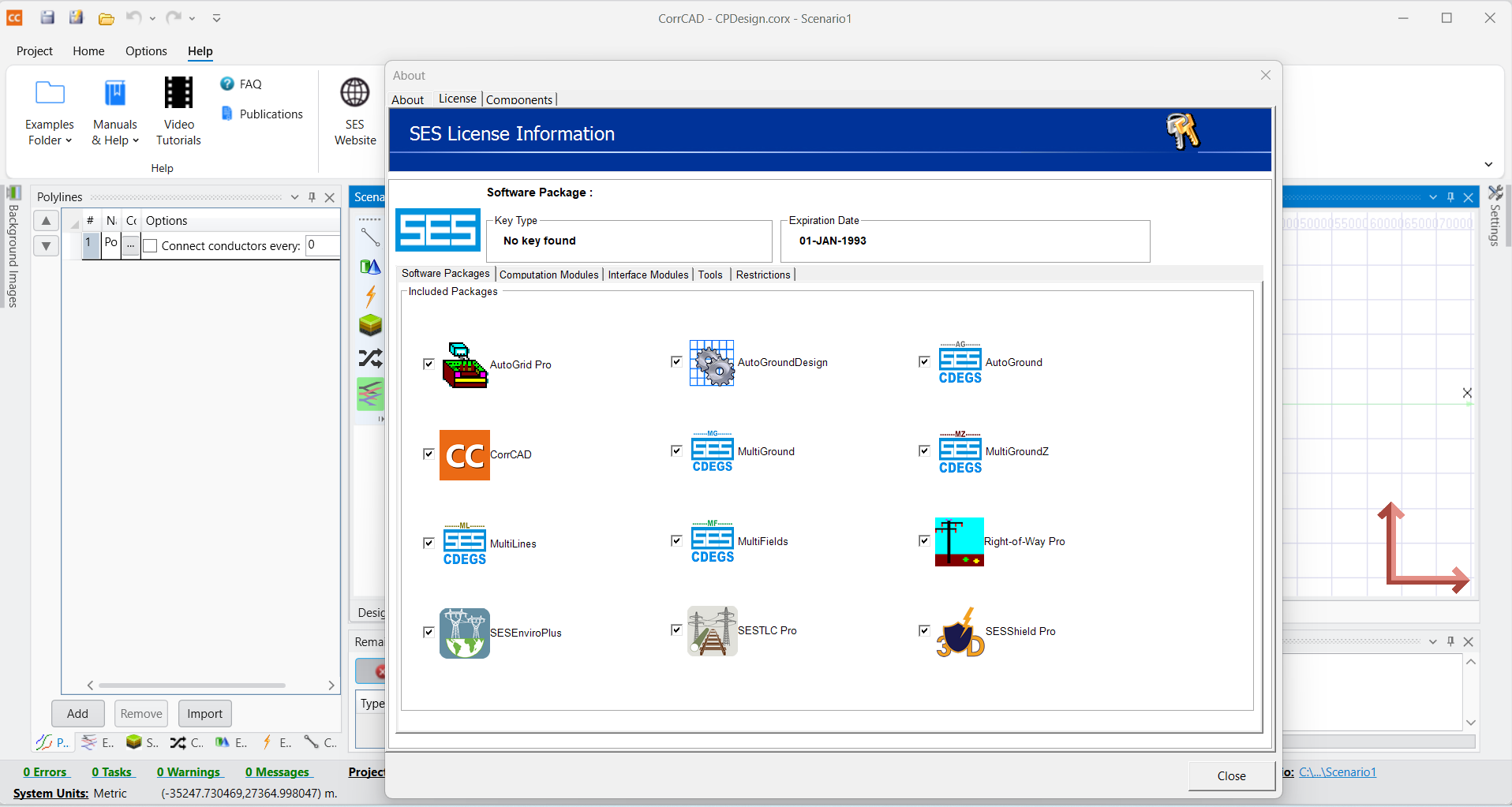
Description
SES CDEGS 20.0.21720 : Advanced Grounding, Electromagnetic Interference, and Power System Analysis Software
SES CDEGS is a powerful engineering software suite designed for professionals who need to analyze grounding systems, electromagnetic interference, power system safety, and complex electrical interactions. Used across electrical engineering, utility design, substations, railways, industrial facilities, and telecommunications, the software provides a comprehensive environment for studying how current flows through the earth and interacts with nearby electrical systems.
What makes SES CDEGS particularly valuable is its ability to handle engineering problems that are difficult to evaluate using basic calculation tools. From grounding grid design and step-and-touch voltage analysis to electromagnetic coupling and interference studies, the platform helps engineers move from theoretical assumptions to detailed, practical analysis.
For professionals working on high-voltage installations, substations, transmission systems, pipelines, rail networks, or industrial electrical infrastructure, CDEGS can become an important part of the design and safety workflow. It is a specialized solution, and its learning curve reflects the complexity of the engineering problems it solves. However, for users who need reliable results and advanced modeling capabilities, SES CDEGS offers a level of depth that simpler electrical calculation software often cannot match.
Introduction
Electrical grounding and electromagnetic interference analysis are critical parts of modern infrastructure design. A grounding system may appear simple on paper, but real-world soil conditions, conductor layouts, fault currents, nearby metallic structures, and power system interactions can create complex safety challenges.
This is where SES CDEGS stands out.
The software suite is built for analyzing electrical systems in the presence of conductive earth, buried conductors, grounding electrodes, overhead lines, pipelines, rail systems, and other interconnected infrastructure. Engineers can model complex environments and study how current distributes through the system.
A typical project may involve a substation grounding grid. An engineer needs to determine whether the grid can safely dissipate fault current while keeping step and touch voltages within acceptable limits. Soil resistivity may vary significantly across the site, and nearby metallic structures may introduce additional risks. Using CDEGS, the engineer can model these conditions and evaluate the behavior of the system before construction.
That ability to investigate potential problems during the design stage can help reduce costly changes later.
What Is SES CDEGS?
SES CDEGS is an engineering software suite focused on grounding system analysis, electromagnetic interference studies, and electrical system interaction modeling.
The platform is commonly associated with complex electrical engineering applications, including:
- Grounding grid design and analysis
- Soil resistivity modeling
- Step and touch voltage evaluation
- Electromagnetic interference studies
- Power system fault analysis
- Pipeline and cable interference assessment
- Railway electrification analysis
- Substation grounding design
- Lightning and transient-related investigations
- Inductive and conductive coupling studies
Rather than being a single-purpose calculator, CDEGS provides a collection of specialized analytical capabilities that can be used for different types of electrical infrastructure projects.
This makes it especially useful for engineering consultants, utilities, industrial organizations, research institutions, and companies involved in high-voltage system design.
Key Features of SES CDEGS
Advanced Grounding System Analysis
One of the strongest capabilities of SES CDEGS software is its grounding analysis functionality.
Engineers can model grounding grids, conductors, rods, electrodes, and other grounding components to study how fault currents are distributed. The software can help evaluate:
- Ground potential rise
- Grounding resistance
- Current distribution
- Step voltage
- Touch voltage
- Surface voltage gradients
- Conductor current behavior
This is particularly important for substations and high-voltage facilities where a grounding fault can create dangerous voltage differences across the ground surface.
Soil Resistivity Modeling
Soil is rarely electrically uniform. A site may contain multiple soil layers with very different resistivity values.
CDEGS allows engineers to work with soil models that better represent real site conditions. This can be valuable when analyzing grounding systems in locations with:
- Layered soil structures
- High-resistivity ground
- Rocky terrain
- Moisture variations
- Complex geological conditions
Accurate soil modeling can significantly influence the reliability of a grounding design.
Step-and-Touch Voltage Evaluation
Safety is one of the primary reasons engineers perform grounding studies.
SES CDEGS can be used to evaluate step and touch voltages around grounding systems. These calculations help engineers understand the potential voltage exposure that may occur during a fault.
For example, a person standing near a substation fence may experience a voltage difference between their feet. Similarly, touching a grounded structure during a fault can create a dangerous potential difference between the hand and feet.
Analyzing these conditions during the design phase gives engineers the opportunity to improve grounding layouts and safety measures.
Electromagnetic Interference Analysis
Modern infrastructure often places different systems close together.
A high-voltage transmission line may run near a pipeline. A railway system may pass close to communication cables. Industrial facilities may contain sensitive control systems near high-current equipment.
These environments can create electromagnetic coupling and interference.
CDEGS provides tools for studying these interactions and evaluating how electrical energy may be transferred between systems through:
- Inductive coupling
- Conductive coupling
- Capacitive effects
- Ground current interactions
This makes the software useful for EMI analysis and electrical interference studies in complex infrastructure environments.
Complex Electrical System Modeling
Professional engineering projects rarely consist of one isolated component.
CDEGS can support the analysis of interconnected systems involving:
- Grounding conductors
- Transmission lines
- Substations
- Pipelines
- Rail systems
- Buried cables
- Metallic structures
- Communication systems
This broader modeling approach can help engineers identify risks that might be overlooked when each system is analyzed separately.
Practical Use Cases
Substation Grounding Design
Substations are one of the most common applications for advanced grounding analysis.
Engineers can model the grounding grid and evaluate its performance under fault conditions. The analysis may help determine whether the design provides sufficient safety for workers and equipment.
A grounding study can help answer questions such as:
- Is the grounding resistance acceptable?
- Where are the highest surface voltage gradients?
- Are step and touch voltages within safe limits?
- How does fault current distribute through the grid?
- Are additional electrodes or conductors required?
This information can support better design decisions before construction begins.
Transmission and Distribution Networks
Transmission lines and distribution infrastructure can create complex electrical interactions with nearby systems.
CDEGS can be used to study grounding behavior and interference associated with towers, substations, pipelines, and other conductive structures.
For large utility projects, this type of analysis can be important for improving system reliability and reducing unexpected interference problems.
Pipeline Interference Studies
Long pipelines can extend for many kilometers and may pass near power lines or electrical facilities.
Induced voltages can create safety and corrosion-related concerns. Engineers can use electromagnetic interference analysis to study how nearby electrical systems may affect pipeline sections.
This type of modeling can assist with:
- Pipeline safety assessments
- AC interference analysis
- Mitigation planning
- Electrical protection studies
Railway Electrification Projects
Railway systems often involve powerful electrical equipment and extensive conductive infrastructure.
Grounding and electromagnetic compatibility can become challenging when railway lines pass near utilities, pipelines, or communication systems.
CDEGS can help engineers evaluate electrical interactions and investigate potential interference problems in railway environments.
Industrial Facilities
Large industrial plants often contain motors, transformers, high-current equipment, control systems, and extensive grounding networks.
A detailed grounding analysis can help engineers assess the behavior of the system during faults and identify potential safety concerns.
For industrial facilities, the software may be particularly valuable during:
- New plant design
- Facility expansion
- Electrical system upgrades
- Grounding system rehabilitation
- Safety investigations
Performance Analysis
From a performance perspective, SES CDEGS is designed for serious engineering workloads rather than casual electrical calculations.
Its strength lies in the depth of its modeling capabilities. When a project includes complex conductor arrangements, multiple soil layers, large grounding networks, or interactions between separate electrical systems, the software provides a structured environment for analyzing those conditions.
The software can be especially valuable when engineers need to compare different design scenarios.
For example, a team may test:
- Different grounding grid configurations
- Alternative conductor layouts
- Changes in soil assumptions
- Different fault current levels
- Additional grounding electrodes
- Various mitigation strategies
This scenario-based approach can help engineers make decisions based on calculated behavior rather than assumptions alone.
However, users should understand that the quality of the results depends heavily on the quality of the input data. Accurate soil measurements, system geometry, conductor information, and fault conditions are essential.
In other words, CDEGS is a powerful analytical tool, but it does not replace engineering judgment.
User Experience and Learning Curve
For experienced electrical engineers, SES CDEGS can provide a highly capable technical environment. The software is built around advanced engineering concepts, so users who already understand grounding systems and electromagnetic analysis will generally find the platform easier to adopt.
New users may need time to understand:
- Soil modeling principles
- Grounding system representation
- Electrical coupling concepts
- Input parameters
- Result interpretation
This is not unusual for specialized engineering software.
The best approach is usually to begin with smaller projects and gradually move toward more complex models. Engineers can first learn how the software represents basic grounding systems before working with large interconnected infrastructure.
The learning curve may be considered a disadvantage for beginners, but it also reflects the professional depth of the platform.
Pros and Cons
Pros
- Advanced grounding system analysis capabilities
- Suitable for complex electrical infrastructure projects
- Supports detailed soil resistivity modeling
- Useful for step and touch voltage studies
- Powerful electromagnetic interference analysis
- Applicable to substations, pipelines, railways, utilities, and industrial systems
- Helps engineers compare multiple design scenarios
- Suitable for professional engineering and research applications
- Supports analysis of interconnected electrical systems
Cons
- May be complex for beginners
- Requires strong electrical engineering knowledge
- Advanced modeling can require accurate project data
- Specialized features may be more than small projects need
- Professional software licensing can be expensive depending on configuration
Pricing and Plans
Pricing for SES CDEGS can vary depending on the licensing arrangement, selected modules, organization type, and project requirements. Specialized engineering software is often offered through professional licensing models rather than simple consumer-style subscriptions.
Organizations should evaluate the specific capabilities they require before selecting a license. A company focused primarily on substation grounding may have different requirements from an engineering consultancy performing pipeline interference and railway studies.
For the most accurate current pricing information, buyers should review the official licensing options available for their intended deployment.
From a value perspective, the cost should be evaluated against the potential benefits of improved design confidence, reduced engineering uncertainty, and earlier identification of grounding or interference problems.
Who Should Use SES CDEGS?
SES CDEGS is best suited to professionals and organizations working with advanced electrical engineering analysis.
It can be a strong choice for:
- Electrical engineers
- Power system consultants
- Utility companies
- Substation designers
- Industrial facility engineers
- Railway infrastructure engineers
- Pipeline operators
- Engineering research teams
- Universities and technical institutions
- Electromagnetic compatibility specialists
It may not be the best choice for someone who only needs simple Ohm’s law calculations, basic circuit analysis, or straightforward electrical design tools.
Final Verdict
Its biggest strength is the ability to model real-world conditions that are often too complicated for basic calculation tools. Grounding grids, soil layers, fault currents, pipelines, railway systems, transmission infrastructure, and nearby conductive structures can all interact in ways that require detailed engineering analysis.
For beginners, the learning curve may feel demanding. However, engineers who take the time to understand the software can gain access to powerful tools for evaluating electrical safety and system behavior.
If your work involves substation grounding, high-voltage systems, pipeline interference, railway electrification, or advanced electromagnetic analysis, SES CDEGS is worth exploring as a professional engineering solution. The software can help transform complex electrical questions into structured analytical studies, giving design teams better information before systems are built or modified.



Reviews
There are no reviews yet.