Description
Cubit Estimating Review: A Practical Construction Estimating Software for Faster, More Accurate Cost Planning
For construction professionals, estimating Cubit Estimating 10.1.2.0 is often where projects are won or lost. A small pricing mistake, missed quantity, or inaccurate material calculation can quickly affect profitability. Cubit Estimating is designed to make this process more efficient by combining digital takeoff, cost estimating, and construction-focused workflows in one platform. Instead of relying on disconnected spreadsheets and manual calculations, estimators can work with structured project data to prepare more consistent and professional estimates.
Whether you are a quantity surveyor, builder, subcontractor, estimator, or construction company, Cubit Estimating offers tools that can help reduce repetitive work and improve control over project costs. Its focus on construction estimating makes it particularly useful for professionals who need to measure quantities, apply rates, calculate costs, and prepare estimates without constantly switching between multiple applications.
In this review, we explore the key features, practical use cases, performance, advantages, limitations, and overall value of Cubit Estimating to help you decide whether it fits your construction estimating workflow.
Introduction
Construction estimating is more than simply adding up materials and labor. A professional estimate requires careful measurement, accurate pricing, waste allowances, subcontractor costs, overheads, and a clear understanding of the project scope.
For many businesses, traditional estimating methods can become difficult to manage. Paper plans, manual calculations, spreadsheets, and separate pricing databases may work for smaller jobs, but they often create unnecessary risks as projects become more complex.
This is where Cubit Estimating software can provide a more organized approach.
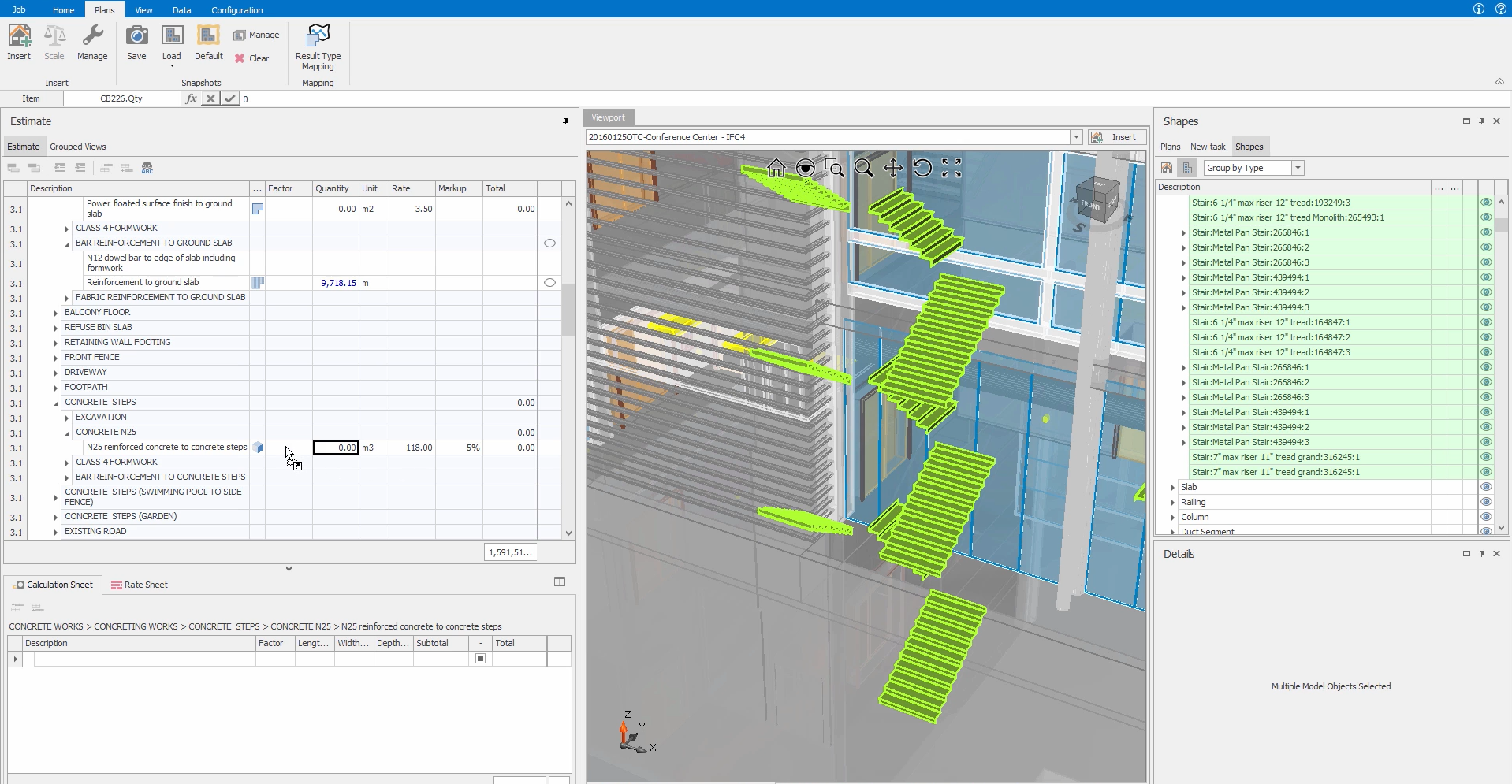
Cubit Estimating is built for construction professionals who need to create detailed estimates from project information. The software supports digital quantity takeoff and cost estimation, allowing users to work with measurements and pricing data in a connected environment.
The result is a workflow that can help estimators move from project plans to a detailed cost estimate more efficiently.
What Is Cubit Estimating?
Cubit Estimating is construction estimating software designed to support quantity takeoff, cost calculation, and project pricing. It is commonly associated with building and construction workflows where accuracy and speed are essential.
Instead of treating measurements and estimating as completely separate tasks, Cubit Estimating helps connect the two. Quantities gathered from plans can be used as the foundation for estimating materials, labor, and other project costs.
For a construction estimator, this can make the process easier to manage. When project information changes, the estimator can update relevant quantities and pricing rather than rebuilding an entire estimate from scratch.
The software can be especially valuable for companies that regularly prepare:
- Residential construction estimates
- Commercial building estimates
- Renovation and remodeling quotes
- Subcontractor pricing
- Material takeoffs
- Labor cost calculations
- Tender and bid documentation
Key Features of Cubit Estimating
Digital Quantity Takeoff
One of the most important parts of construction estimating is measuring quantities correctly. Cubit Estimating helps users organize and calculate quantities required for a project.
Depending on the project workflow, estimators can work with digital drawings and measurement data to calculate items such as:
- Areas
- Lengths
- Counts
- Volumes
- Materials
- Construction components
Digital takeoff can reduce the need for repetitive manual calculations and make the estimating process easier to review.
Construction-Focused Estimating
Cubit Estimating is built specifically around construction estimating requirements. This is an important advantage for users who want software designed for their industry rather than a generic spreadsheet or accounting application.
The estimating workflow can help users organize costs related to:
- Materials
- Labor
- Equipment
- Subcontractors
- Waste
- Overheads
- Markups
This structure makes it easier to understand where project costs are coming from.
Integrated Measurement and Cost Data
A major benefit of dedicated estimating software is the connection between quantities and costs.
For example, an estimator may measure a certain quantity of flooring, concrete, plasterboard, or other construction materials. That measurement can then become part of the estimate, where applicable rates and costs can be applied.
This approach can help reduce errors caused by copying numbers between multiple systems.
Estimate Organization
Large construction estimates can quickly become difficult to manage when hundreds or thousands of individual items are involved.
Cubit Estimating provides tools for organizing estimate information into a structured format. Estimators can work with different cost categories, assemblies, project elements, and pricing information.
A well-organized estimate makes it easier to:
- Review project costs
- Identify expensive components
- Compare different options
- Adjust pricing
- Check quantities
- Prepare client or tender documentation
Reusable Cost Information
Many construction businesses repeatedly use similar materials, labor rates, and construction methods. Re-entering this information for every project can waste valuable time.
A construction estimating system can allow users to reuse commonly required cost information and estimating structures. This can be particularly helpful for businesses that work on similar project types.
For example, a residential builder may regularly estimate kitchens, bathrooms, flooring, roofing, or structural work. Reusable data can help create a more consistent estimating process.
Practical Use Cases
Residential Builders
Residential builders often need to prepare estimates quickly while maintaining accuracy. Cubit Estimating can help organize material quantities, labor requirements, and other costs for new homes, extensions, and renovations.
A builder estimating a home renovation, for example, may need to calculate demolition, framing, plasterboard, flooring, painting, fixtures, and labor. Managing these items in a structured estimating workflow can make the process easier to review.
Commercial Construction
Commercial projects typically involve more complex scopes and larger quantities. Estimators may need to manage multiple trades and extensive cost information.
Cubit Estimating can support a more systematic approach to commercial cost planning by helping users break down the project into manageable estimating categories.
Renovation and Remodeling Companies
Renovation projects can be difficult to estimate because existing conditions may create uncertainty. A professional estimating system can help contractors document expected work and organize costs more clearly.
This is useful when preparing estimates for:
- Kitchen renovations
- Bathroom remodeling
- Extensions
- Interior upgrades
- Structural alterations
Quantity Surveyors and Estimating Professionals
Professional estimators and quantity surveyors often need to handle multiple projects with different levels of detail. A dedicated estimating platform can help create repeatable workflows.
The ability to organize quantities, rates, and costs in a structured environment can be valuable when preparing detailed project estimates.
Subcontractors
Specialist subcontractors can also benefit from construction estimating software. Electrical, plumbing, flooring, roofing, and other trade contractors may use estimating tools to calculate labor and material requirements for specific scopes of work.
Accurate estimating can help subcontractors submit more competitive bids without underestimating the actual cost of completing the work.
A Real-World Estimating Scenario
Imagine a small construction company preparing a quote for a renovation project.
The estimator begins by reviewing the project drawings and scope. Instead of manually writing measurements on paper and then transferring them into a spreadsheet, the estimating workflow is organized digitally.
The estimator calculates the required quantities, assigns costs to materials and labor, adds appropriate overheads and markups, and reviews the total project value.
Later, the client requests a change to the project scope. Rather than manually searching through several spreadsheets, the estimator can update the relevant items and review the impact on the overall estimate.
This type of workflow is where Cubit Estimating software can provide practical value. It does not remove the need for professional judgment, but it can reduce repetitive administrative work and improve visibility into the estimate.
Performance Analysis
The performance of construction estimating software depends on several factors, including project size, hardware, workflow complexity, and the user’s familiarity with the platform.
For day-to-day estimating tasks, Cubit Estimating is designed to provide a structured and professional environment. Its construction-specific focus can make it more practical than general-purpose spreadsheet workflows.
Accuracy
Accuracy is one of the most important factors in estimating. A well-structured digital workflow can help reduce calculation mistakes and improve consistency.
However, software cannot automatically guarantee an accurate estimate. The quality of the final result still depends on:
- Correct project measurements
- Updated cost information
- Proper waste allowances
- Accurate labor assumptions
- Complete project scope
- Professional review
Cubit Estimating should therefore be viewed as a powerful estimating tool rather than a replacement for construction expertise.
Workflow Efficiency
The ability to connect quantity takeoff and cost estimating can help improve productivity. Estimators can spend less time repeating calculations and more time reviewing project costs and making informed decisions.
For businesses that prepare estimates frequently, this time-saving potential can become significant.
Scalability
Small projects may be relatively easy to manage in spreadsheets, but larger projects can become increasingly complicated. A dedicated construction estimating platform can offer better organization as the number of cost items increases.
This makes Cubit Estimating potentially suitable for businesses handling a variety of project sizes.
Pros and Cons of Cubit Estimating
Pros
- Designed specifically for construction estimating
- Supports digital quantity takeoff workflows
- Helps connect quantities with project costs
- Useful for builders, contractors, and estimators
- Can reduce repetitive manual calculations
- Supports detailed project cost organization
- Useful for residential and commercial estimating
- Helps create more consistent estimating processes
Cons
- New users may need time to learn the complete workflow
- Professional estimating software may be more than a small occasional contractor needs
- Accurate results still depend on quality project data
- Pricing and licensing options may vary depending on the edition and current availability
- Users switching from simple spreadsheets may need to adjust their existing workflow
Pricing and Plans
The pricing of Cubit Estimating can depend on the current licensing model, edition, region, and available commercial packages. Construction software providers may offer different purchasing or subscription arrangements based on business requirements.
Because pricing structures can change, potential buyers should evaluate the current licensing terms before making a purchasing decision.
When comparing the cost of Cubit Estimating, it is important to consider more than the initial software price. The potential value can also come from:
- Time saved during estimating
- Reduced calculation errors
- Faster bid preparation
- Improved cost visibility
- Better estimate consistency
- Reduced dependence on manual spreadsheets
For a company that prepares estimates regularly, productivity improvements may justify the investment more easily than for a user who only creates occasional quotes.
Who Should Use Cubit Estimating?
Cubit Estimating may be a good fit for:
- Construction companies
- Builders
- Quantity surveyors
- Professional estimators
- General contractors
- Renovation companies
- Trade subcontractors
- Project cost planners
It may be less suitable for someone who only needs a very basic calculator for occasional small jobs. In that situation, a spreadsheet or simple estimating application may be sufficient.
The real value of Cubit Estimating becomes more apparent when a business needs a repeatable, detailed, and professional estimating process.
Final Verdict
Cubit Estimating is a practical construction estimating solution for professionals who want to improve the way they manage quantity takeoff and project costs. By bringing construction-focused estimating workflows into a more organized digital environment, the software can help reduce repetitive manual work and make estimates easier to review.
Its strongest advantage is its industry-specific approach. Rather than forcing construction professionals to adapt generic software to their needs, Cubit Estimating is designed around the realities of construction cost planning.
For builders, contractors, quantity surveyors, and estimating teams, accurate cost information is essential for protecting profit margins and preparing competitive bids. A well-managed estimating workflow can make a meaningful difference in both daily productivity and long-term business performance.
Overall, Cubit Estimating is worth exploring for construction professionals who want a more structured approach to digital takeoff, material estimating, labor costing, and project pricing. If your current estimating process relies heavily on disconnected spreadsheets and manual calculations, moving toward dedicated construction estimating software could be a valuable step toward greater efficiency and control.
Before choosing any estimating platform, evaluate your project types, team workflow, required integrations, pricing structure, and learning requirements. For businesses that need detailed construction cost estimation and a more professional way to manage project data, Cubit Estimating offers a compelling solution to consider.



Reviews
There are no reviews yet.