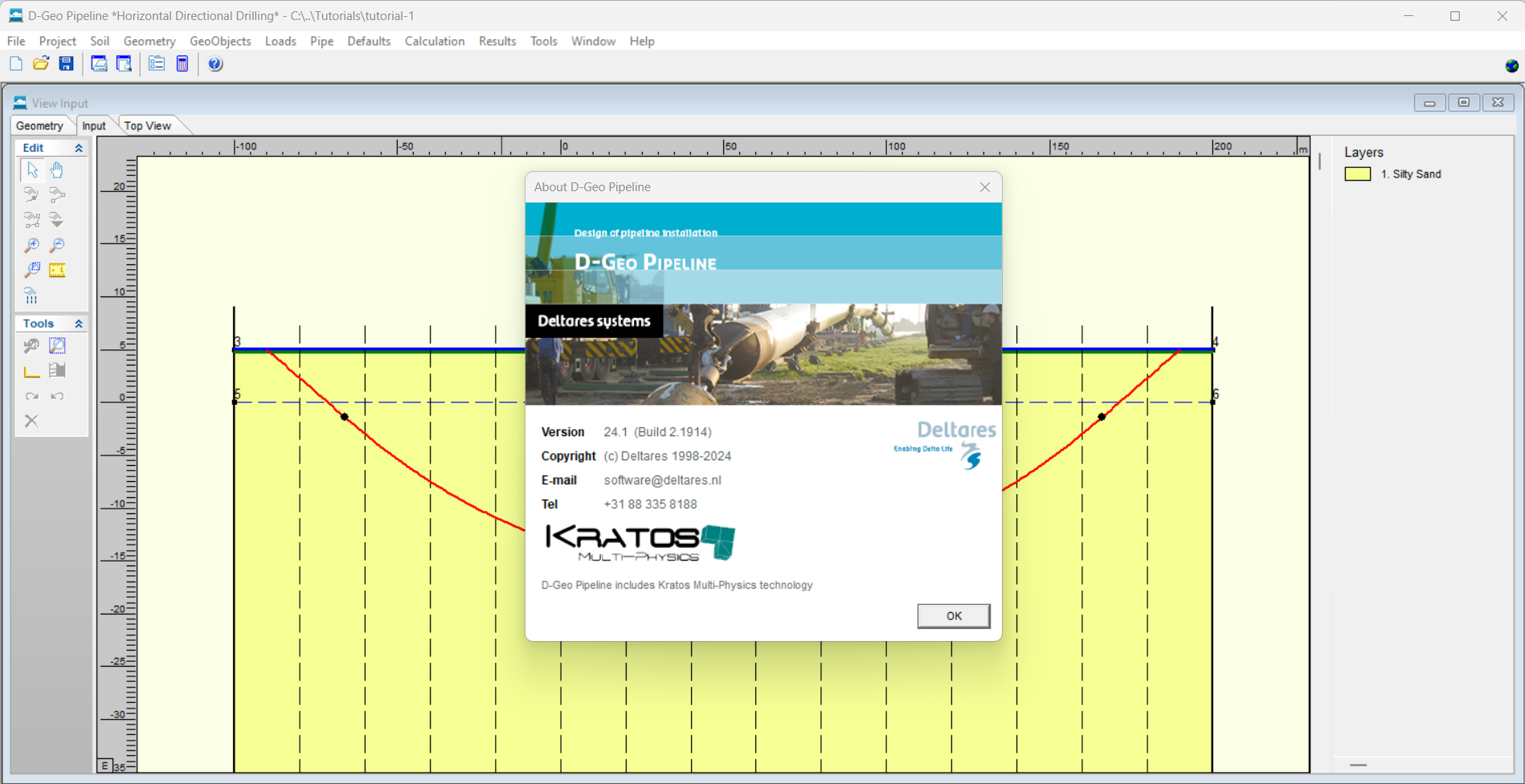
Description
Deltares D-Geo Pipeline Review: Advanced Geotechnical Analysis for Pipelines and Buried Infrastructure
Deltares D-Geo Pipeline is a specialized geotechnical engineering software solution designed to help engineers analyze the interaction between pipelines, soil, and underground construction conditions. Developed for demanding geotechnical workflows, the software supports the assessment of pipeline behavior under various loading and soil conditions, making it a valuable tool for infrastructure, energy, civil engineering, and offshore-related projects.
When a pipeline crosses challenging terrain, passes through soft soil, or is exposed to construction activities, accurately understanding soil-pipeline interaction becomes essential. A small mistake in estimating ground movement or pipeline response can result in expensive repairs, operational disruption, or long-term structural problems. This is where Deltares D-Geo Pipeline provides a more focused approach to geotechnical analysis.
With its engineering-oriented workflow, specialized calculation capabilities, and connection to broader geotechnical design practices, D-Geo Pipeline can help professionals make better-informed decisions during pipeline design and assessment. Whether you are evaluating a new pipeline route or checking the safety of an existing buried pipeline, the software provides a structured environment for analyzing important geotechnical risks.
Introduction
Pipeline engineering often involves much more than selecting the correct pipe material or calculating internal pressure. Underground pipelines are strongly influenced by their surrounding environment. Soil stiffness, settlement, excavation, embankment loading, ground movement, and construction activities can all affect pipeline performance.
For engineers, one of the most difficult challenges is understanding how these forces interact. A pipeline may appear structurally adequate in isolation, but its behavior can change significantly when placed in weak or variable ground conditions.
Deltares DGeo Pipeline is designed to address this type of engineering problem. It focuses on the geotechnical aspects of pipeline behavior, helping users evaluate the effects of soil and ground conditions on buried pipelines and similar infrastructure.
The software is particularly relevant to engineers working on:
- Gas and oil pipelines
- Water and utility pipelines
- Buried infrastructure
- Pipeline crossings
- Ground improvement projects
- Excavation and construction impact assessments
- Settlement and subsidence studies
- Geotechnical risk assessments
Instead of relying only on simplified assumptions, engineers can use specialized modeling approaches to examine how pipeline systems respond to realistic ground conditions.
What Is Deltares D-Geo Pipeline?
Deltares D Geo Pipeline is part of the broader family of specialized geotechnical engineering tools associated with Deltares. Its primary purpose is to support the analysis of pipeline-soil interaction and geotechnical effects affecting pipelines.
The software is intended for professional engineering environments where soil behavior and pipeline response must be evaluated together. This is particularly important for long pipelines because even relatively small ground movements can create significant cumulative effects over long distances.
Depending on the project and analysis requirements, engineers may use the software to investigate conditions such as:
- Differential settlement
- Soil displacement
- Pipeline deformation
- Ground loading
- Excavation effects
- Embankment construction
- Soil improvement
- Pipeline crossings
- Changes in ground profile
- Potential geotechnical hazards
The main advantage of using a dedicated pipeline geotechnical analysis tool is that it allows engineers to focus on the specific interaction between underground infrastructure and surrounding soil.
Key Features of Deltares D-Geo Pipeline
Specialized Pipeline-Soil Interaction Analysis
The most important strength of Deltares D-Geo Pipeline is its focus on pipeline-soil interaction. Rather than treating the pipeline as an isolated structural element, the software considers the influence of the surrounding ground.
This approach can help engineers understand how changes in soil conditions affect pipeline behavior and identify areas that may require additional investigation or mitigation.
Geotechnical Engineering Workflow
The software is designed around engineering calculations and geotechnical assessment workflows. This makes it suitable for professionals who need to evaluate real project conditions rather than simply create theoretical models.
Users can work with relevant soil and ground parameters to assess how different conditions may affect the pipeline.
Analysis of Ground Movement Effects
Ground movement is one of the major risks for buried pipelines. Settlement, lateral movement, subsidence, and construction-related displacement can all produce stress and deformation.
D-Geo Pipeline helps engineers study these types of conditions and evaluate their potential impact on pipeline performance.
Support for Complex Infrastructure Projects
Pipeline projects frequently cross different geological and construction environments. A single route may include soft clay, sand, fill material, embankments, excavations, and areas with varying groundwater conditions.
A specialized geotechnical tool can help engineers assess these conditions more systematically and improve the quality of design decisions.
Engineering-Oriented Results
Professional software is only useful when its results can support engineering decisions. Deltares D-Geo Pipeline is intended to provide results that can be reviewed, interpreted, and used as part of a broader geotechnical design or assessment process.
This can make the software useful for:
- Preliminary design
- Detailed engineering
- Risk assessment
- Design verification
- Technical reporting
- Construction planning
Practical Use Cases
1. New Pipeline Route Design
Before constructing a new pipeline, engineers need to understand the ground conditions along the proposed route.
A pipeline crossing soft or compressible soil may experience settlement over time. By analyzing the relationship between ground movement and pipeline behavior, engineers can identify potential problem areas early in the design process.
This can help support decisions involving:
- Pipeline alignment
- Burial depth
- Ground improvement
- Construction sequencing
- Additional structural protection
2. Pipeline Construction Near Excavations
Excavation work near an existing pipeline can create changes in stress and ground movement. Even when the pipeline itself is not directly excavated, nearby construction may influence the surrounding soil.
Engineers can use geotechnical analysis to evaluate potential effects and determine whether protective measures or monitoring are necessary.
This is particularly relevant for:
- Road construction
- Building foundations
- Tunnels
- Deep excavations
- Underground utilities
3. Settlement and Subsidence Assessment
Long-term settlement is a common concern for buried infrastructure.
When a pipeline passes through areas with soft soil or changing ground conditions, differential settlement can create additional stresses. D-Geo Pipeline can support the assessment of these scenarios and help engineers understand the potential consequences of ground deformation.
4. Pipeline Crossings
Pipelines often cross roads, railways, rivers, canals, embankments, and other infrastructure.
Each crossing introduces different geotechnical challenges. A dedicated analysis workflow can help engineers evaluate the effects of changing soil conditions and construction loads at these critical locations.
5. Infrastructure Risk Management
Existing pipelines may remain in service for decades. During that time, the surrounding environment can change because of new construction, land development, groundwater changes, or natural ground movement.
D-Geo Pipeline can be valuable when engineers need to evaluate whether new conditions could affect the safety or serviceability of an existing pipeline.
A Typical User Experience
Imagine a geotechnical engineer reviewing a pipeline route that crosses an area of soft ground. The initial design looks acceptable, but the soil investigation indicates that settlement may occur after construction.
Without a specialized analysis, the engineer may need to rely on simplified calculations or combine several separate tools. This can make the workflow slower and increase the possibility of inconsistent assumptions.
With a pipeline-focused geotechnical analysis workflow, the engineer can approach the problem more systematically. Soil conditions, ground movement, and pipeline response can be evaluated together, helping the project team identify where additional design measures may be required.
This type of workflow is especially valuable during design reviews. Instead of simply asking whether a pipeline is safe under ideal conditions, engineers can ask more practical questions:
- What happens if the soil settles unevenly?
- Which sections are most sensitive to ground movement?
- Could nearby construction influence the pipeline?
- Is ground improvement necessary?
- Should the pipeline alignment be adjusted?
These questions reflect the real-world value of specialized engineering software.
Performance Analysis
From a professional perspective, the performance of Deltares D-Geo Pipeline depends heavily on the quality of the input data and the engineer’s understanding of the geotechnical problem.
Calculation Efficiency
Specialized software can make repetitive engineering assessments more efficient compared with manual calculations. This is particularly useful when engineers need to evaluate multiple soil conditions or design scenarios.
Engineering Accuracy
The quality of results depends on appropriate soil parameters, pipeline information, boundary conditions, and modeling assumptions. Like any geotechnical software, the tool should not be treated as a replacement for engineering judgment.
Good results require:
- Reliable site investigation data
- Appropriate soil parameters
- Correct pipeline properties
- Suitable calculation assumptions
- Proper interpretation of results
Workflow Value
The software is most valuable when integrated into a wider engineering process. It can support collaboration between geotechnical engineers, pipeline designers, structural engineers, and project managers.
By creating a more focused analysis workflow, it may reduce the need for excessive manual calculations and improve the consistency of technical assessments.
Pros and Cons
Pros
- Specialized for pipeline and geotechnical interaction analysis
- Useful for evaluating ground movement effects
- Supports professional infrastructure engineering workflows
- Suitable for complex soil and construction conditions
- Can improve understanding of pipeline behavior in challenging ground
- Valuable for design assessment and risk evaluation
- Developed for technically demanding geotechnical applications
Cons
- Requires geotechnical engineering knowledge
- Results depend strongly on the quality of input data
- May require training for users unfamiliar with specialized geotechnical software
- Not intended as a general-purpose CAD or structural design application
- The overall workflow may be more advanced than necessary for simple pipeline projects
Pricing and Plans
The pricing structure for Deltares D-Geo Pipeline may depend on licensing arrangements, organization type, version, and purchasing requirements. Professional engineering software is often distributed through commercial licensing models that can vary between individual users, companies, educational institutions, and research organizations.
For businesses considering the software, the best approach is to confirm the current licensing options and compatibility requirements before purchase.
When evaluating the total value of the software, organizations should consider more than the initial license cost. Potential benefits may include:
- Reduced manual calculation time
- Improved design confidence
- Better documentation
- More consistent engineering workflows
- Earlier identification of geotechnical risks
For a professional pipeline or infrastructure team, these advantages can be significant over the lifetime of a project.
Who Should Use Deltares D-Geo Pipeline?
Deltares D-Geo Pipeline is best suited to professionals who regularly work with geotechnical conditions affecting buried pipelines.
Potential users include:
- Geotechnical engineers
- Pipeline design engineers
- Civil engineers
- Infrastructure consultants
- Energy-sector engineering teams
- Construction engineering professionals
- Research organizations
- Technical design offices
It may be less suitable for casual users or professionals who only need basic pipeline calculations. The software provides the most value when the project involves meaningful soil-structure interaction or ground movement concerns.
Deltares D-Geo Pipeline Developer
Final Verdict
Deltares D-Geo Pipeline is a specialized solution for engineers who need to understand how buried pipelines respond to changing ground conditions. Its biggest strength is its focused approach to pipeline-soil interaction, an area that can be difficult to assess accurately using general-purpose engineering tools.
For projects involving settlement, excavation, soil movement, pipeline crossings, or complex geotechnical conditions, the software can provide valuable engineering insight. It can help teams move beyond simplified assumptions and examine the relationship between ground behavior and pipeline performance in a more structured way.
The software is not designed to replace professional judgment, site investigation, or broader engineering analysis. Instead, it works best as a specialized tool within a complete geotechnical and pipeline design workflow.
For engineering firms, infrastructure consultants, and project teams dealing with challenging underground conditions, exploring Deltares D-Geo Pipeline may be a worthwhile step. When used with reliable data and sound engineering expertise, it can help improve analysis quality, support better design decisions, and reduce uncertainty in complex pipeline projects.



Reviews
There are no reviews yet.