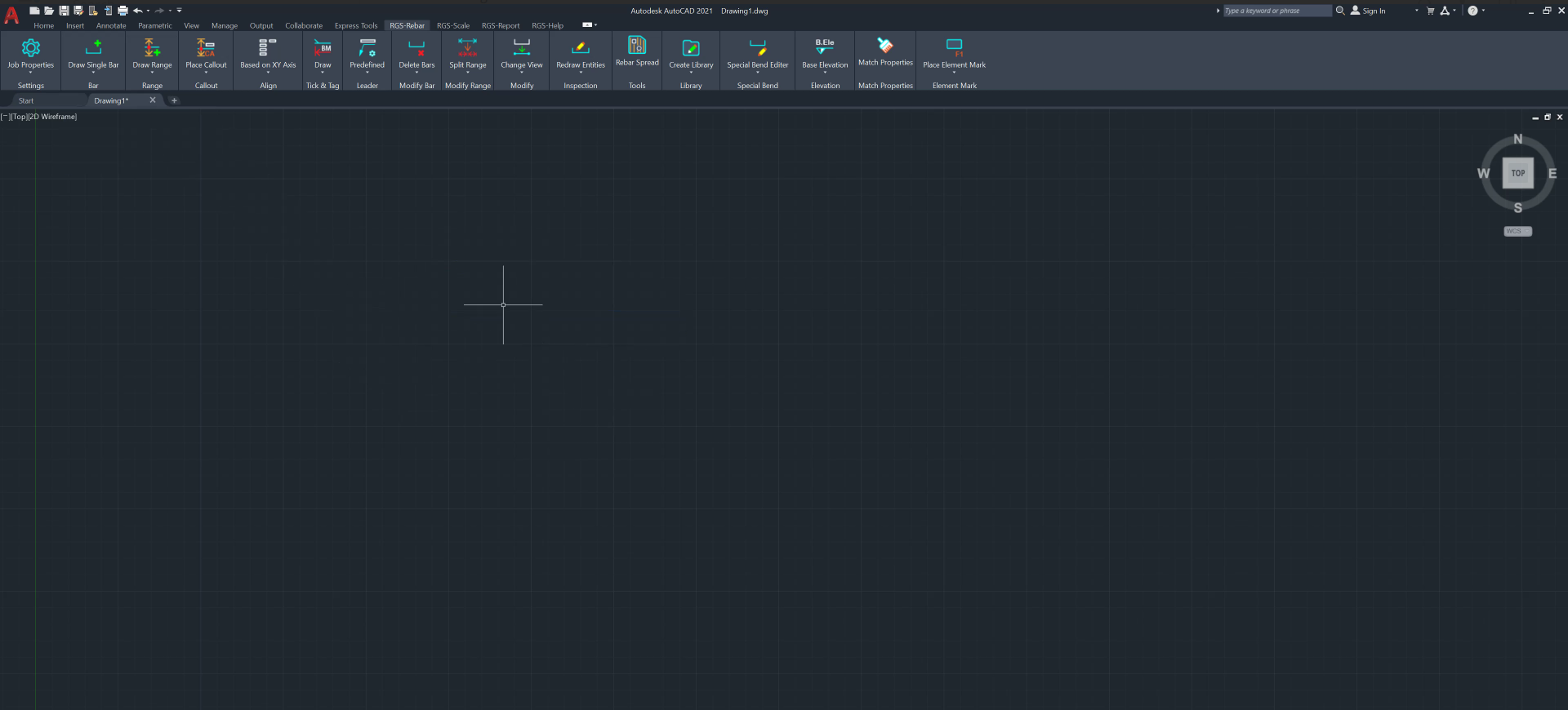
Description
RGS Rebar Detailing Software: Features, Benefits, Uses, Performance, and Pricing
Summary
RGS Rebar Detailing software solution to explore for professionals who need a more organized approach to rebar detailing, reinforcement planning, and construction documentation. In the structural engineering and construction industries, accurate reinforcement information is essential for preparing reliable drawings, coordinating projects, and reducing costly mistakes on-site. Software designed for rebar-related workflows can help teams manage these responsibilities more efficiently by improving documentation, supporting technical accuracy, and simplifying repetitive tasks.
For engineers, rebar detailers, construction professionals, and reinforcement specialists, choosing the right software depends on its compatibility with existing workflows, ease of use, drawing capabilities, and overall value. RGS Rebar is worth evaluating in the context of these practical requirements, particularly for teams looking to improve how they handle reinforcement-related work.
This review examines the software’s potential role in rebar detailing, its practical applications, important evaluation criteria, advantages and limitations, pricing considerations, and suitability for different users. Because verified specifications, current licensing information, and independently documented performance results are not established here, specific features and capabilities should be confirmed before purchasing. The goal is to provide a realistic, useful overview that helps potential buyers make an informed decision.
Introduction to RGS Rebar
Reinforced concrete construction requires careful coordination between structural designs, reinforcement schedules, construction drawings, and on-site installation. Even relatively small errors in bar dimensions, quantities, or placement instructions can lead to delays, additional material costs, and unnecessary rework.
Traditional workflows may involve several disconnected tools, manual calculations, spreadsheets, and repeated drawing revisions. As projects become more complex, maintaining consistency across these documents can become increasingly difficult.
RGS Rebar is a software name relevant to buyers researching digital solutions for reinforcement-related work. Before adopting it, users should establish precisely which tasks the available version supports, whether it is intended for rebar detailing or another specialized workflow, and how it fits into their existing engineering environment.
The main consideration is not simply whether a software package offers advanced tools. It is whether those tools solve real problems for the people who prepare, review, coordinate, and install reinforcement.
A suitable rebar software workflow should help professionals improve information consistency, manage revisions, communicate design intent, and prepare dependable project documentation. These are the practical outcomes buyers should prioritize when evaluating RGS Rebar.
Key Features to Evaluate
The following capabilities are important when assessing RGS Rebar or any comparable reinforcement software. They are evaluation criteria rather than confirmed features of a particular RGS Rebar edition.
1. Rebar Detailing and Drawing Tools
Rebar detailing involves representing reinforcement arrangements clearly enough for fabrication and construction. A capable detailing workflow should support accurate bar representation, dimensions, placement information, and drawing annotations.
When evaluating RGS Rebar, check whether it supports the drawing formats and detailing methods your projects require. Consider whether users can revise reinforcement details without unnecessarily repeating completed work.
Clear detailing can make drawings easier for engineers, fabricators, and site personnel to interpret.
2. Reinforcement Scheduling and Quantity Management
Reinforcement schedules help teams organize bar marks, sizes, lengths, shapes, and quantities. When scheduling information is maintained consistently, project teams can reduce the administrative burden associated with ordering and tracking steel.
Potential buyers should verify whether RGS Rebar includes automated scheduling, quantity calculations, bar lists, or related reporting functions. They should also check how the software handles revisions and whether schedule information remains consistent with the corresponding drawings.
Accurate schedules are particularly valuable on projects with multiple structural elements and frequent design changes.
3. Design Coordination and File Compatibility
Construction projects rarely rely on a single application. Structural engineers, detailers, architects, contractors, and fabricators may use different software packages and document formats.
Compatibility is therefore an important purchasing consideration. Investigate whether RGS Rebar can exchange information with the tools your team already uses, including relevant CAD applications, structural design platforms, and common drawing formats.
Do not assume that a particular integration or export format is available without checking the current product documentation.
4. Revision Management
Reinforcement drawings often change as engineering reviews progress and site conditions become clearer. Revision management helps teams distinguish current information from outdated documents.
When assessing RGS Rebar, examine how it handles drawing updates, revised schedules, and the distribution of updated information. A well-organized revision process can reduce confusion and help prevent construction teams from working from superseded drawings.
5. Reporting and Documentation
Reports support communication between engineering offices, procurement teams, fabricators, and construction sites. Depending on the product’s actual capabilities, useful outputs might include reinforcement schedules, bar lists, quantity summaries, or drawing packages.
Confirm which reports are available, whether they can be customized, and how easily information can be exported for use in other project systems.
6. Ease of Use and Learning Requirements
Even powerful engineering software can create problems if its interface is difficult to learn or its workflow requires extensive manual intervention.
A practical evaluation should consider navigation, command organization, available training resources, error messages, and the time required for new users to complete routine tasks.
For smaller teams, straightforward onboarding may be just as important as advanced technical functionality.
Practical Use Cases for RGS Rebar
The usefulness of rebar software depends on the type of work being performed. The following scenarios illustrate where a suitable reinforcement workflow could provide value.
Residential and Commercial Construction
Residential buildings, offices, and commercial developments require reinforcement information for foundations, columns, beams, slabs, and other structural elements.
A digital detailing workflow can help teams organize reinforcement information and maintain clearer documentation throughout the project. For example, when a beam detail changes during a design review, a coordinated workflow can make it easier to identify which drawings and schedules need updating.
Users considering RGS Rebar should test this type of revision before committing to a license.
Infrastructure and Civil Engineering Projects
Infrastructure projects may involve bridges, retaining walls, drainage structures, culverts, and other reinforced concrete components. These projects can require extensive documentation and close coordination between design and construction teams.
Software suitability depends on whether the product supports the project’s specific detailing requirements, applicable design standards, and expected documentation volume.
Engineers should verify these capabilities against a representative project rather than relying on general software descriptions.
Rebar Fabrication and Material Preparation
Fabricators need reliable information about reinforcement shapes, dimensions, and quantities. Inconsistent schedules can lead to cutting errors, material waste, and production delays.
Where supported, automated bar lists and structured reinforcement data can help organize fabrication activities. Buyers should confirm whether RGS Rebar produces the required fabrication outputs and whether those outputs match the systems used by their suppliers.
Small Engineering Consultancies
Smaller consultancies often operate with limited staff and tight deadlines. Reducing repetitive documentation work can help engineers spend more time reviewing designs and coordinating projects.
However, the financial benefit depends on the software’s purchase price, training requirements, and actual time savings. A trial using a typical project can reveal whether the software is appropriate for a small engineering practice.
Performance Analysis: Accuracy, Efficiency, and Reliability
Software performance should be evaluated through practical results rather than marketing claims. For reinforcement-related applications, the most important factors include calculation accuracy, drawing responsiveness, revision handling, file compatibility, and the time required to complete routine tasks.
Accuracy and Quality Control
Accuracy is critical in reinforcement detailing because incorrect dimensions, bar quantities, or placement information can create costly construction problems. Users should verify how RGS Rebar handles dimensional inputs, quantity calculations, and changes to reinforcement details.
Any automated calculations should be checked against established engineering methods and applicable project requirements. Software output does not replace the professional responsibility of qualified engineers to review and approve technical documentation.
Workflow Efficiency
The potential productivity benefit of rebar software comes from reducing repetitive work and improving information consistency. Automated scheduling, reusable detailing elements, and coordinated documentation can save time when these functions are available and properly configured.
To assess RGS Rebar fairly, complete a representative task using both your existing workflow and the software. Compare preparation time, revision effort, error frequency, and the amount of manual correction required.
Stability and File Handling
Reliable software should perform consistently with the drawing sizes and project complexity a team normally encounters. Users should test file opening, saving, exporting, and revision handling under realistic working conditions.
Compatibility with existing systems is equally important. A tool that works well independently may still create inefficiencies if project information cannot be transferred cleanly between applications.
Overall Performance Assessment
Without verified benchmark results or documented independent testing, it would be premature to assign RGS Rebar a performance rating. A hands-on evaluation is the most dependable way to establish whether its capabilities match your technical and operational needs.
Pros and Cons of RGS Rebar
The following assessment separates potential benefits of a suitable rebar software workflow from considerations that buyers should verify for RGS Rebar specifically.
Potential Advantages
- Improved organization: Digital reinforcement documentation can make project information easier to manage.
- Reduced repetitive work: Supported automation may reduce the effort required for recurring detailing and scheduling tasks.
- Better coordination: Consistent drawings and schedules can help engineering, procurement, fabrication, and construction teams communicate.
- Revision control: An appropriate workflow can make changes easier to track and review.
- Scalable processes: Standardized detailing procedures can help teams maintain consistency as their project workload grows.
- More informed purchasing: Testing the software against actual project requirements can reveal whether it offers meaningful value.
Potential Limitations
- Unverified functionality: Buyers must confirm the available features, integrations, and supported outputs before purchasing.
- Training requirements: New users may need time to learn the interface and establish effective workflows.
- Compatibility concerns: Existing CAD, structural design, or fabrication systems may limit the software’s usefulness if integration is inadequate.
- Licensing costs: The total expense may include training, maintenance, upgrades, or additional user licenses.
- Quality assurance requirements: Automated outputs still require appropriate technical review and verification.
These considerations should be treated as purchasing questions, not as confirmed defects or limitations of RGS Rebar.
Pricing and Plans
The current pricing, licensing structure, and subscription options for RGS Rebar could not be verified for this review. Consequently, it would be misleading to publish an estimated price or claim that a particular free, monthly, annual, or perpetual license is available.
Before purchasing, request a clear breakdown of the following costs:
- Initial license or subscription fees.
- Monthly or annual renewal charges, if applicable.
- Additional user or workstation licenses.
- Training, onboarding, and technical support.
- Software updates, maintenance, and upgrade eligibility.
- Commercial usage rights and any applicable restrictions.
Also determine whether a demonstration or trial is available. A trial can help establish whether the software handles your real project requirements before you commit financially.
For businesses, the most useful pricing comparison considers total ownership cost rather than the initial license fee alone. A more expensive application may offer better value if it reduces measurable project delays and repetitive work. Conversely, a lower-cost product may be sufficient for a small team with straightforward detailing requirements.
Who Should Consider RGS Rebar?
RGS Rebar may be worth investigating if you are searching for software related to reinforcement detailing, rebar documentation, or construction engineering workflows.
It may be relevant to:
- Structural engineers seeking more organized reinforcement documentation.
- Rebar detailers managing drawing preparation and revisions.
- Construction companies reviewing digital tools for reinforcement coordination.
- Fabrication businesses evaluating software for reinforcement schedules and material preparation.
- Engineering consultancies comparing specialized software for project delivery.
However, suitability depends on the product’s verified capabilities. Before selecting it, confirm the intended application, supported operating environment, available documentation, and compatibility with your team’s existing tools.
Tips for Choosing the Right Rebar Software
Selecting reinforcement software is easier when the evaluation follows a consistent process.
First, identify your most frequent tasks. These might include preparing reinforcement drawings, generating schedules, checking quantities, coordinating revisions, or producing fabrication documentation.
Second, establish your technical requirements. Consider applicable design standards, expected project complexity, required file formats, and collaboration needs.
Third, test a representative project. Use a realistic drawing or reinforcement detail to evaluate accuracy, editing speed, export quality, and ease of use.
Fourth, calculate the total cost. Include licensing, training, support, and any necessary changes to your existing workflow.
Finally, evaluate support and documentation. Reliable assistance can be particularly important when introducing specialized software into an established engineering team.
Following these steps helps buyers make decisions based on practical evidence instead of assumptions.
RGS Rebar For Autodesk Autocad Developer
Download RGS Rebar For Autodesk Autocad 2021 Full Version 2026
Final Verdict
Nevertheless, a confident recommendation requires verified information about RGS Rebar’s actual features, supported integrations, licensing terms, and performance. These details should be established before the product is described as a proven solution for a particular engineering workflow.
For potential buyers, the best approach is to identify the tasks that consume the most time, verify that RGS Rebar supports those requirements, and evaluate it using a realistic project. Pay particular attention to drawing accuracy, schedule consistency, revision handling, and compatibility with existing tools.



Reviews
There are no reviews yet.