Description
Autometrix PatternSmith and CadShot 2026: Features, Benefits, Uses, and Pricing
Summary
Autometrix PatternSmith and CadShot are specialized software solutions associated with digital patternmaking, product visualization, and manufacturing workflows for flexible materials. They are relevant to businesses that need to develop accurate patterns, manage customized designs, and improve communication between design and production teams. For manufacturers working with textiles, upholstery, marine covers, automotive interiors, and other fabric-based products, these tools can support a more organized approach to product development.
Autometrix PatternSmith focuses on digital pattern design and preparation, helping users create, modify, and manage patterns for manufacturing. CadShot complements the broader digital workflow by supporting product presentation and visualization tasks, depending on the available configuration and intended application. Together, these tools may help businesses move from design concepts toward clearer product representations and more structured production preparation.
The main advantage of combining pattern development with visualization is improved coordination. Designers can focus on dimensional accuracy and component geometry while using appropriate visualization tools to communicate how a product should look. This can be especially useful for custom manufacturing, where customers often need to approve a design before production begins.
However, the suitability of Autometrix PatternSmith and CadShot depends on the user’s industry, required features, software compatibility, and manufacturing workflow. This review explores their capabilities, practical applications, advantages, limitations, and purchasing considerations.
Introduction to Autometrix PatternSmith and CadShot
Modern manufacturing requires more than a good design idea. Businesses must translate customer requirements into accurate patterns, communicate product details, prepare manufacturing information, and ensure that the finished product matches the intended specifications.
These tasks can become complicated when a company relies on separate manual processes. Measurements may be recorded in different places, patterns may require repeated adjustments, and customers may struggle to visualize the finished product from technical drawings alone.
Autometrix PatternSmith is designed for digital patternmaking workflows involving flexible materials. It helps users develop and modify patterns electronically rather than relying entirely on physical templates. This is valuable when products contain multiple panels, curved edges, custom dimensions, or components that must fit together accurately.
CadShot is associated with the wider design and visualization side of the product workflow. Its usefulness depends on the specific implementation and capabilities available to the user. Before purchasing, businesses should confirm exactly which CadShot functions are included and how they interact with PatternSmith and their existing applications.
Consider a company that manufactures custom boat covers. Each customer may require different dimensions, panel shapes, and fitting arrangements. The designer needs to prepare accurate patterns, while the sales team needs a clear way to communicate the proposed result.
A digital patternmaking workflow can help manage the technical details, while suitable visualization capabilities can support customer communication. When these activities are coordinated effectively, the business can reduce confusion, manage revisions more systematically, and improve the transition from design approval to production.
Key Features of Autometrix PatternSmith and CadShot
1. Digital Pattern Creation and Editing
PatternSmith provides a digital environment for developing and modifying patterns used in flexible-material manufacturing.
Instead of repeatedly creating physical templates, designers can work with digital pattern information and make adjustments as project requirements change. This is particularly useful for manufacturers producing customized products or maintaining a library of reusable designs.
For example, an upholstery workshop may need to produce several cushion sizes using similar construction methods. A digital pattern workflow can help the designer adapt existing patterns to new measurements while preserving a consistent approach to component design.
The exact editing tools and supported operations should be verified for the installed version.
2. Pattern Management for Customized Products
Customized manufacturing often involves frequent revisions. Customers may request different dimensions, additional panels, alternative shapes, or changes to an existing design.
Digital pattern management can make these adjustments easier to organize. Rather than starting over with every new order, designers can use suitable existing patterns as a foundation for new variations.
This can help businesses manage repeat orders and maintain more consistent design information.
Good file organization remains essential. Teams should establish clear naming conventions, revision histories, and approval procedures to avoid using outdated patterns during production.
3. Product Visualization and Design Communication
Visualization is valuable when customers need to understand the appearance or arrangement of a proposed product before manufacturing begins.
CadShot may support visualization-related tasks within the relevant product workflow, but its exact capabilities, supported inputs, and output formats should be confirmed before purchase.
When a suitable visualization process is available, it can help sales representatives explain product concepts, present design alternatives, and communicate requirements more clearly.
For instance, a manufacturer producing customized fabric enclosures may need to show a customer how a proposed design relates to the intended product. A clear visual representation can help identify misunderstandings before materials are cut.
Visualization should not be confused with manufacturing verification. A visually convincing representation does not automatically guarantee that the pattern, dimensions, or construction details are correct.
4. Flexible-Material Manufacturing Support
Flexible materials introduce challenges that are different from rigid-component design. Fabric stretch, material thickness, grain direction, seam allowances, and assembly methods can all affect the final result.
PatternSmith is relevant to industries that rely on accurate digital patterns for flexible materials. This makes it useful to investigate for marine upholstery, technical textiles, automotive interiors, outdoor covers, and similar applications.
Designers must still account for the physical behavior of the chosen material. Digital geometry should be checked against practical manufacturing requirements before production begins.
5. Design-to-Production Workflow
A digital manufacturing process is most effective when information moves smoothly between design, approval, and production.
PatternSmith can support pattern preparation, while compatible visualization and communication tools can help teams review the intended result. Depending on the software configuration, this combination may reduce repeated drafting and improve communication between designers, sales personnel, and production staff.
Before adopting the software, verify supported file formats, compatibility with cutting equipment, and whether additional applications or modules are required.
6. Repeatability and Production Consistency
Manufacturers often need to reproduce similar products over time. A digital pattern library can help preserve design information and reduce dependence on individual employees remembering earlier measurements or construction details.
For a business that produces replacement upholstery or repeat orders for established customers, this can be particularly valuable.
A consistent digital workflow can also support quality control by making it easier to compare new work against approved design information.
The actual benefits depend on the accuracy of the stored patterns and the company’s procedures for reviewing and approving changes.
Practical Use Cases
Marine Covers and Boat Upholstery
Marine products often involve custom measurements and complex contours. Boat covers, protective enclosures, and upholstered seating must fit specific structures and withstand demanding environmental conditions.
PatternSmith can support digital pattern development for these products. Appropriate visualization tools may also help communicate design intentions to customers before manufacturing starts.
This combination is worth considering for marine fabricators handling a high volume of customized orders.
Automotive Interiors
Automotive upholstery and interior components frequently require carefully shaped fabric or synthetic-material panels.
Digital patternmaking can help manufacturers organize component geometry and manage design variations. Visualization can support communication during product development, although final fit and construction must be validated through appropriate testing.
Furniture and Upholstery Manufacturing
Furniture businesses regularly work with cushions, seat covers, backrest panels, and other shaped components.
PatternSmith can help manage digital patterns for recurring furniture designs and custom upholstery orders. A coordinated visualization process can also help customers understand proposed fabric arrangements or product concepts where the available tools support those tasks.
Awnings and Outdoor Fabric Products
Awnings, canopies, shade structures, and protective covers often require custom-shaped panels.
Digital pattern development can help designers organize these components according to project dimensions. Visualization may help explain the proposed appearance and layout to customers.
The finished design must still be checked against the frame geometry, fabric properties, installation conditions, and relevant safety requirements.
Technical Textile Manufacturing
Technical textile manufacturers produce specialized covers, enclosures, protective components, and other products that require repeatable patterns.
A digital pattern workflow can improve organization and support customization. When paired with suitable visualization tools, it may also help engineering and production teams communicate design requirements more effectively.
Performance Analysis
Autometrix PatternSmith and CadShot should be evaluated according to their contribution to design productivity, communication, repeatability, and production preparation.
Design efficiency: Digital pattern creation can reduce repetitive manual drafting. The actual time saved depends on pattern complexity, order volume, and employee experience.
Communication: Suitable visualization workflows can help customers and internal teams understand proposed designs. Their value depends on the available features and the quality of the information being presented.
Production consistency: Reusable digital patterns can help maintain consistency across repeat orders. Reliable results still require accurate measurements, appropriate material allowances, and controlled design revisions.
Workflow integration: The combination may help organize the transition from pattern development to product review and manufacturing. Businesses should verify that the software works with their existing CAD applications, file formats, and cutting equipment.
Learning requirements: Experienced patternmakers may adapt more quickly to digital pattern workflows. New users may need training in software operation, material behavior, and manufacturing procedures.
A practical evaluation should involve a real product rather than a simple demonstration. Test how easily the team can create a pattern, revise its dimensions, communicate the proposed design, and prepare the required production information.
Pros and Cons
Pros
-
- Supports digital patternmaking for flexible-material applications.
-
- Can help reduce repetitive manual template preparation.
-
- Makes customized pattern revisions easier to organize.
-
- Can support more consistent handling of repeat designs.
-
- Visualization-related workflows may improve product communication.
-
- Relevant to marine, upholstery, automotive, and technical textile businesses.
-
- May help coordinate design information with compatible production workflows.
Cons
-
- The suitability of CadShot depends on its specific capabilities and configuration.
-
- Advanced workflows may require technical training.
-
- Equipment and file-format compatibility must be confirmed.
-
- Visualization does not replace physical fit checks or engineering validation.
-
- Licensing and additional software requirements may increase the total cost.
-
- Benefits depend on how effectively the business manages its digital design process.
Pricing and Plans
Pricing for Autometrix PatternSmith and CadShot can vary according to licensing arrangements, product configuration, supported equipment, and the features required by the business.
A reliable current price should be obtained for the specific products and configuration being considered. Avoid assuming that the two products are always bundled together or that every feature is included in a standard license.
Before purchasing, review the following considerations:
-
- Licensing: Confirm the license type, duration, and permitted number of users.
-
- Feature availability: Identify the exact patternmaking and visualization capabilities included.
-
- Compatibility: Verify support for the intended CAD environment, file formats, and manufacturing equipment.
-
- Technical support: Check the availability of training, updates, and assistance with implementation.
-
- Total ownership cost: Include setup, training, hardware, and any additional software required.
Small workshops may prioritize essential patternmaking functions, while larger manufacturers may need a more comprehensive workflow connecting design, visualization, and production.
The best purchasing decision is based on actual manufacturing requirements rather than the number of features listed in a product description.
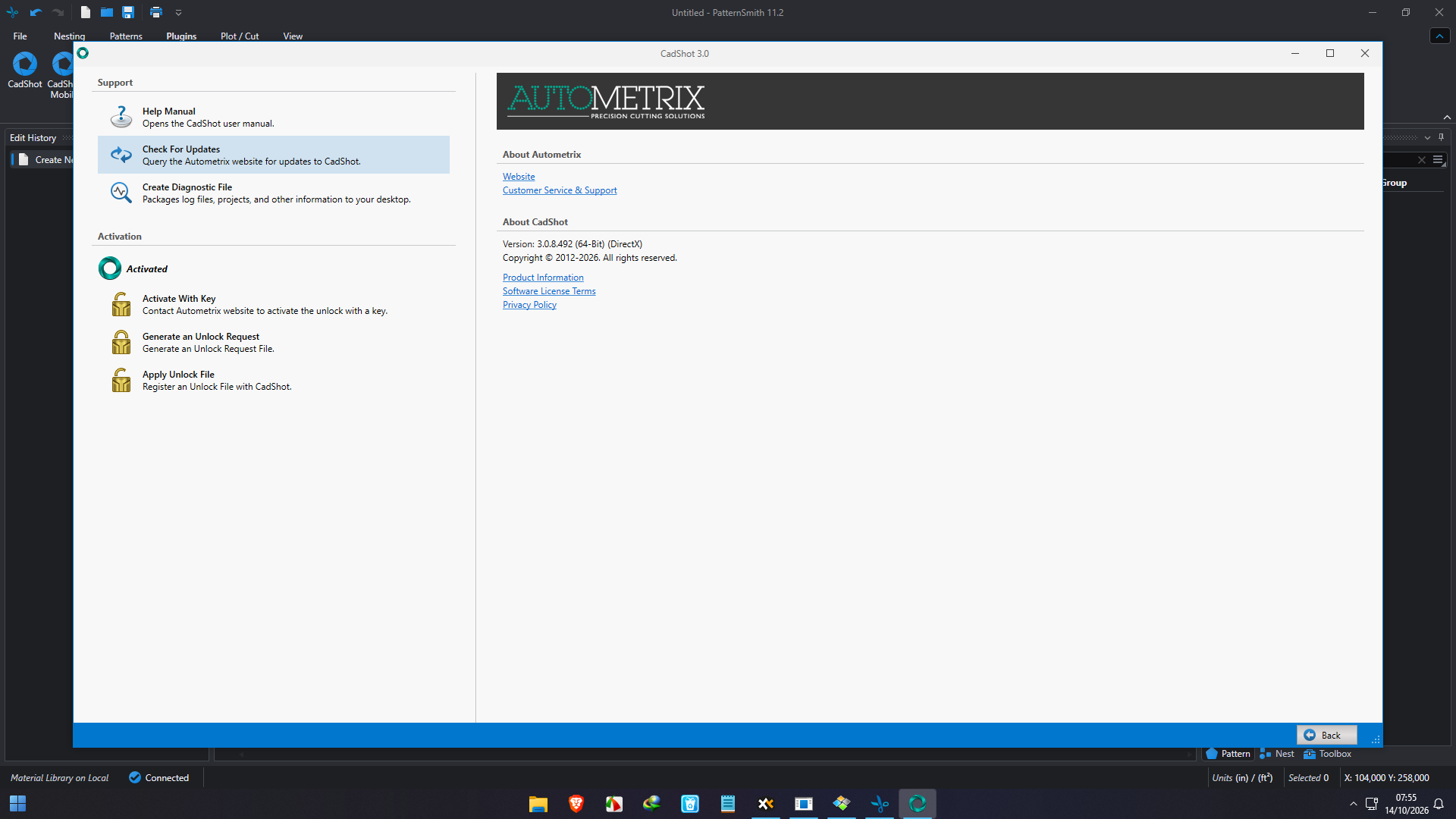
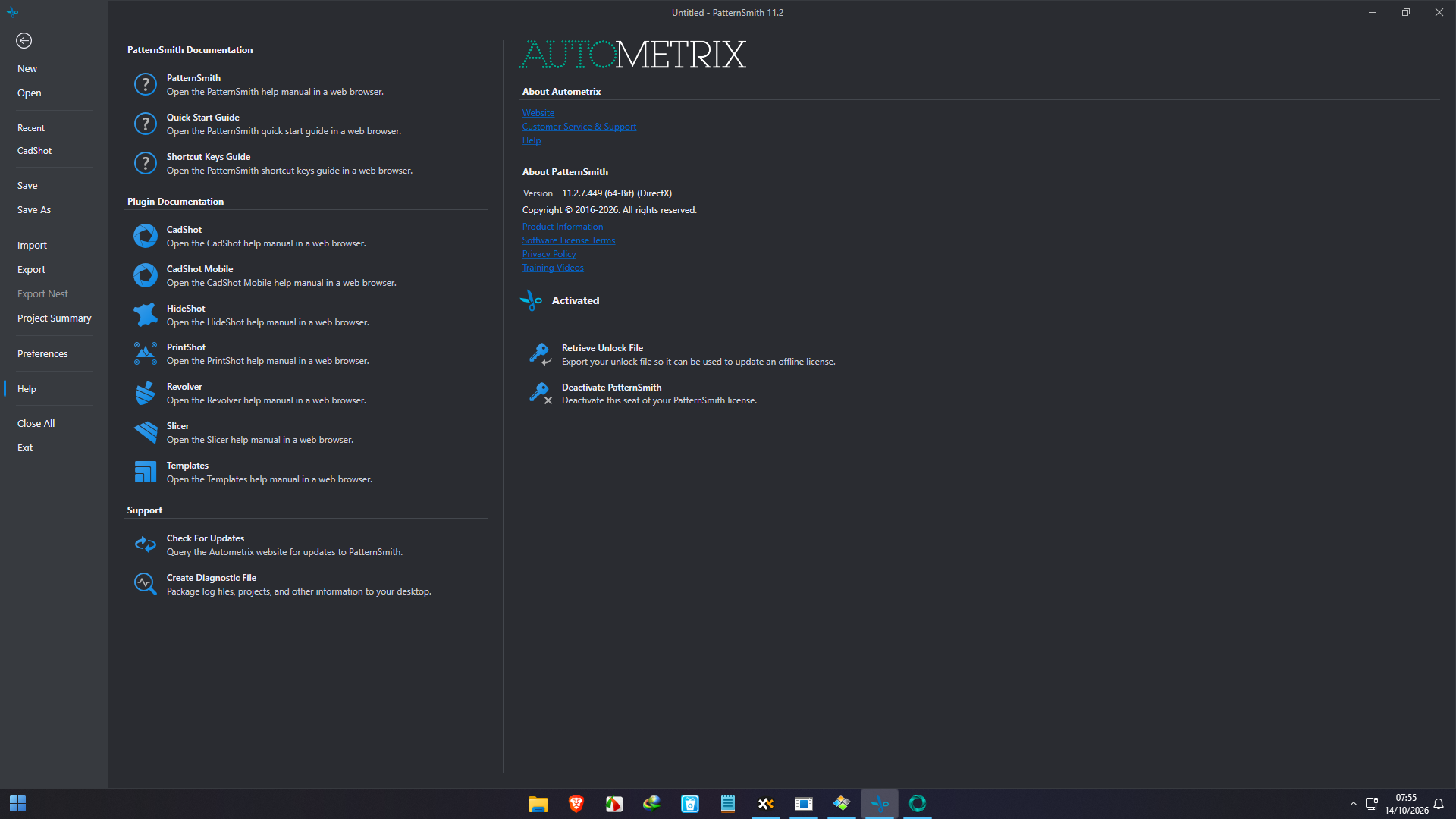
Autometrix PatternSmith 11.2.7.449 + CadShot 3.0.8.492 Download
Autometrix PatternSmith and CadShot Developer
Final Verdict
PatternSmith is particularly relevant to companies that develop custom fabric patterns, manage multiple product variations, or need repeatable design information for production. CadShot may complement this process through its intended visualization-related workflow, provided its specific capabilities match the business’s requirements.
If your business produces marine covers, upholstery, awnings, automotive interior components, or technical textile products, consider testing the relevant software with a representative project. Evaluate pattern accuracy, revision handling, visualization requirements, and compatibility with your existing equipment before committing to a purchase. This practical assessment will help you determine whether Autometrix PatternSmith and CadShot are the right additions to your manufacturing workflow.



Reviews
There are no reviews yet.