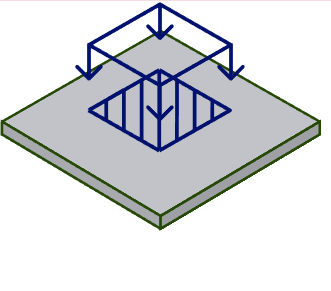
Description
OPTUM CS 3.1.605 Review: Advanced Geotechnical Analysis Software for Modern Civil Engineering
Geotechnical engineering has transformed Download OPTUM CS 3.1.605 dramatically over the past decade, and software tools play a critical role in making precise, reliable calculations faster than ever. OPTUM CS crack download stands out as one of the industry’s most innovative solutions, widely used by civil engineers, geotechnical consultants, and researchers looking for high-accuracy soil–structure interaction modeling. In this in-depth software review, we explore what makes OPTUM CS a game-changer—from its precision finite element analysis to automated limit state design capabilities.
This comprehensive review covers OPTUM CS 3 free download the software’s features, performance, real-world applications, pricing considerations, and pros and cons. If you’re evaluating geotechnical design tools for your workflow, this expert breakdown will help you decide whether OPTUM CS is the right choice.
Introduction
OPTUM CS 2926 cracked latest version (Construction Stage) is a powerful geotechnical engineering platform designed to simulate complex soil behavior, ground deformation, and structural interactions under various construction stages. Built by OptumCE, the software uses advanced numerical methods—especially finite element limit analysis (FELA) and finite element analysis (FEA)—to provide high-accuracy results with significantly reduced computational time.
Today, OPTUM CS is used in:
-
Infrastructure design
-
Deep excavation engineering
-
Retaining structure analysis
-
Foundation and footing stability analysis
-
Embankment modeling
-
Soil–structure interaction studies
Its defining strength lies in its ability to predict behavior under different construction phases, making it ideal for real-world engineering scenarios where stability changes continuously during excavation, loading, or reinforcement.
In a world where regulatory standards keep getting more demanding, software like OPTUM CS offers engineers unmatched confidence and efficiency.
Key Features of OPTUM CS
OPTUM CS provides a combination of intuitive modeling tools and high-level computational engines designed specifically for geotechnical engineering.
1. Advanced Finite Element Limit Analysis (FELA)
One of the most prominent features of OPTUM CS is FELA. Unlike traditional FEA, FELA delivers upper and lower bound solutions, enabling engineers to achieve absolute, mathematically verified stability assessments.
Key benefits include:
-
Faster convergence
-
Greater numerical stability
-
Highly accurate soil failure predictions
Engineers working on slope stability or foundation safety find FELA essential for reliable, code-compliant assessments.
2. Intuitive Construction Stage Modeling
OPTUM CS allows engineers to simulate step-by-step construction sequences, including:
-
Excavation stages
-
Backfilling
-
Dewatering
-
Structural installation
-
Soil reinforcement
This makes it ideal for analyzing real project workflows where stresses evolve over time.
3. Wide Range of Soil and Material Models
The software includes multiple constitutive models, such as:
-
Mohr–Coulomb
-
Modified Cam–Clay
-
Linear elastic
-
Undrained shear models
-
User-defined material behavior
This ensures compatibility with various geotechnical conditions—from stiff clays and granular soils to soft organic layers.
4. Robust Mesh Generation & Adaptation
OPTUM CS uses high-quality automated mesh refinement, which significantly reduces setup time. The adaptive mesh system improves precision by allocating more elements where stress variations are high while maintaining fast computation.
5. Analysis for Slopes, Foundations, and Retaining Structures
The software provides specialized modules for:
-
Slope safety evaluation
-
Bearing capacity and settlement
-
Pile-soil interaction
-
Sheet pile walls
-
Braced excavations
-
Anchored retaining structures
This creates an all-in-one platform for geotechnical and construction engineering.
6. BIM & CAD-Friendly Modeling Interface
The modeling interface supports:
-
Import of geometry from CAD tools
-
Intuitive drawing tools
-
Easy modification of layers, boundaries, and structural components
This ensures a smooth integration into existing engineering workflows.
Practical Use Cases
OPTUM CS is used across multiple engineering disciplines. Below are some real-world scenarios where it adds significant value.
1. Deep Excavation Design
Geotechnical contractors frequently use OPTUM CS to model:
-
Support of excavation
-
Tieback anchors
-
Strut systems
-
Soil–wall interactions
The step-by-step staging ensures engineers can predict potential collapses or excessive deformations during each excavation phase.
2. Foundation & Footing Stability
Whether designing shallow foundations, mat footings, or pile groups, OPTUM CS helps engineers:
-
Calculate bearing capacity
-
Assess settlements
-
Optimize foundation geometry
-
Compare soil improvement strategies
Limit state analysis gives precise safety margins under varied load combinations.
3. Slope Stability Evaluation
Slope stability is one of the most safety-critical geotechnical functions. OPTUM CS offers:
-
Automated upper and lower bound limit analysis
-
High-speed failure surface search
-
Modeling for rock, soil, and mixed terrain
This makes it ideal for road embankments, mining operations, and natural slope assessments.
4. Tunnels & Underground Structures
The software models stress redistribution during tunneling and excavation, helping engineers design safer underground structures with minimal risk of collapse or excessive deformation.
5. Soil Improvement & Ground Reinforcement
OPTUM CS supports modeling of:
-
Geogrids
-
Ground anchors
-
Jet grouting
-
Soil mixing
By simulating material improvements, engineers can optimize both performance and cost.
Performance Analysis
OPTUM CS is widely regarded for its speed and accuracy. The software’s performance stands out in the following areas:
1. High-Speed Computation
Thanks to FELA and optimized solvers, OPTUM CS can deliver high-precision outcomes significantly faster than classic finite element tools.
This makes it extremely useful for iterative design, sensitivity analyses, and alternative scenario modeling.
2. Superior Accuracy
The dual-bound method ensures mathematically verified results, reducing the uncertainty often associated with soil modeling.
Unlike conventional FEA where results must be validated through expert judgment, OPTUM CS provides verifiable upper and lower bounds that engineers can trust.
3. Efficient Workflow
Users appreciate how little manual input is required:
-
Automatic mesh generation
-
Easy stage setup
-
Smart material libraries
This reduces project turnaround time, especially in large-scale or fast-paced construction environments.
4. Reliable for Complex Problems
Many geotechnical engineers and consultants report that OPTUM CS handles advanced problems—such as layered soils, nonlinear material behavior, and staged loading—better than older-generation geotechnical software.
Pros and Cons
Pros
-
Highly accurate limit analysis results
-
Fast computation even with complex geometries
-
Excellent construction-stage modeling
-
Robust library of soil and material models
-
Automatic mesh refinement improves efficiency
-
Ideal for foundations, slopes, and deep excavations
-
User-friendly interface compared to many FEA tools
Cons
-
Requires expert understanding of geotechnical concepts
-
Not ideal for general structural engineering
-
Premium pricing compared to basic soil analysis tools
-
Some advanced modules require additional licensing
Pricing & Plans
OPTUM CS pricing varies depending on:
-
License type (perpetual or subscription)
-
Required modules
-
Number of users
-
Support and maintenance options
The software is positioned in the premium engineering category. While the investment is significant, most users find the cost justified due to the precision, speed, and reliability the platform delivers.
For exact pricing, engineering firms typically request a customized quotation based on their usage needs.
Final Verdict
OPTUM CS 2026 is a powerful, high-accuracy geotechnical analysis software built for modern engineering challenges. Its combination of finite element limit analysis, construction staging capabilities, and comprehensive soil modeling makes it exceptionally reliable for infrastructure, foundation design, excavation planning, and slope safety.
If your work involves complex geotechnical simulations or regulatory-driven analysis, OPTUM CS provides unmatched efficiency and numerical confidence. From consultants to large engineering firms, users consistently praise its precision and performance.
Actionable Conclusion
OPTUM CS is more than a calculation tool—it’s a complete geotechnical modeling ecosystem designed for engineers who demand accuracy, speed, and robustness. If you’re looking to streamline your geotechnical workflows or upgrade from older finite element tools, exploring OPTUM CS is a highly worthwhile step.


Reviews
There are no reviews yet.