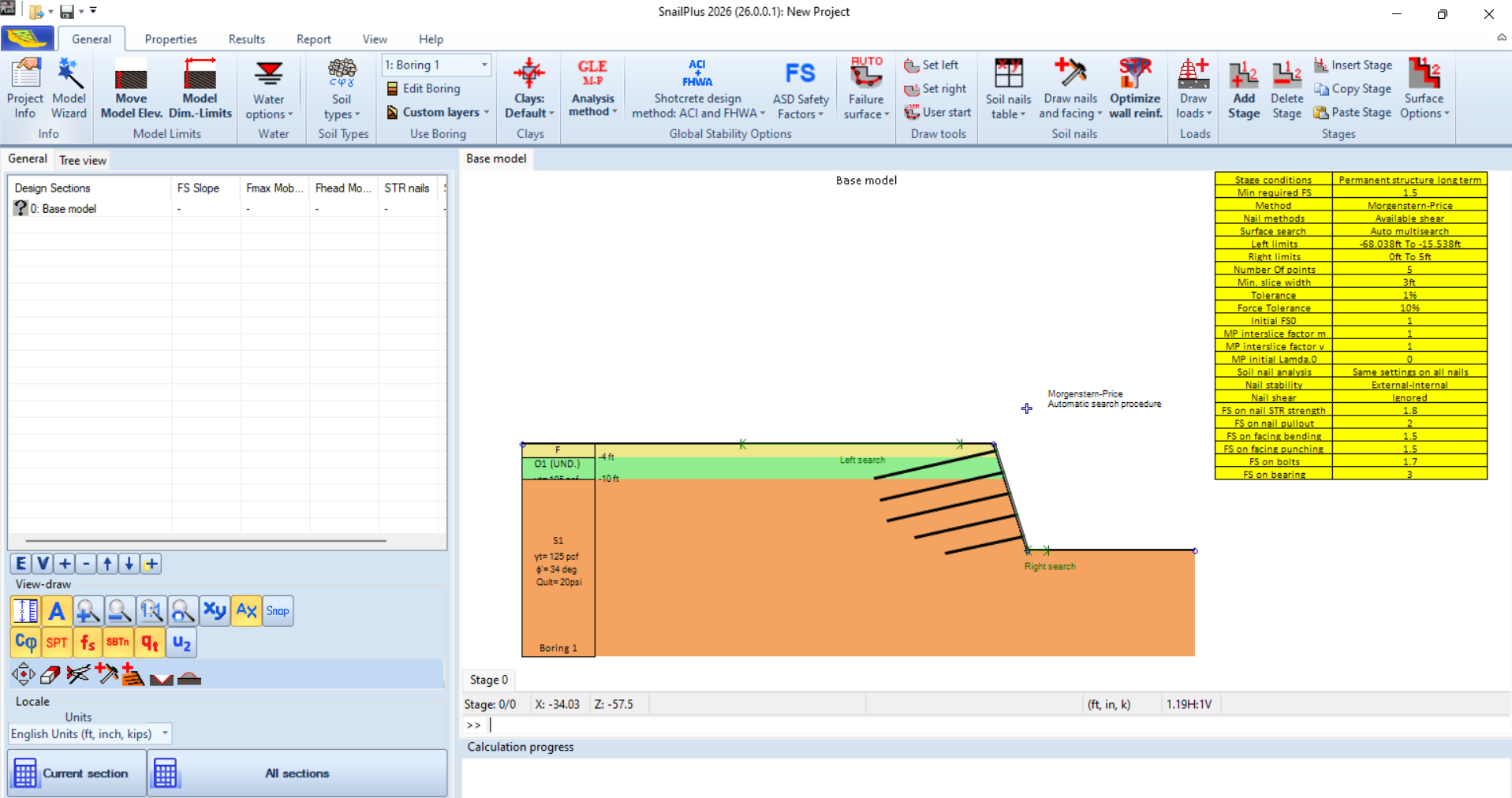
Description
DeepEX SnailPlus 2026: A Practical Solution for Advanced Geotechnical and Excavation Analysis
When excavation projects become more complex, traditional calculation methods can quickly become difficult to manage. Engineers and geotechnical professionals need software that can help them analyze ground conditions, evaluate excavation behavior, and make informed design decisions with greater confidence. This is where DeepEX SnailPlus can become a valuable part of a modern engineering workflow.
Designed for professionals working with deep excavations, soil-structure interaction, retaining systems, and geotechnical design challenges, DeepEX SnailPlus offers a specialized environment for analyzing difficult underground construction scenarios. Its value is especially noticeable when engineers need to move beyond simple calculations and study how excavation stages, support systems, soil behavior, and structural components work together.
For engineering teams that regularly deal with deep excavation design, temporary support systems, complex soil profiles, and construction-stage analysis, DeepEX SnailPlus provides a practical way to organize technical information and evaluate project behavior more efficiently. The software is particularly suitable for users who want a more structured approach to geotechnical modeling and excavation engineering.
Introduction
Deep excavation projects are among the most demanding tasks in geotechnical engineering. A small change in soil conditions, excavation depth, groundwater level, or support configuration can influence the stability and performance of an entire project.
Engineers often need to evaluate questions such as:
- How will the soil respond during excavation?
- Will lateral movement remain within acceptable limits?
- How will a retaining wall behave as excavation progresses?
- What impact will groundwater have on the excavation?
- How will nearby buildings, roads, or utilities be affected?
- Is the selected support system adequate for the planned construction sequence?
These questions require more than basic structural calculations. They require a combination of geotechnical judgment, engineering experience, and reliable analysis tools.
DeepEX SnailPlus is positioned as a specialized software solution for professionals involved in deep excavation and geotechnical analysis. Instead of treating an excavation as a simple static problem, users can work with a more structured analytical approach that considers the interaction between soil, excavation stages, and support systems.
For both experienced engineers and technical teams managing complex excavation projects, the software can help improve organization, reduce repetitive manual work, and support more informed engineering decisions.
What Is DeepEX SnailPlus?
DeepEX SnailPlus is a specialized engineering software solution associated with deep excavation analysis and geotechnical design workflows. Its primary purpose is to help engineers evaluate excavation systems and underground construction conditions through structured modeling and analysis.
The software can be useful when projects involve:
- Deep basement excavations
- Retaining wall systems
- Temporary excavation support
- Braced excavations
- Anchored retaining systems
- Soil and groundwater considerations
- Construction-stage analysis
- Urban excavation near existing structures
One of the most important advantages of specialized geotechnical software is that it gives engineers a central environment for examining project assumptions. Rather than relying on disconnected spreadsheets and manual calculations, a dedicated analysis workflow can make it easier to review project behavior and identify potential design concerns.
Key Features of DeepEX SnailPlus
The exact capabilities available may depend on the specific edition, licensing arrangement, and software version. However, DeepEX SnailPlus is valuable because it supports the broader requirements of modern excavation and geotechnical engineering workflows.
1. Deep Excavation Analysis
The central purpose of the software is to assist with the analysis of deep excavation projects. Engineers can evaluate excavation conditions and investigate how different design assumptions may influence project performance.
This is particularly useful for large basement developments, underground infrastructure, and urban construction where excavation depth and surrounding conditions create additional engineering challenges.
2. Geotechnical Modeling Workflow
A structured modeling environment helps users organize important project parameters such as soil layers, excavation geometry, support systems, and construction stages.
This can make it easier to review:
- Soil profiles
- Excavation depths
- Support arrangements
- Structural elements
- Groundwater assumptions
- Construction sequences
The benefit is not only technical. A well-organized model also makes design reviews easier for project teams.
3. Support System Evaluation
Deep excavation projects often use systems such as retaining walls, struts, anchors, or other forms of temporary support. An important part of engineering analysis is understanding how these systems perform as excavation progresses.
DeepEX SnailPlus can support the evaluation of different support concepts, allowing engineers to study design alternatives and compare possible solutions before construction begins.
4. Construction-Stage Thinking
Excavation rarely happens in one single step. Soil is removed progressively, and support components are usually installed at specific stages.
A staged analysis approach is valuable because it reflects the way construction actually occurs. Engineers can consider how changes in excavation depth influence the overall behavior of the system.
This is particularly important for projects where the excavation sequence directly affects stability and deformation.
5. Technical Reporting and Engineering Documentation
Engineering analysis is only useful when the results can be understood and communicated clearly. Technical documentation is an important part of geotechnical work.
A structured software workflow can help engineers organize analysis results, review assumptions, and prepare information for internal design discussions or project documentation.
Practical Use Cases
Urban Basement Construction
Imagine a construction team planning a multi-level basement in a densely developed city area. The excavation is located near existing buildings, roads, and underground utilities.
In this situation, engineers must think beyond the excavation itself. Ground movement and retaining wall behavior may affect neighboring structures.
DeepEX SnailPlus can be useful in this type of scenario by helping engineers evaluate excavation conditions, support arrangements, and construction stages in a more organized manner.
Retaining Wall Design Studies
Engineers frequently need to compare different retaining solutions. A project may require an anchored wall in one location and a braced system in another.
A specialized analysis workflow allows engineers to investigate alternative designs and determine which option may be more appropriate based on the project requirements.
Deep Excavation Near Existing Structures
Excavating next to an existing building is one of the most sensitive geotechnical situations. Even relatively small ground movements can create concerns for foundations, walls, utilities, and surrounding infrastructure.
Software-based analysis can help engineers identify potential risk areas and understand how excavation and support decisions may influence surrounding conditions.
Temporary Excavation Support
Many construction projects require temporary support systems that must remain stable throughout the excavation process.
By analyzing support arrangements and construction stages, engineers can better understand the expected behavior of the temporary system and make more informed design decisions.
Groundwater-Related Excavation Challenges
Groundwater can significantly complicate excavation projects. Water pressure and soil conditions may affect stability, wall performance, and construction planning.
A comprehensive geotechnical analysis workflow can help engineers include groundwater-related assumptions in their project evaluation and consider the potential effects on excavation behavior.
Performance Analysis
From a practical engineering perspective, the value of DeepEX SnailPlus depends heavily on the complexity of the project and the quality of the input data.
For simple excavation projects, traditional engineering calculations may be sufficient. However, as the number of variables increases, specialized software becomes more useful.
The main performance advantages can include:
- Faster evaluation of design alternatives
- Better organization of engineering inputs
- Reduced dependence on repetitive manual calculations
- Easier comparison of support configurations
- Improved understanding of staged excavation behavior
- More structured project documentation
A major benefit for experienced engineers is the ability to spend less time managing disconnected calculations and more time evaluating the engineering implications of the results.
However, users should remember that software does not replace engineering judgment. The accuracy of any geotechnical analysis depends on the quality of soil data, groundwater assumptions, structural parameters, boundary conditions, and professional interpretation.
User Experience and Learning Curve
For a beginner, specialized geotechnical software may initially feel more complex than general-purpose design tools. Users need to understand both the software workflow and the engineering principles behind excavation analysis.
Professionals who already have experience with:
- Soil mechanics
- Foundation engineering
- Retaining wall design
- Construction staging
- Geotechnical modeling
will generally find it easier to understand the software’s purpose and apply it effectively.
A practical way to learn DeepEX SnailPlus is to begin with a small and familiar project. For example, users can model a basic excavation, review the soil profile, define a support system, and gradually introduce more complex conditions.
This approach helps users understand the relationship between model inputs and engineering results instead of trying to learn every feature at once.
Pros and Cons
Pros
- Specialized for complex excavation and geotechnical engineering workflows
- Useful for evaluating deep excavation conditions
- Supports structured analysis of soil and support systems
- Helpful for studying construction stages
- Can reduce repetitive manual calculations
- Suitable for professional engineering environments
- Useful for comparing design alternatives
- Helps organize complex project information
Cons
- May require geotechnical engineering knowledge to use effectively
- New users may face a learning curve
- Results depend heavily on accurate project inputs
- Specialized software may be unnecessary for very simple excavation projects
- Licensing and available features may vary depending on the edition
Pricing and Plans
Pricing for DeepEX Snail Plus may depend on the specific version, license type, update policy, and purchasing arrangement. Engineering software is often offered through different licensing models, including individual, professional, organizational, or other specialized options.
Because pricing can change over time, potential users should verify the current commercial terms before purchasing.
For engineering companies, the most important consideration should not be the initial price alone. The real value comes from evaluating how much time the software can save, how effectively it supports design analysis, and whether it improves the overall quality of project decision-making.
For professionals regularly working on complex excavation projects, specialized software can provide significant long-term value by reducing repetitive work and improving the consistency of technical analysis.
Who Should Use DeepEX SnailPlus?
DeepEX SnailPlus may be a good fit for:
- Geotechnical engineers
- Structural engineers involved in excavation support
- Foundation design professionals
- Civil engineering consultants
- Construction engineering teams
- Underground infrastructure designers
- Engineering firms working on urban excavation projects
- Students and engineers learning advanced excavation analysis
It may be less suitable for users who only need basic calculations for small and uncomplicated excavations.
DeepEX SnailPlus vs. Manual Engineering Workflows
Many engineers begin projects using spreadsheets, handwritten calculations, and multiple disconnected documents. These methods can work for small tasks, but they become increasingly difficult to manage as projects grow in complexity.
A specialized software workflow offers several advantages:
Manual workflows can be flexible but may require significant repetitive effort.
Dedicated software can provide better organization, repeatability, and easier comparison of design alternatives.
The most effective approach is often a combination of both. Engineering software should support professional judgment rather than replace it. Engineers still need to review assumptions, validate results, and determine whether the analysis accurately represents real site conditions.
Final Verdict
DeepEX SnailPlus is a specialized solution for professionals who need a more organized and analytical approach to deep excavation and geotechnical engineering challenges.
Its greatest value appears in projects where excavation depth, soil conditions, groundwater, support systems, and construction stages all interact. In these situations, a structured software workflow can make the analysis process more manageable and help engineers evaluate different design possibilities with greater confidence.
For professionals working on urban basements, retaining systems, temporary excavation support, and complex underground construction, DeepEX SnailPlus can be a practical addition to the engineering toolkit.
The most important point is that software performance depends on the quality of engineering inputs and the experience of the person using it. When combined with accurate site data and sound geotechnical judgment, a dedicated excavation analysis tool can help improve efficiency, project understanding, and design confidence.
If your work regularly involves deep excavation analysis, soil-structure interaction, retaining systems, or staged underground construction, exploring Deep EX Snail Plus may be a worthwhile step. Start with a manageable project, learn the workflow carefully, and evaluate how effectively the software fits your existing engineering process.


Reviews
There are no reviews yet.