Description
DeepEx RetainEX Review: A Practical Software Solution for Retaining Wall Design and Engineering Workflows
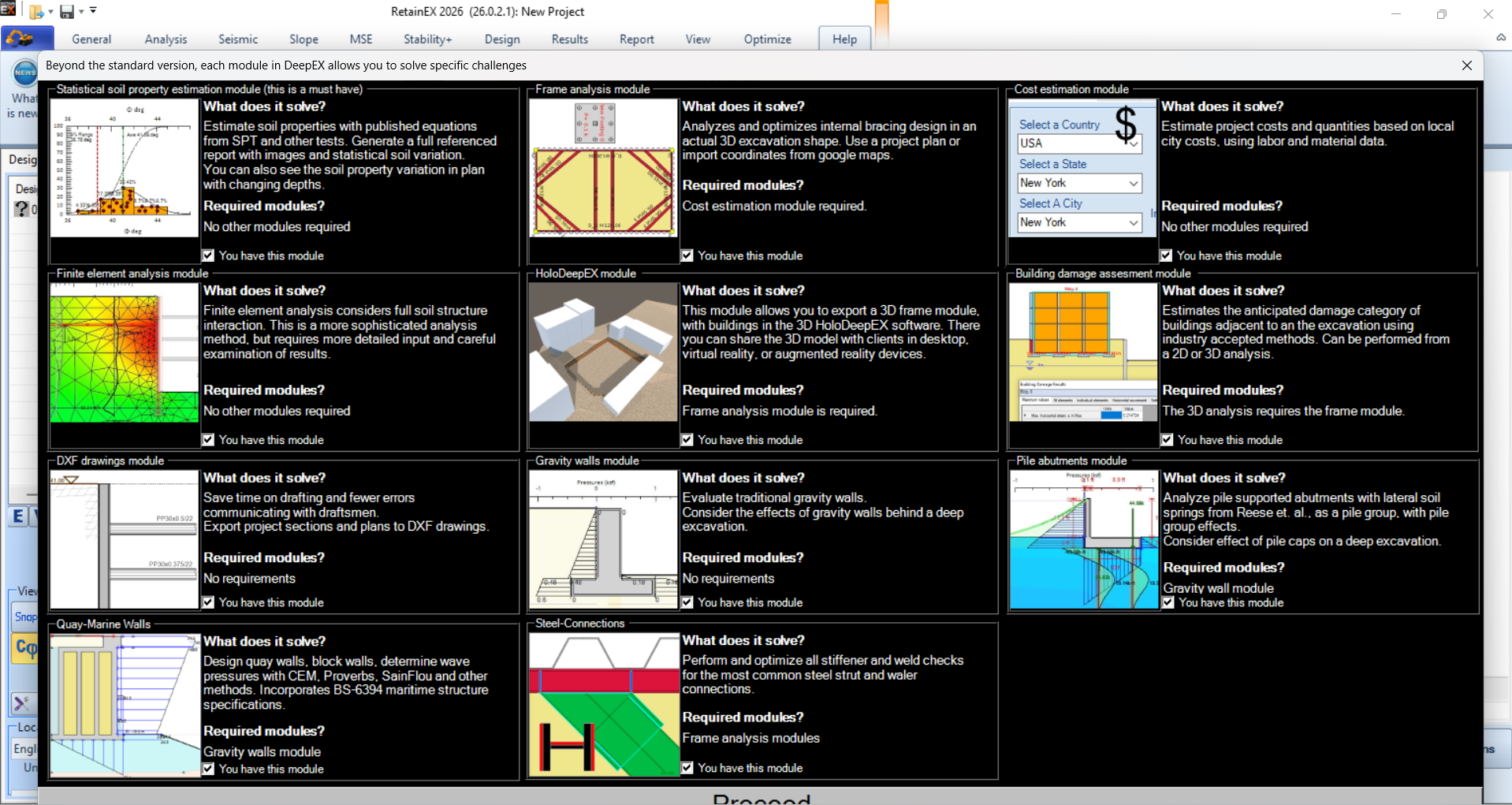
DeepEx RetainEX is a specialized engineering software solution designed to simplify the analysis and design of retaining wall systems. For engineers, structural designers, geotechnical professionals, and construction teams, retaining wall projects often involve complex calculations, multiple design checks, and the need to balance safety, stability, material efficiency, and practical construction requirements. DeepEx RetainEX aims to make this process more organized and efficient by bringing essential retaining wall design tasks into a focused engineering environment.
In real-world projects, the difference between a smooth design workflow and a frustrating one often comes down to how quickly an engineer can test alternatives, identify potential stability problems, and produce reliable results. Instead of relying entirely on repetitive manual calculations and disconnected spreadsheets, specialized software such as DeepEx RetainEX can help professionals evaluate retaining wall conditions more systematically.
This review explores the key features, practical applications, performance, benefits, limitations, and overall value of DeepEx RetainEX for users looking for retaining wall design software and geotechnical engineering tools.
Introduction
Retaining walls are common in infrastructure, residential development, commercial construction, road projects, landscaping, and civil engineering works. Although a retaining wall may appear relatively simple from the outside, its design can involve several important factors, including soil pressure, surcharge loads, groundwater conditions, wall geometry, foundation behavior, and overall stability.
Engineers must typically consider questions such as:
- Will the wall resist sliding?
- Is overturning stability adequate?
- Is the foundation pressure acceptable?
- Can the soil support the proposed structure?
- Are the wall dimensions appropriate for the site conditions?
- Can the design be optimized without compromising safety?
These questions make retaining wall design a technical task where accuracy and efficiency are both important.
DeepEx RetainEX is built for this type of workflow. Its focused approach allows users to work with retaining wall design parameters, review engineering results, and refine proposed solutions. For professionals who regularly handle geotechnical or structural design calculations, a dedicated tool can provide a more convenient alternative to managing every calculation manually.
Key Features of DeepEx RetainEX
The main strength of DeepEx RetainEX is its specialized focus. Rather than trying to serve every possible engineering discipline, the software is intended for retaining wall analysis and design workflows.
Retaining Wall Design Analysis
A primary use of DeepEx RetainEX is evaluating retaining wall configurations based on project-specific parameters. Engineers can work with important design variables and assess how changes influence the overall design.
This is particularly useful during the early design stage, when several possible wall dimensions or loading conditions may need to be compared.
Stability Evaluation
Retaining wall stability is one of the most important aspects of design. A suitable engineering workflow should help users evaluate key stability considerations, such as:
- Sliding resistance
- Overturning behavior
- Foundation bearing conditions
- Soil-related forces
- Applied surcharge effects
- Overall structural response
By bringing these considerations into a dedicated workflow, DeepEx RetainEX can help engineers identify potential issues earlier in the design process.
Efficient Parameter Adjustments
Design is rarely a one-attempt process. A wall may need to be modified because of limited space, different soil conditions, revised loading requirements, or construction constraints.
A useful retaining wall design program should allow engineers to adjust inputs and compare the resulting outcomes efficiently. This iterative process can save considerable time compared with rebuilding manual calculations each time a design parameter changes.
Engineering-Oriented Workflow
DeepEx RetainEX is designed with a technical audience in mind. Its value is not simply in producing numbers, but in helping users organize the design process around engineering parameters and stability checks.
For experienced professionals, this type of focused workflow can make repetitive calculations easier to manage. For less experienced users, it can also provide a structured way to understand how different variables affect retaining wall performance.
Practical Use Cases
Civil Engineering Design Offices
Civil engineering firms frequently work on projects where retaining walls are required for grade changes, road construction, site development, and infrastructure improvements.
An engineer may need to evaluate multiple wall options before selecting a practical solution. DeepEx RetainEX can support this process by helping users examine design alternatives in a more organized manner.
Residential and Commercial Site Development
Retaining walls are common on sloped properties and development sites. A commercial project may require a wall to create usable construction space, while a residential development may use retaining structures to manage changes in elevation.
In these situations, the software can be useful during preliminary design and technical evaluation. Designers can assess different wall configurations before the final design is prepared for construction.
Road and Infrastructure Projects
Roads often pass through uneven terrain, requiring retaining walls to support embankments, protect slopes, or create stable construction corridors.
For infrastructure engineers, the ability to evaluate retaining wall conditions efficiently can be valuable, particularly when projects involve multiple wall sections or changing site conditions.
Geotechnical Engineering Workflows
Geotechnical engineers may use retaining wall analysis tools alongside soil investigation data and broader ground engineering studies.
A typical workflow may involve:
- Reviewing soil parameters.
- Establishing the proposed wall geometry.
- Considering loads and surcharge conditions.
- Evaluating stability requirements.
- Adjusting the design where necessary.
- Reviewing the final engineering results.
DeepEx RetainEX can fit into this type of iterative design process.
A Real-World Design Scenario
Imagine an engineer working on a sloped commercial site. The initial retaining wall concept appears structurally reasonable, but the available space behind the wall is limited. The engineer must find a solution that provides sufficient stability without creating an unnecessarily large structure.
Instead of manually rebuilding calculations for every alternative, the engineer can use a specialized retaining wall analysis workflow to test different configurations. The wall height, geometry, soil assumptions, and loading conditions can be reviewed as part of the design process.
This is where the practical value of software becomes clear. The benefit is not just speed. It is the ability to explore more design options and make better-informed engineering decisions.
Performance Analysis
From a workflow perspective, DeepEx RetainEX is most valuable for users who want a dedicated environment for retaining wall calculations and design evaluation.
Workflow Efficiency
Specialized software can reduce the amount of repetitive work associated with manual calculations. Once the main project parameters are established, engineers can focus more on evaluating design outcomes rather than repeatedly reconstructing calculation sheets.
Design Iteration
One of the strongest benefits of retaining wall design software is the ability to test alternatives. A small change in geometry or loading can affect the final result, so rapid iteration is important.
DeepEx RetainEX can be particularly useful during this stage, where engineers need to compare different approaches before settling on a final concept.
Practical Engineering Review
Software should support engineering judgment rather than replace it. DeepEx RetainEX is best viewed as a calculation and design aid that helps organize analysis and improve efficiency.
Users should still verify input data, review assumptions, apply appropriate design standards, and ensure that final designs are checked by qualified professionals where required.
User Experience
For experienced engineers, the appeal of DeepEx RetainEX is its focused purpose. A specialized tool can be easier to integrate into a professional workflow than a broad platform filled with features that are unrelated to retaining wall design.
A typical user experience may involve defining project conditions, entering soil and loading parameters, reviewing stability results, and refining the design. This type of workflow is familiar to engineering professionals and can help reduce unnecessary complexity.
New users may need time to understand the technical terminology and design assumptions involved. However, anyone familiar with basic retaining wall engineering concepts should find the software’s purpose relatively straightforward.
Pros and Cons
Pros
- Focused specifically on retaining wall analysis and design workflows.
- Helps organize complex engineering calculations.
- Supports iterative design and parameter testing.
- Useful for civil, structural, and geotechnical engineering applications.
- Can reduce reliance on repetitive manual calculations.
- Suitable for evaluating different design alternatives.
- Provides a specialized approach rather than an overly broad engineering environment.
Cons
- Users need a reasonable understanding of retaining wall engineering principles.
- Results depend heavily on the accuracy of the entered soil and project data.
- It may be more specialized than necessary for users who only occasionally design retaining walls.
- Final engineering decisions should not rely on software output alone.
- Availability of specific advanced features may depend on the edition or licensing arrangement.
Pricing & Plans
Pricing and licensing for DeepEx RetainEX may vary depending on the software edition, licensing model, vendor policies, and available purchasing options. Because engineering software pricing can change over time, users should review the current licensing information before making a purchase decision.
For professional users, the most important consideration is often the value delivered through improved workflow efficiency. If the software saves significant time during repeated retaining wall analysis tasks, its practical value can extend beyond the initial purchase price.
When evaluating DeepEx RetainEX, buyers should consider:
- Whether the license fits individual or business use.
- The number of users who require access.
- Available updates and technical support.
- Compatibility with the existing engineering workflow.
- The frequency with which retaining wall projects are handled.
Who Should Use DeepEx RetainEX?
DeepEx RetainEX may be a good fit for:
- Civil engineers.
- Structural engineers involved in retaining structures.
- Geotechnical engineering professionals.
- Construction design consultants.
- Engineering firms handling site development.
- Students and technical learners studying retaining wall design.
- Professionals who want to reduce repetitive manual calculations.
It may be less suitable for users who rarely work with retaining walls or who need a complete, all-in-one civil engineering platform rather than a specialized design tool.
Final Verdict
DeepEx RetainEX is a focused retaining wall design and analysis solution for professionals who need a more structured way to evaluate wall stability and design alternatives. Its greatest advantage is specialization. By concentrating on a specific engineering task, the software can help users organize calculations, test different configurations, and improve the efficiency of their design workflow.
For a civil or geotechnical engineer working on repeated retaining wall projects, this type of dedicated software can be a practical addition to the engineering toolkit. It can help reduce repetitive work while giving professionals more opportunity to compare design options and identify potential issues during the design process.
However, like any engineering software, DeepEx RetainEX should be used responsibly. Accurate project data, appropriate engineering assumptions, applicable design standards, and professional review remain essential.
If your work regularly involves retaining wall analysis, soil pressure evaluation, stability checks, or geotechnical design calculations, exploring DeepEx RetainEX may be worthwhile. A specialized tool can make complex design workflows more manageable and help engineers move from initial concepts to more refined engineering solutions with greater efficiency.



Reviews
There are no reviews yet.