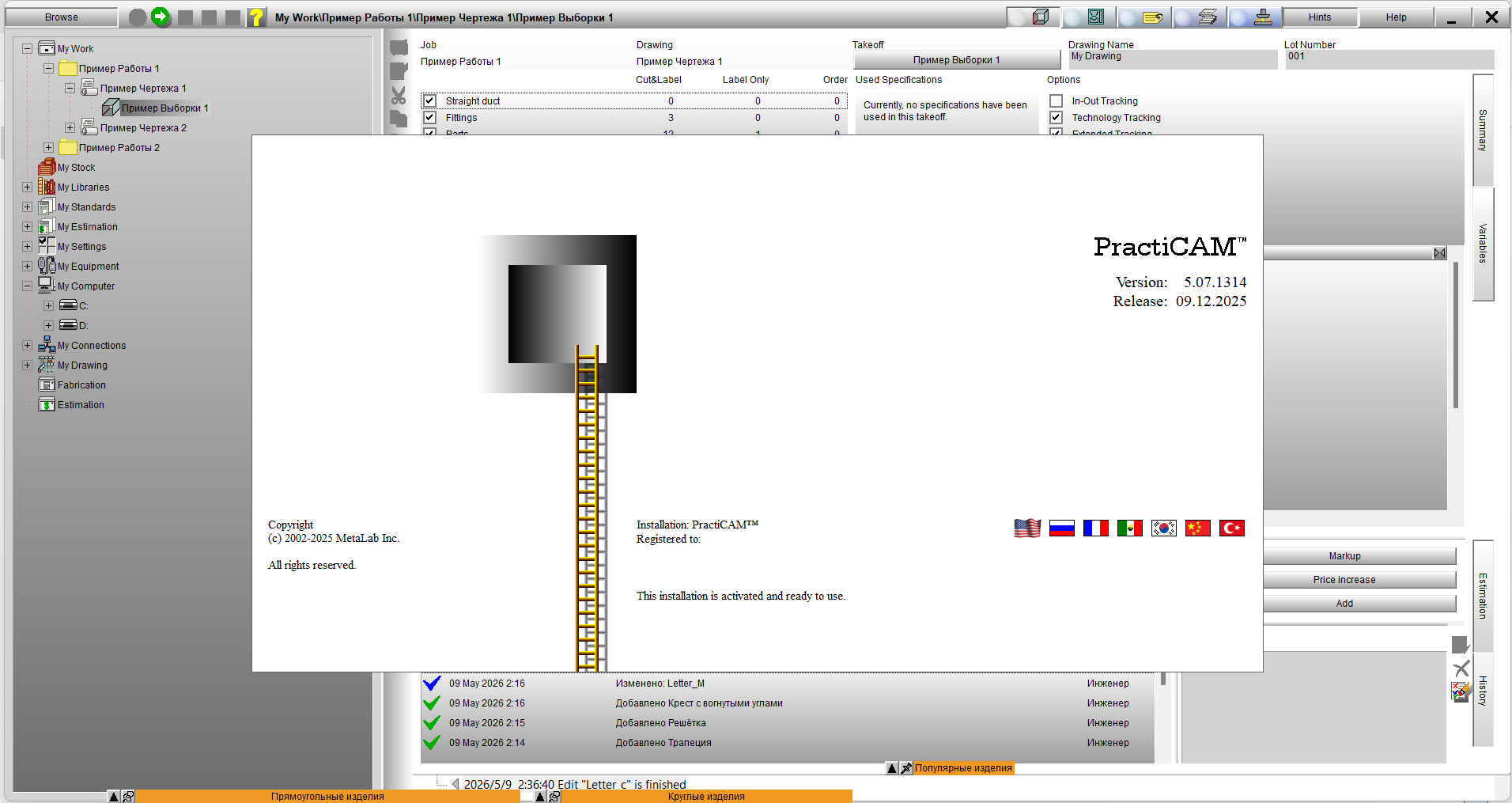
Description
PractiCAM CNC CAM Software Review: Powerful CNC Programming for Modern Manufacturing
For manufacturers, machinists, and CNC professionals, the difference between a good production workflow and a frustrating one often comes down to the software used to prepare and manage machining operations. PractiCAM CNC CAM Software is designed to help businesses transform CAD designs into efficient CNC programs while improving workflow organization, machining accuracy, and production efficiency.
Whether you are working with milling machines, turning centers, routers, or other CNC equipment, PractiCAM CNC CAM Software provides a practical environment for creating toolpaths and preparing machine-ready programs. Its combination of CAD/CAM functionality, CNC programming tools, machining strategies, and production-oriented features makes it a useful option for workshops that want greater control over the manufacturing process.
For small machine shops, engineering departments, educational institutions, and industrial manufacturers, PractiCAM can help reduce repetitive programming tasks and create a more structured connection between digital design and physical production. While the learning curve depends on the complexity of the machining operations involved, users who regularly work with CNC manufacturing can benefit from having design preparation and toolpath generation available within one software environment.
Introduction to PractiCAM CNC CAM Software
CNC manufacturing begins long before a cutting tool touches a workpiece. A designer or engineer creates a model, a machinist studies the geometry, and a programmer develops the toolpaths required to produce the final component. If these steps are disconnected, errors, delays, and unnecessary manual adjustments can quickly appear.
PractiCAM CNC CAM Software is built to support this digital manufacturing workflow. It provides tools for preparing geometry, defining machining operations, selecting cutting strategies, and generating CNC code suitable for compatible machine tools.
In a typical workshop, a user may receive a CAD drawing for a custom mechanical part. Instead of manually calculating every cutting movement, the programmer can use CAM tools to define machining operations and generate a structured toolpath. This can save time and provide greater consistency between similar jobs.
The software is especially relevant for businesses that need practical CNC programming capabilities without relying entirely on separate applications for every stage of the manufacturing process.
Key Features of PractiCAM CNC CAM Software
The exact capabilities available can depend on the specific PractiCAM configuration, edition, and supported machining environment. However, the software is generally recognized for its broad CNC CAD/CAM workflow and manufacturing-focused functionality.
CAD Geometry Preparation
Before a toolpath can be generated, the geometry must be properly prepared. PractiCAM provides tools for working with design geometry and preparing it for CNC machining operations.
Users can work with drawing elements, profiles, shapes, and machining boundaries. This is particularly useful when a design needs minor adjustments before being sent to the CAM programming stage.
For example, a machinist may receive a drawing that requires a small modification to a profile or machining boundary. Having geometry preparation tools available inside the CAM workflow can reduce the need to switch repeatedly between multiple applications.
CNC Toolpath Generation
Toolpath generation is one of the most important functions of any CAM system. PractiCAM CNC CAM Software helps users create machining paths based on the selected operation, material, tool, and machine requirements.
Depending on the machining workflow, users may work with operations such as:
- Profiling and contour machining
- Pocketing
- Drilling
- Facing
- Roughing
- Finishing
- Engraving
- 2D and 3D machining operations
- Turning-related operations in supported configurations
The objective is to convert digital geometry into practical machine movements that can be simulated, reviewed, and post-processed.
Support for CNC Manufacturing Workflows
Different workshops have different production requirements. A job shop may handle a variety of customer parts every day, while a manufacturing company may repeatedly produce similar components.
PractiCAM can help organize machining operations in a way that supports both one-off production and repeat manufacturing. Once a reliable workflow has been developed, similar parts may be programmed more efficiently than starting from scratch each time.
CNC Code and Post-Processing
A CAM system must ultimately communicate with CNC equipment. PractiCAM supports the generation of machine-specific CNC programs through post-processing workflows.
Post-processors are important because CNC machines can use different control systems and programming formats. A correctly configured post-processor helps translate the CAM toolpath into code that is appropriate for the target machine.
This is an area where professional setup is important. Users should verify that the selected post-processor matches their machine and controller before running production work.
Tool and Machining Parameter Management
Cutting tools, feeds, speeds, depths of cut, and other parameters have a major impact on machining performance. A CAM system becomes much more useful when programmers can define and manage these details in an organized way.
PractiCAM supports the process of configuring machining parameters so that users can create more consistent CNC programs. Experienced machinists can adjust settings based on material, tooling, machine capabilities, and the desired surface finish.
Simulation and Toolpath Verification
A toolpath that looks correct on screen may still contain problems if it has not been properly reviewed. Simulation and verification tools can help users identify potential issues before production begins.
A programmer may use simulation to check:
- Tool movement
- Cutting sequence
- Material removal
- Possible collisions
- Excessive movements
- Unnecessary machining passes
This can be particularly valuable for expensive materials or complex components where a programming error could lead to wasted material or damaged tooling.
Practical Use Cases for PractiCAM CNC CAM Software
One of the strongest advantages of CNC CAM software is its ability to support different types of manufacturing environments.
Small CNC Machine Shops
A small machine shop may not have a large engineering team or dedicated CNC programming department. In this environment, the same person may handle customer drawings, programming, machine setup, and production.
PractiCAM can help consolidate important programming tasks into a single CAM workflow. This may reduce manual calculations and make it easier to move from design geometry to CNC production.
Custom Part Manufacturing
Job shops often produce parts that are different from one order to the next. This creates constant pressure to program new components quickly.
For custom manufacturing, PractiCAM CNC CAM Software can help programmers create toolpaths for individual components while maintaining control over machining operations and machine output.
Prototyping and Product Development
Engineers and product developers frequently need prototypes before committing to large-scale manufacturing. CAM software can help transform prototype designs into physical parts more efficiently.
For example, a product development team may design a custom enclosure, bracket, mechanical component, or industrial fixture. PractiCAM can support the transition from digital design to CNC machining, allowing the team to test physical versions of the product.
Educational and Training Environments
CNC programming is a valuable skill for students and new machinists. A CAM system can provide an opportunity to learn how digital geometry, machining operations, tooling, and CNC code are connected.
PractiCAM may be useful in training environments where students need practical exposure to CAD/CAM workflows and CNC programming concepts.
Repetitive Production Work
When a company produces similar components repeatedly, efficient programming becomes extremely important. A well-organized CAM workflow can help reduce preparation time and improve consistency between production runs.
Experienced users can develop repeatable machining processes and refine parameters over time, helping improve production efficiency.
Performance Analysis: How Does PractiCAM Perform?
The performance of PractiCAM CNC CAM Software depends on several factors, including the complexity of the design, the selected machining strategy, computer hardware, machine configuration, and the user’s experience.
For standard CNC programming tasks, the software provides a practical environment for creating machining operations and preparing CNC output. Its value is especially noticeable when users need a structured workflow rather than relying on manual programming for every job.
Workflow Efficiency
The biggest performance advantage is workflow organization. Instead of manually calculating every movement, users can create machining strategies based on the design geometry and selected parameters.
This can reduce repetitive work and allow CNC programmers to spend more time reviewing machining quality and less time performing routine calculations.
Accuracy and Consistency
CAM software can improve consistency by applying defined machining strategies and parameters. This is particularly useful for repeat jobs where maintaining similar results is important.
However, software alone does not guarantee perfect machining. Proper tool selection, machine calibration, workholding, material knowledge, and verification remain essential.
Learning Curve
New users should expect to spend time learning the interface, machining concepts, toolpath strategies, and post-processing workflow.
Users with previous CAD/CAM or CNC programming experience will generally find it easier to understand the logic behind the software. Beginners may need training and hands-on practice before confidently programming complex components.
User Experience and Real-World Workflow
A common experience in CNC manufacturing is the pressure to complete jobs quickly. A customer may send a drawing in the morning and expect a finished component shortly afterward.
In this situation, a CAM system can make a major difference. Instead of manually creating every CNC movement, the programmer can prepare geometry, select machining operations, define tools, review the toolpath, and generate machine code through a more organized workflow.
The practical benefit is not simply speed. A structured process can also make programming easier to review and repeat.
For an experienced machinist, the software can function as a productivity tool. For a new programmer, it can provide a visual connection between the part design and the machine operation.
Pros and Cons of PractiCAM CNC CAM Software
Pros
- Supports a complete CNC CAD/CAM programming workflow
- Helps automate toolpath generation
- Useful for custom manufacturing and job shops
- Can support different machining operations and production requirements
- Helps reduce repetitive manual CNC programming
- Provides tools for preparing geometry and machining data
- Supports machine-specific CNC output through post-processing
- Useful for prototyping, production, and training environments
- Can improve workflow consistency when properly configured
Cons
- New users may face a learning curve
- Advanced CNC programming requires technical knowledge
- Proper post-processor configuration is essential
- Features and capabilities may vary depending on the selected edition
- Users must still verify toolpaths and machine programs before production
- Professional training may be beneficial for complex manufacturing workflows
Pricing and Plans
PractiCAM CNC CAM Software pricing can vary depending on the specific version, module configuration, licensing model, and manufacturing requirements. CAM software is often offered in different configurations based on supported machining processes and required functionality.
For businesses considering PractiCAM, the most important factors to evaluate include:
- Required CNC machining operations
- Number of users
- Supported machine controllers
- Post-processor requirements
- Training and technical support
- Updates and licensing terms
Because pricing structures and product configurations can change, potential buyers should evaluate the current offering based on their specific CNC programming needs rather than choosing software solely by price.
For a professional machine shop, the return on investment may come from reduced programming time, fewer avoidable errors, better production consistency, and improved workflow efficiency.
Who Should Use PractiCAM CNC CAM Software?
PractiCAM may be a good choice for:
- CNC machine shops
- Manufacturing companies
- Mechanical engineering departments
- Custom part manufacturers
- Prototype developers
- CNC programmers
- Educational institutions
- Industrial production teams
It may be less suitable for users who only need extremely basic design software or those looking for a simple beginner-only application without advanced manufacturing concepts.
PractiCAM CNC CAM Software Developer
PractiCAM CNC CAM Software 5.07.1314
Final Verdict: Is PractiCAM CNC CAM Software Worth Considering?
PractiCAM CNC CAM 5.07 is a practical solution for businesses and professionals who need a structured way to move from digital design to CNC manufacturing. Its focus on geometry preparation, machining operations, toolpath creation, CNC programming, and post-processing makes it a useful tool for a wide range of manufacturing workflows.
The software is particularly valuable in environments where programming efficiency and repeatable results matter. Small machine shops can benefit from a more organized workflow, while larger manufacturing teams may use it as part of a broader CNC production process.
Like any professional CAM platform, PractiCAM requires users to understand machining principles. The best results come from combining the software with proper tooling knowledge, machine experience, careful simulation, and responsible program verification.
Overall, PractiCAM CNC CAM Software is worth exploring for CNC professionals and manufacturing businesses looking for capable CAM programming tools. If your workflow involves converting CAD geometry into reliable CNC machining operations, evaluating PractiCAM against your machine requirements and production goals can be a practical next step.




Reviews
There are no reviews yet.