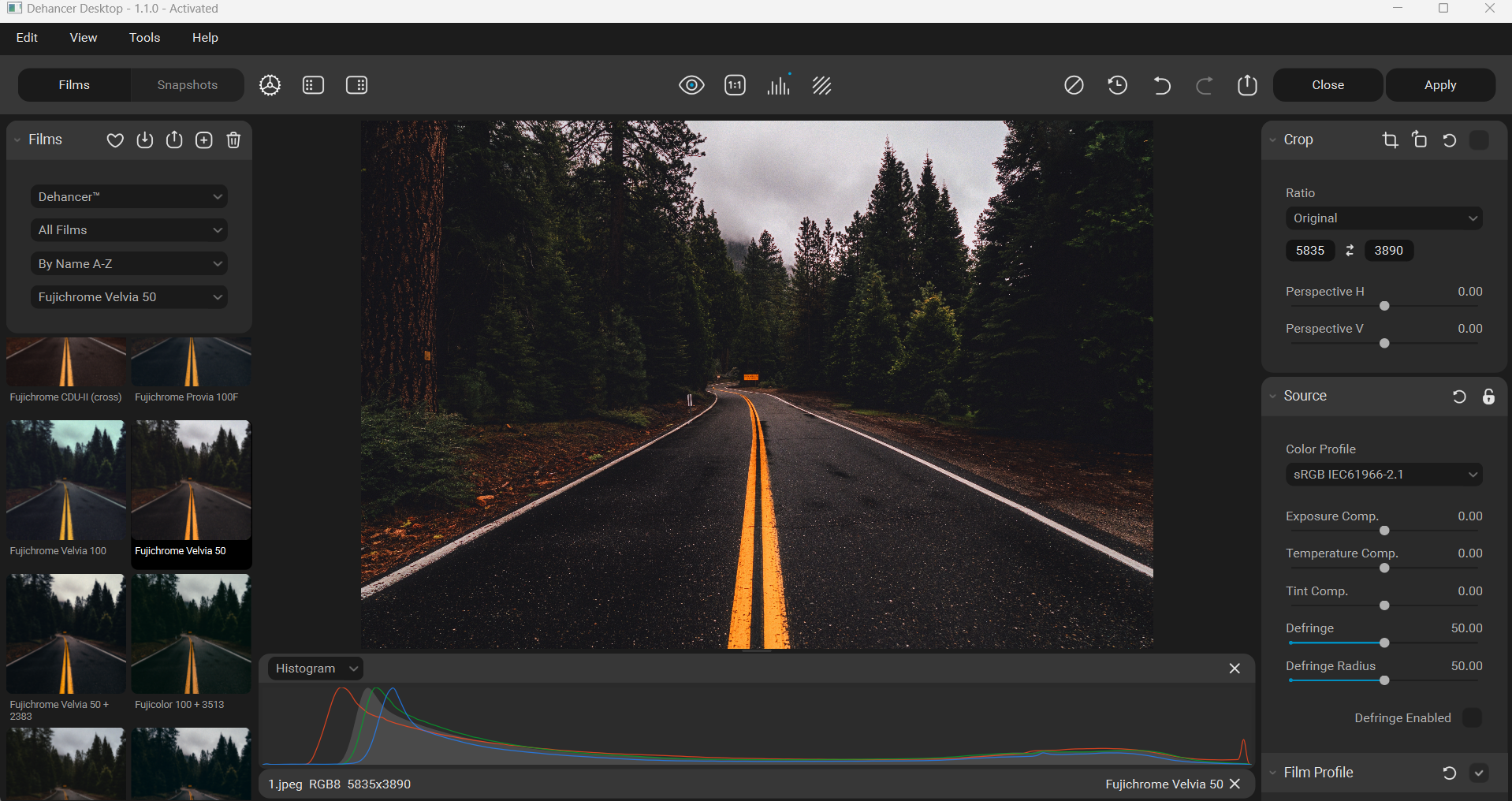
Description
Dehancer Desktop 1.1.0: Features, Film Emulation, Performance, and Creative Workflow
Dehancer Desktop 1.1.0 is a creative image-processing solution designed for photographers, filmmakers, and visual artists who want to recreate the distinctive character of analog film in a digital workflow. Dehancer Desktop 2026 Instead of relying solely on basic color correction or conventional presets, Dehancer focuses on the visual qualities that make film photography appealing, including organic grain, natural-looking halation, bloom, film-specific color responses, and the subtle imperfections associated with traditional photographic materials.
For creators who Dehancer Desktop 2027 want cinematic color grading without spending hours building complex effects from scratch, Dehancer Desktop offers a specialized approach to digital image finishing. It can help transform clean digital footage and photographs into images with a more textured, atmospheric, and film-inspired appearance.
The software is particularly interesting for independent filmmakers, commercial photographers, content creators, and colorists who value creative control. However, the final results depend on the source material, the chosen film profile, the computer’s capabilities, and the user’s understanding of color management. Dehancer is not a magic button for perfect cinematic images, but it can become a valuable part of a carefully managed creative workflow.
Introduction to Dehancer Desktop
Digital cameras provide impressive sharpness, dynamic range, and flexibility, but their output can sometimes look overly clean or lack the visual character associated with traditional film. Photographers and filmmakers often spend considerable time adjusting contrast, saturation, highlights, and shadows to achieve a more organic appearance.
Dehancer Desktop addresses this creative challenge by providing film-inspired image-processing tools in a digital environment. Its approach centers on simulating the characteristics of photographic film rather than simply applying a uniform color filter.
The software is useful for creators who want to experiment with different film aesthetics while maintaining control over the final image. Depending on the workflow and available edition, users may work with film profiles, print-film characteristics, grain, halation, bloom, and other image-finishing effects.
One of its biggest attractions is the ability to establish a consistent visual style across multiple photographs or video shots. This can be particularly important for wedding films, documentaries, fashion photography, short films, music videos, and commercial projects where visual consistency contributes to the overall quality.
For beginners, the software provides an opportunity to explore analog-inspired color grading without developing every effect manually. Experienced colorists can use its controls to refine an established look and integrate film-inspired finishing into a broader post-production process.
Key Features of Dehancer Desktop
1. Film Emulation Profiles
Film emulation is the central attraction of Dehancer. Different film stocks have distinctive approaches to color reproduction, contrast, highlight handling, and tonal transitions. Reproducing these characteristics digitally can help creators move beyond the generic appearance of standard color presets.
Dehancer offers film-oriented processing designed to reproduce recognizable analog aesthetics. Depending on the available profile and workflow, users can explore different interpretations of color and monochrome imagery.
For example, a portrait photographer might prefer gentle skin tones and restrained contrast, while a music-video editor may choose richer colors and more dramatic tonal separation.
The important advantage is flexibility. Rather than building every look from scratch, users can begin with a film-inspired foundation and adjust it to suit the image.
2. Film Grain Simulation
Film grain adds texture and can help digital images feel less sterile. However, convincing grain requires more than placing random noise over an image.
Dehancer provides film-grain tools designed to reproduce the visual character of analog photographic materials. Grain settings can help users adjust the texture and perceived character of their images.
This feature can be valuable when finishing digital footage that looks excessively smooth or when creating a consistent texture across a photographic series.
The key is moderation. Excessive grain can obscure fine details, especially in low-resolution footage or images intended for small displays. A subtle treatment often produces a more convincing result than an aggressively textured image.
3. Halation Effects
Halation is a characteristic associated with light interacting with photographic film layers, often producing a reddish glow around bright areas.
Dehancer includes halation-oriented processing that can help recreate this recognizable film characteristic. It can add atmosphere around bright lights, illuminated signs, reflections, and other high-contrast elements.
For example, a nighttime street scene with headlights and neon signage may benefit from restrained halation that reinforces its cinematic atmosphere.
The effect should be applied carefully. Strong halation can make highlights appear unnatural or reduce the clarity of important subjects. A balanced treatment helps preserve the image while introducing a subtle analog-inspired quality.
4. Bloom and Highlight Rendering
Bloom creates a soft glow around bright image areas. It is often used to produce a dreamy, nostalgic, or atmospheric appearance.
In Dehancer Desktop, bloom-related tools can help soften the appearance of intense highlights and contribute to a more film-inspired finish.
This can be particularly effective in wedding films, romantic portraits, music videos, and scenes containing sunlight, practical lamps, or bright reflections.
Bloom is not suitable for every image. Documentary footage requiring maximum clarity may benefit from a lighter treatment, while stylized commercial projects may accommodate a more noticeable effect.
5. Print Film and Color Finishing
Film-inspired color finishing helps shape the relationship between shadows, midtones, and highlights. It can also influence the overall mood of an image.
Dehancer’s film-oriented workflow can help creators develop a coherent visual treatment instead of relying exclusively on separate saturation and contrast adjustments.
For a commercial product shoot, the objective might be rich colors and controlled highlights. For a documentary, a restrained treatment may preserve realism while introducing subtle warmth and texture.
These adjustments are most effective when the original footage is properly exposed and prepared. A strong finishing effect cannot reliably repair every problem in badly exposed or poorly balanced source material.
6. Film Damage and Analog Imperfections
Some creative projects benefit from imperfections associated with aging film, including dust, scratches, and other irregularities.
Dehancer provides film-inspired effects intended to help recreate aspects of analog media. These treatments can be useful for period-style advertisements, retro music videos, archival-inspired sequences, and experimental photography.
Not every project needs visible imperfections. The ability to introduce them selectively is more useful than applying the same distressed appearance to every image.
7. Creative Control and Customization
A major advantage of specialized film-emulation software is the opportunity to refine an effect rather than accept a fixed preset.
Dehancer’s controls allow users to shape their treatment according to the image, the intended mood, and the technical requirements of the project. The precise options available depend on the product version and supported workflow.
For experienced users, this flexibility can help establish a repeatable visual identity. Beginners can start with restrained adjustments, compare alternative looks, and gradually develop a better understanding of how film-inspired processing changes an image.
Practical Use Cases
Professional Photography
Portrait, fashion, lifestyle, and editorial photographers can use Dehancer Desktop to create distinctive image treatments. Film-inspired color and grain may help a portrait series feel cohesive, especially when photographs are captured under different lighting conditions.
For the best results, photographers should establish consistent exposure and white balance before applying the finishing treatment.
Wedding Photography and Cinematic Wedding Films
Wedding creators often need images that feel emotional, timeless, and visually consistent. Dehancer can support this goal by introducing carefully controlled warmth, softer highlights, film-like texture, and a cohesive color response.
For example, outdoor ceremony footage and indoor reception scenes may have very different lighting characteristics. Preparing each shot before applying a common creative look can help maintain consistency without making every scene appear identical.
Independent Filmmaking
Independent filmmakers frequently work with limited production budgets and a mixture of camera equipment. Dehancer can provide a film-inspired finishing approach for short films, documentaries, and narrative projects.
A consistent grade can help footage from different scenes feel more unified. Nevertheless, matching cameras and lighting remains important because film emulation cannot completely eliminate differences in exposure, white balance, or dynamic range.
Music Videos and Commercial Content
Music videos, fashion campaigns, and branded content often benefit from strong visual identity. Grain, halation, bloom, and film-oriented color can help establish a nostalgic, dramatic, or stylized appearance.
The best approach is to build a look around the project’s creative direction rather than selecting effects simply because they are available.
Social Media Content Creation
Creators producing short-form videos and promotional photography may appreciate having a repeatable finishing style. A carefully developed look can help content remain recognizable across multiple posts and campaigns.
However, the treatment should be evaluated on the intended delivery platform. Fine grain and subtle highlight effects may appear different after video compression or when viewed on smaller screens.
Performance Analysis
Dehancer Desktop’s performance depends on the complexity of its processing, the resolution of the source material, the host application, and the computer’s hardware.
Film grain, halation, bloom, and other image-processing effects can require additional computation. High-resolution footage, multiple processing stages, and complex timelines may therefore place greater demands on the system than basic color adjustments.
Processing Speed
Simple projects may feel responsive on a capable computer, while demanding 4K or higher-resolution workflows can require more processing time. Playback performance also depends on whether the host application can use available hardware acceleration effectively.
For professional editing, testing a representative section of footage before grading an entire timeline is a practical way to identify performance limitations.
Image Quality
The software’s primary strength is its focus on analog-inspired image characteristics. When used with suitable source material, its effects can introduce texture, distinctive highlight behavior, and a more intentional color response.
Image quality still depends on the starting footage. Well-exposed images with controlled highlights generally provide a better foundation than severely underexposed clips or footage with clipped color channels.
Workflow Efficiency
Starting with a suitable film-inspired treatment can reduce the need to construct every effect independently. Once a look has been established, users may be able to adapt it across a project while making individual corrections where necessary.
Efficiency is not automatic, however. Understanding exposure, color management, and the interaction between effects helps prevent unnecessary adjustments and inconsistent results.
Hardware Considerations
Before purchasing or installing the software, users should check the current system requirements, supported host applications, operating-system compatibility, and any GPU requirements for their intended workflow.
A practical evaluation should include playback responsiveness, export time, memory usage, and image quality at the final delivery resolution.
Pros and Cons
Pros
- Specialized tools for film-inspired color grading and image finishing.
- Film-emulation workflows that go beyond basic color filters.
- Creative options for grain, halation, bloom, and analog-inspired effects.
- Useful for photography, filmmaking, commercial work, and stylized content.
- Can help establish a consistent visual identity across a project.
- Provides a starting point for creators who want analog aesthetics without recreating every effect manually.
- Offers opportunities for experimentation and detailed creative refinement.
Cons
- Advanced effects can increase processing demands.
- Effective results require a basic understanding of exposure and color management.
- Strong effects may reduce image clarity or appear artificial when overused.
- Compatibility depends on the particular version and supported workflow.
- Film emulation cannot compensate for every problem in poorly captured footage.
- Pricing and licensing options may vary by edition, platform, or purchase terms.
Overall, Dehancer is most attractive to creators who specifically value film-inspired finishing. Users who only need straightforward brightness, contrast, and saturation adjustments may find a dedicated film-emulation solution more specialized than their workflow requires.
Pricing and Plans
Dehancer’s pricing and licensing terms should be checked against the current official product information before making a purchasing decision. Prices, available editions, supported applications, and included features can change over time, so an outdated price should not be treated as a reliable quotation.
When comparing available options, consider the following factors:
- Product edition: Confirm whether the version meets your photography or video-production requirements.
- Host application compatibility: Make sure the software supports the application and version you currently use.
- Included features: Check which film profiles, image-processing tools, and workflow options are included.
- License terms: Review activation limits, permitted devices, upgrade conditions, and commercial-use provisions.
- System requirements: Confirm that your computer can comfortably handle the intended resolution and processing workload.
- Trial availability: If an official trial is offered for your chosen edition, use it to evaluate image quality and performance before committing.
For a professional creator, the value of Dehancer depends on how frequently its film-emulation capabilities are needed. A photographer producing large volumes of film-inspired work may benefit more than someone who occasionally applies a retro effect to a single image.
Tips for Getting Better Results with Dehancer Desktop
A few practical habits can improve the consistency and quality of your work.
- Prepare the source image first. Correct exposure, white balance, and major color problems before applying the creative finish.
- Choose a look that suits the subject. Portraits, landscapes, commercial products, and nighttime scenes may need different treatments.
- Use grain carefully. Check fine details at full resolution to ensure the texture does not overwhelm the image.
- Keep halation and bloom controlled. These effects should support the lighting rather than distract from the subject.
- Maintain consistency across shots. Compare neighboring clips or photographs and adjust individual images where necessary.
- Check the final export. Review the image or video at its intended resolution and on the type of display your audience is likely to use.
- Save reusable settings. Where supported, retain successful adjustments so that future projects can follow a consistent creative direction.
These habits are especially valuable for creators working under tight deadlines, where a repeatable process can save time without sacrificing quality.
Dehancer Desktop 1.1.0 Download
Final Verdict
Dehancer Desktop is a compelling option for photographers, filmmakers, and colorists who want to bring the character of analog film into digital production. Its emphasis on film-inspired color, grain, halation, bloom, and image finishing makes it more specialized than a conventional collection of color presets.



Reviews
There are no reviews yet.