Description
Arkance AGACAD for Revit Review 2027: Advanced BIM Automation for Smarter Revit Workflows
Arkance AGACAD for Revit is a powerful collection of BIM productivity tools designed to help architects, engineers, contractors, and prefab manufacturers automate repetitive modeling tasks, improve design accuracy, and accelerate project delivery. Instead of relying solely on native Revit capabilities, AGACAD extends Autodesk Revit with specialized modules for wood framing, panelization, MEP hangers, sheet metal, wall systems, and automated documentation.
For BIM professionals managing complex projects, reducing modeling time without compromising precision can significantly impact profitability and team efficiency. AGACAD addresses these challenges by providing intelligent automation tools that integrate directly within Revit, helping users standardize workflows, minimize errors, and streamline fabrication-ready modeling.
This review explores Arkance Agacad For Revit 1.2.0.4 capabilities, practical applications, strengths, limitations, and overall value for BIM-driven organizations.
Introduction
Building Information Modeling has transformed modern construction, but many firms still struggle with time-consuming manual processes inside Revit.
Creating framing systems, placing thousands of components, generating shop drawings, coordinating fabrication data, and maintaining model consistency can consume substantial resources.
Arkance AGACAD for Revit was developed specifically to solve these challenges.
Originally recognized as AGACAD before joining the Arkance ecosystem, the software has evolved into one of the industry’s most respected collections of Revit productivity enhancements.
Rather than functioning as a standalone BIM application, AGACAD works as an extension to Autodesk Revit, giving users access to specialized tools that support:
- Structural framing
- Prefabrication
- Modular construction
- MEP detailing
- Manufacturing workflows
- Automated documentation
- Parametric design processes
For firms focused on BIM maturity and digital construction strategies, AGACAD provides a practical way to unlock more value from existing Revit investments.
Key Features of Arkance AGACAD for Revit 2026
1. Wood Framing Automation
One of AGACAD’s most widely adopted modules is Wood Framing.
This tool automates the creation of:
- Wall studs
- Floor joists
- Roof rafters
- Trusses
- Structural framing layouts
Users define design rules, spacing requirements, and framing standards.
The software then generates complete framing systems automatically.
Benefits include:
- Reduced manual drafting
- Consistent framing standards
- Faster project completion
- Improved structural coordination
For timber construction specialists, this feature alone can save dozens of working hours per project.
2. Smart Assemblies
Smart Assemblies enables users to create intelligent parametric objects.
Examples include:
- Cabinet systems
- Modular wall panels
- Furniture components
- Industrial assemblies
Once configured, assemblies adapt automatically to model changes.
Advantages include:
- Improved design flexibility
- Faster updates
- Reduced coordination errors
- Better BIM consistency
This functionality is particularly useful for firms producing repetitive building components.
3. Panelization Tools
Off-site construction continues to grow rapidly.
AGACAD 2027 supports this trend through advanced panelization capabilities.
Users can automatically create:
- Wall panels
- SIP systems
- Modular units
- Prefabricated assemblies
Panel data can be prepared for fabrication workflows, helping bridge the gap between design and manufacturing.
4. MEP Hangers Module
Mechanical contractors often spend significant time placing support systems manually.
AGACAD simplifies this process through automated hanger generation.
Capabilities include:
- Duct supports
- Pipe hangers
- Cable tray supports
- Equipment mounting systems
Benefits:
- Faster detailing
- Improved installation planning
- Better coordination
- Reduced field conflicts
5. Sheet Metal Tools
Sheet metal designers can leverage dedicated tools for creating fabrication-ready elements.
Features include:
- Automated sheet generation
- Custom profiles
- Parametric adjustments
- Manufacturing preparation
Fabricators benefit from more accurate production data and fewer revisions.
6. Cut Opening Automation
Coordinating openings between disciplines remains a common BIM challenge.
AGACAD automates opening placement for:
- Pipes
- Conduits
- Ductwork
- Structural penetrations
The software identifies clashes and generates openings automatically.
This minimizes coordination issues during construction.
7. BIM Documentation Enhancements
Documentation often consumes as much time as modeling itself.
AGACAD improves documentation workflows by automating:
- Drawing production
- Schedules
- Annotation
- Detail generation
- Assembly sheets
Project teams can produce deliverables more efficiently while maintaining consistency.
Practical Use Cases
Residential Timber Construction
A timber home manufacturer designing dozens of houses annually can automate wall framing generation.
Instead of spending several days framing each model manually, designers can complete framing layouts within hours.
The result:
- Increased productivity
- Standardized deliverables
- Faster permit submissions
Modular Building Companies
Companies producing modular hotels or apartments often work with repetitive layouts.
Smart Assemblies allow teams to create reusable modules that update automatically.
This approach reduces repetitive modeling work significantly.
Mechanical Contracting Firms
Large commercial projects may contain thousands of hangers and supports.
Manual placement becomes inefficient and error-prone.
Using AGACAD’s MEP Hangers module enables contractors to:
- Automate support placement
- Improve installation accuracy
- Coordinate systems earlier
Field crews receive clearer installation information.
Prefabrication Manufacturers
Manufacturers producing wall panels need fabrication-ready BIM models.
AGACAD helps convert design models into production-ready assemblies.
Benefits include:
- Reduced rework
- Better factory planning
- Enhanced quality control
- Improved material management
Architectural Practices
Architects managing multiple projects simultaneously can standardize documentation workflows.
Automated drawing generation reduces repetitive tasks and allows designers to focus more on creative problem-solving.
User Experience and Workflow Efficiency
One of AGACAD’s biggest strengths is its seamless integration with Revit.
Users do not need to learn an entirely new platform.
The tools appear directly inside familiar Revit environments.
Experienced Revit professionals typically adapt quickly.
Common user feedback highlights:
Positive Experiences
- Significant reduction in modeling time
- Improved project consistency
- Better BIM standards compliance
- Efficient prefabrication workflows
- Reliable automation capabilities
Learning Considerations
Some modules contain advanced settings and customization options.
New users may require:
- Initial training
- Testing workflows
- Template development
However, teams that invest time in setup often achieve substantial productivity gains.
Performance Analysis
Performance largely depends on:
- Project complexity
- Hardware specifications
- Number of AGACAD modules deployed
In medium and large-scale projects, users frequently report meaningful improvements in workflow speed.
Productivity Improvements
Potential gains may include:
| Task | Manual Workflow | AGACAD Workflow |
|---|---|---|
| Wall framing | Several hours | Minutes |
| Hanger placement | Multiple days | Few hours |
| Panel generation | Manual drafting | Automated |
| Documentation | Repetitive editing | Rule-based automation |
For firms billing projects based on labor hours, these efficiencies can translate into measurable cost savings.
Advantages of Arkance AGACAD for Revit
Extensive BIM Automation
AGACAD addresses many repetitive Revit tasks that traditionally consume valuable project time.
Strong Support for Prefabrication
The software aligns well with modern construction trends, including:
- DfMA
- Off-site manufacturing
- Industrialized construction
Flexible Module Selection
Organizations can deploy only the tools they require.
This creates a scalable implementation approach.
Reduced Modeling Errors
Automation minimizes inconsistencies caused by manual work.
Seamless Revit Integration
Users remain within their preferred BIM environment.
No separate modeling platform is required.
Potential Limitations
Despite its strengths, AGACAD may not be ideal for every organization.
Pros
- Excellent Revit productivity enhancement
- Strong timber framing capabilities
- Powerful prefab workflows
- Advanced automation options
- Improves BIM deliverable quality
Cons
- Requires Autodesk Revit
- Initial setup can be time-intensive
- Advanced modules may have a learning curve
- Smaller firms may not need every available tool
Companies should evaluate which modules best align with their project requirements before investing heavily.
Pricing and Plans
Arkance AGACAD offers various specialized modules, and pricing structures may vary depending on:
- Selected toolsets
- Number of users
- Subscription terms
- Enterprise requirements
- Regional distribution models
Potential buyers are encouraged to consult authorized Arkance representatives for current pricing information, licensing options, and implementation guidance.
Organizations considering deployment should also account for:
- Staff training
- BIM standards development
- Workflow customization
- Ongoing support requirements
For firms regularly handling prefabrication, timber construction, or highly repetitive BIM tasks, the return on investment can often justify the software costs.
Who Should Use Arkance AGACAD for Revit?
AGACAD is particularly well suited for:
Architects
Seeking faster documentation and standardized BIM processes.
Structural Engineers
Managing timber framing and modular systems.
Contractors
Coordinating MEP supports and fabrication workflows.
Manufacturers
Producing prefabricated building components.
BIM Managers
Establishing company-wide automation standards.
Organizations with large project portfolios stand to benefit the most from its automation capabilities.
Complete Previous Release Archive – All Versions Available
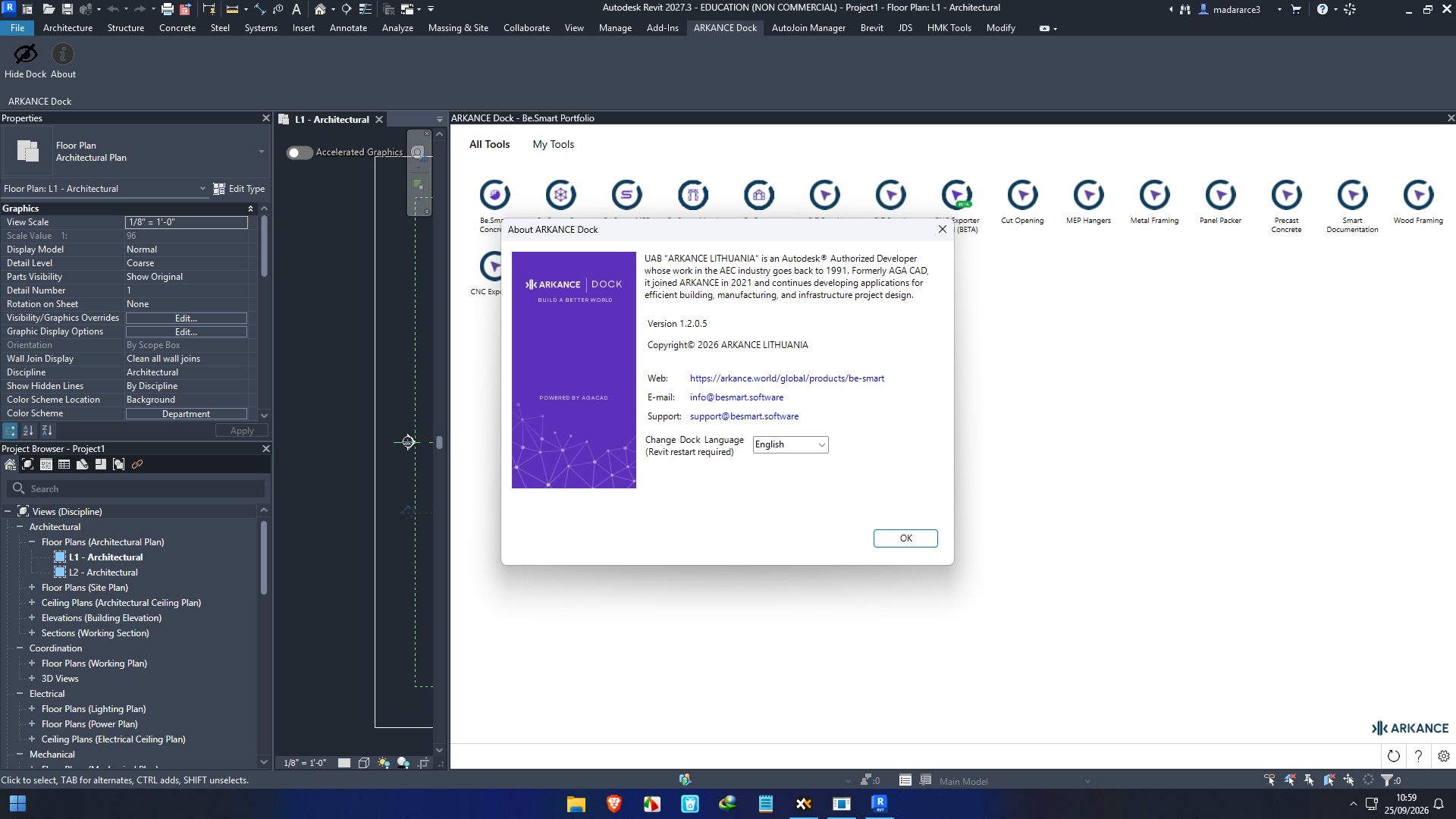
Arkance Agacad For Revit 2027 v1.2.0.5
Arkance Agacad For Revit 2026 and 2027 v1.2.0.4
Arkance Agacad For Revit Developer
Arkance Agacad For Revit 2027 v1.2.0.4
Compatible Be.Smart Agacad for Revit 2019 to 2027
Final Verdict
Arkance AGACAD for Revit is one of the most comprehensive BIM productivity solutions available for Autodesk Revit users. Its extensive suite of automation tools helps eliminate repetitive tasks, improve model accuracy, and support modern construction methods such as prefabrication and modular building.
While implementation may require some upfront training and workflow planning, the long-term benefits can be substantial. Faster modeling, more reliable documentation, and enhanced fabrication readiness make AGACAD a valuable investment for firms committed to advanced BIM practices.
For architecture, engineering, construction, and manufacturing professionals looking to maximize their Revit workflows, Arkance AGACAD offers a practical and scalable path toward greater efficiency. Exploring its specialized modules and testing them within real project scenarios is an excellent way to determine how much time and value BIM automation can bring to your organization.


Reviews
There are no reviews yet.