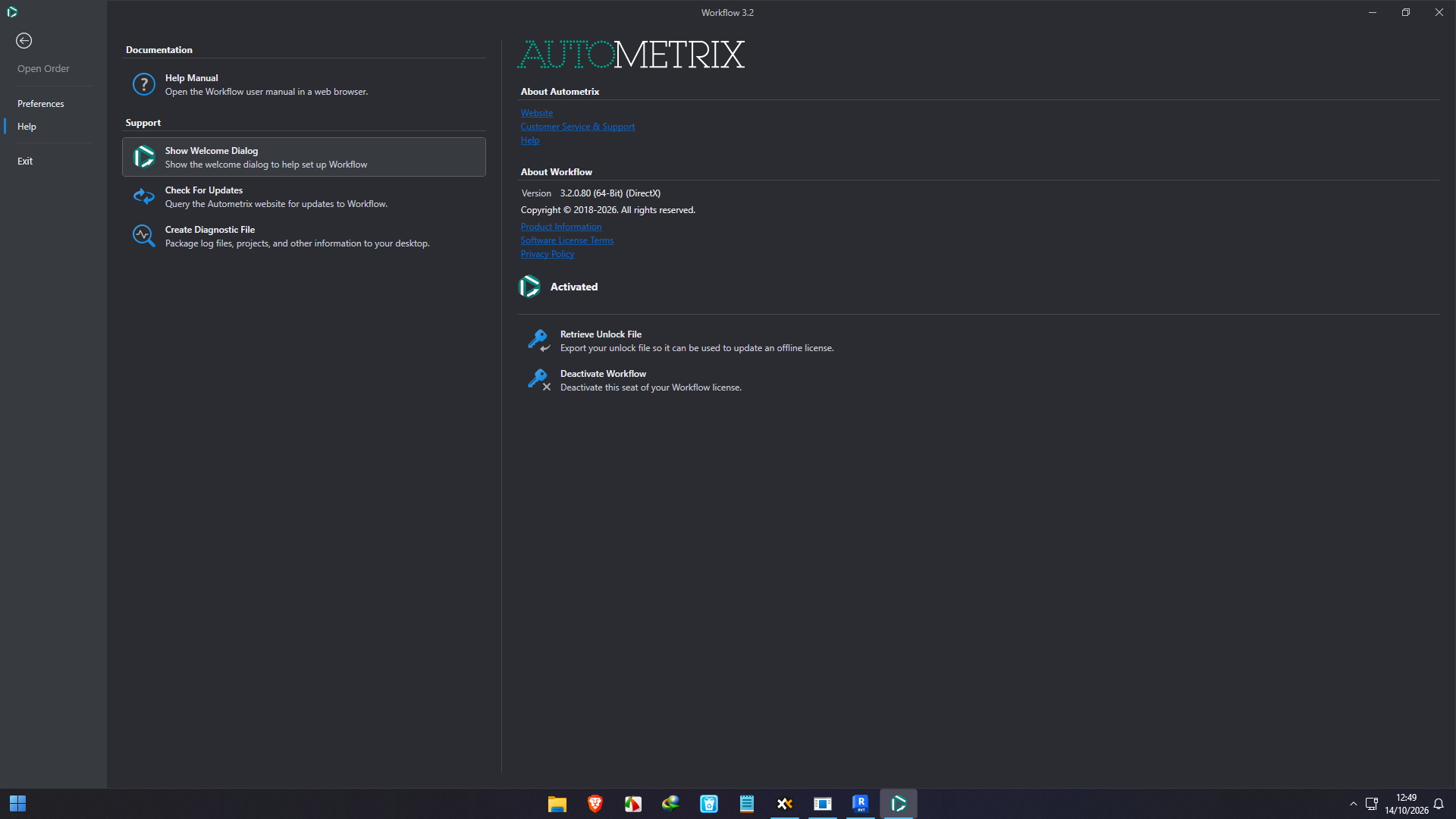
Description
Autometrix Workflow Review: Key Features, Benefits, Use Cases, and Performance Analysis
Summary
Autometrix Workflow 2026 is a software solution associated with improving workflow efficiency, organizing production activities, and supporting digital processes in specialized manufacturing environments. For businesses that manage pattern development, material cutting, production planning, and related operational tasks, Autometrix Workflow 3.2.0.80workflow-focused software can help reduce repetitive work, improve consistency, and make day-to-day operations easier to manage. Its practical value depends on how well its capabilities match a company’s production requirements, existing equipment, and preferred working methods.
In this comprehensive review, we explore the potential benefits of Autometrix Workflow, its important features, practical applications, performance considerations, advantages, limitations, and pricing factors. We also examine how workflow automation and digital production management can help businesses improve productivity without unnecessarily complicating established processes.
Whether you operate a manufacturing facility, manage production teams, or are evaluating specialized software for your business, this guide will help you understand what to consider before choosing Autometrix Workflow.
Introduction to Autometrix Workflow
Managing production efficiently requires more than having skilled employees and reliable machinery. Businesses must coordinate information, materials, designs, schedules, and equipment while maintaining consistent quality. When these activities depend heavily on manual communication or disconnected tools, delays and avoidable mistakes can become common.
This is where workflow-oriented software becomes valuable.
Autometrix is associated with specialized manufacturing technologies, particularly digital pattern development and automated cutting solutions for industries that work with flexible materials. Within this environment, an efficient workflow involves connecting design preparation, production planning, cutting operations, and related manufacturing tasks.
Autometrix Workflow, as a software search term, is relevant to businesses investigating digital manufacturing processes and ways to organize production more effectively. However, the precise feature set, supported integrations, and licensing arrangements of a specific product or package should be confirmed before purchase. Not every capability associated with a manufacturer’s broader software ecosystem is necessarily included in an individual workflow solution.
For businesses considering this category of software, the main objective is straightforward: reduce unnecessary manual work, improve communication between production stages, and make daily operations more predictable.
A well-designed digital workflow can also help employees spend less time searching for files, repeating routine tasks, or resolving avoidable production inconsistencies.
Key Features of Autometrix Workflow
The most important capabilities to evaluate in Autometrix Workflow relate to production organization, digital design processes, material utilization, and operational coordination. Availability may vary by product version, configuration, and connected equipment.
1. Digital Workflow Management
Digital workflow management helps organize production activities into a more consistent process. Instead of relying entirely on handwritten instructions, scattered files, or informal communication, employees can work with structured digital information.
For manufacturing teams, this approach can improve visibility into job requirements and help establish repeatable procedures.
Potential benefits include:
- More organized production information.
- Reduced dependence on manual recordkeeping.
- Easier coordination between design and production teams.
- More consistent handling of recurring jobs.
- Improved identification of process bottlenecks.
These benefits depend on the software’s actual workflow-management capabilities and how consistently employees use the system.
2. Pattern and Design Preparation
Businesses working with textiles, upholstery, technical fabrics, composites, and other flexible materials often need accurate digital patterns before production begins.
Software-supported pattern preparation can help teams organize design files, prepare components, and maintain consistency between design specifications and manufacturing requirements.
A digital approach may also make it easier to manage design revisions and reduce confusion caused by outdated files.
For example, an upholstery manufacturer producing several versions of a seating product may need to distinguish between patterns for different dimensions and material types. A structured digital process can help employees identify the appropriate production files before cutting begins.
The exact design tools supported by Autometrix Workflow should be verified for the intended application.
3. Production Planning and Coordination
Production planning involves deciding what needs to be manufactured, which materials are required, and how work should move through the facility.
Workflow-oriented software can support this process by making job information more accessible and encouraging standardized procedures.
Potential advantages include:
- Better organization of production orders.
- Clearer communication of job requirements.
- Improved coordination between departments.
- More predictable handling of repeat orders.
- Easier identification of scheduling conflicts.
The level of planning automation available depends on the specific software configuration. Businesses should distinguish between basic digital job organization and advanced production scheduling when evaluating the product.
4. Material Utilization and Cutting Efficiency
Material costs can significantly affect profitability in manufacturing businesses. Even small improvements in material utilization may produce meaningful savings when repeated across hundreds of production jobs.
Digital cutting workflows can help manufacturers prepare cutting layouts, manage pattern arrangements, and reduce avoidable waste when the appropriate nesting and cutting tools are available.
However, material optimization is not guaranteed simply by adopting workflow software. Results depend on pattern geometry, material characteristics, cutting constraints, operator decisions, and the capabilities of the connected system.
Businesses should evaluate whether their intended configuration supports the specific cutting and material-planning functions they require.
5. File Organization and Production Consistency
Accurate information is essential when several employees work on the same production process.
A structured digital environment can help teams organize design files, maintain consistent naming conventions, and reduce confusion between current and outdated documents.
This becomes particularly useful when handling repeat orders or producing similar items in different sizes.
Before purchasing Autometrix Workflow, companies should confirm its file formats, revision-management options, compatibility with existing design applications, and ability to exchange information with their current production systems.
Practical Use Cases of Autometrix Workflow
The potential usefulness of Autometrix Workflow becomes easier to understand when considered in everyday manufacturing situations.
Use Case 1: Upholstery Manufacturing
An upholstery business may produce furniture covers in several shapes, sizes, and material combinations. Without a consistent digital process, employees can lose time locating patterns, checking measurements, and confirming which files belong to each order.
A suitable digital workflow can help organize design information and standardize preparation before cutting begins.
The practical result may be fewer administrative interruptions, more consistent job preparation, and better coordination between design and production staff.
Actual improvements depend on the tools available and the manufacturer’s existing processes.
Use Case 2: Automotive Interior Production
Automotive interior manufacturers often handle multiple components with precise dimensions and material specifications.
A structured production workflow can help teams organize cutting patterns, distinguish between product variants, and communicate requirements more consistently.
For businesses producing seat covers, interior trim, or related flexible-material components, maintaining accurate digital files is particularly important.
Software and equipment compatibility should be assessed carefully because automotive manufacturing may involve strict documentation, quality, and traceability requirements.
Use Case 3: Marine and Outdoor Products
Manufacturers of boat covers, sails, protective enclosures, and outdoor fabric products frequently work with customized dimensions and different material properties.
Each project may require adjustments to patterns and production instructions.
A digital workflow can help organize project-specific information and reduce the likelihood of employees using the wrong design version.
This is especially useful for businesses balancing customized production with repeatable manufacturing procedures.
Use Case 4: Technical Textiles and Composite Materials
Technical textile and composite manufacturers must often balance material cost, production accuracy, and consistent handling procedures.
A suitable digital production environment may support more organized design preparation and cutting operations.
Companies working with specialized materials should verify whether the selected software and connected equipment support their material types, file formats, cutting methods, and quality-control requirements.
Use Case 5: Small and Medium-Sized Manufacturing Businesses
Smaller manufacturers may have limited administrative resources and depend on a small number of experienced employees.
Moving from informal processes to a structured digital workflow can help preserve operational knowledge and reduce unnecessary repetition.
However, smaller businesses should consider implementation costs, employee training, and the complexity of their current operations before investing in a specialized solution.
Performance Analysis: What Businesses Should Evaluate
Software performance should be judged by measurable operational results rather than marketing claims alone.
For Autometrix Workflow, businesses should evaluate the capabilities of the exact product configuration they intend to use and compare its performance against their current processes.
Productivity and Time Savings
One of the most important measures is the time required to prepare and complete a typical production job.
Companies can compare the time spent locating files, preparing patterns, communicating instructions, and resolving production errors before and after implementation.
A useful evaluation should examine several representative jobs rather than relying on a single successful example.
Accuracy and Consistency
Manufacturing accuracy depends on multiple factors, including source designs, machine calibration, material properties, operator training, and software configuration.
A digital workflow may reduce errors associated with inconsistent documentation or outdated files, but it cannot eliminate every production mistake.
Businesses should track rework, incorrect material cuts, design revisions, and other relevant quality indicators.
Material Efficiency
Material utilization is another valuable performance metric.
Manufacturers can compare material consumption per completed product, scrap levels, and the frequency of cutting-related errors.
Any claimed improvement should be measured using comparable jobs and material conditions.
Integration and Compatibility
Software that does not work well with existing equipment or applications can create more problems than it solves.
Before implementation, confirm compatibility with current operating systems, design tools, cutting equipment, file formats, and other essential production systems.
Also determine whether integration requires additional licenses, specialized hardware, or paid technical services.
Ease of Use and Training
Even capable software can underperform when employees find it difficult to use.
A practical evaluation should include the learning curve for operators, designers, supervisors, and administrators.
A demonstration using realistic production tasks is often more informative than a general presentation of features.
Pros and Cons of Autometrix Workflow
The following assessment describes potential advantages and limitations of a specialized digital manufacturing workflow. These points should not be interpreted as independently verified specifications of every Autometrix Workflow configuration.
Pros
- More organized production processes: Digital procedures can help standardize recurring activities.
- Improved information access: Structured files and job information can reduce unnecessary searching.
- Potential productivity improvements: Better coordination may reduce avoidable delays and repetitive administrative work.
- Support for specialized manufacturing: A solution designed for relevant production environments may fit industry-specific requirements better than generic office software.
- Greater process consistency: Standardized digital procedures can help teams follow the same production steps.
- Potential material savings: Compatible design and cutting tools may help improve material utilization.
- Better operational visibility: Organized production information can help managers identify inefficiencies.
Cons
- Uncertain product-specific capabilities: The precise functions included in the intended package must be confirmed.
- Implementation requirements: Businesses may need to adjust existing processes and train employees.
- Potential equipment dependencies: Some benefits may depend on compatible machinery or complementary software.
- Additional ownership costs: Hardware, maintenance, integration, and support may increase the overall investment.
- Learning curve: Employees may need time to adapt to new digital procedures.
- Variable return on investment: Results depend on production volume, current inefficiencies, and how effectively the software is implemented.
Pricing and Plans
Pricing for specialized manufacturing software can vary according to licensing arrangements, required functionality, equipment compatibility, support services, and business requirements.
A reliable, current price for Autometrix Workflow cannot be established from the product name alone. Businesses should obtain a quotation for their intended configuration rather than relying on an assumed subscription fee.
When comparing pricing options, consider the following factors:
- License structure: Determine whether the software uses a subscription, perpetual license, or another commercial arrangement.
- Included functionality: Confirm which workflow, design, production, and cutting capabilities are included.
- Equipment requirements: Identify any additional hardware or machine-related costs.
- Implementation services: Ask whether setup, configuration, and data migration are included.
- Training and support: Confirm the availability and cost of employee training and technical assistance.
- Updates and maintenance: Understand how software updates, bug fixes, and ongoing maintenance are handled.
- Expansion costs: Check whether adding users, equipment, or production locations changes the total price.
For an accurate financial assessment, calculate the total cost of ownership over several years. Compare that figure with measurable improvements in productivity, material utilization, rework, and administrative time.
A solution with a higher initial price may still provide value if it addresses expensive production problems. Conversely, a feature-rich system may not justify its cost for a business with simple requirements.
Who Should Consider Autometrix Workflow?
Autometrix Workflow may be worth evaluating for businesses seeking a more structured approach to specialized manufacturing processes.
It may be particularly relevant to:
- Manufacturers working with textiles and flexible materials.
- Upholstery and automotive-interior production businesses.
- Marine-cover and technical-fabric manufacturers.
- Production teams seeking more consistent digital procedures.
- Companies evaluating integrated design and cutting workflows.
It may be less suitable for businesses that need only basic task management, have no relevant equipment requirements, or cannot justify the cost and complexity of specialized manufacturing software.
Smaller operations should also compare the benefits of a dedicated solution with simpler tools that already meet their needs.
Tips Before Choosing Autometrix Workflow
Before making a purchasing decision, take a practical approach to evaluation.
- Define your production challenges. Identify the tasks that consume the most time or generate the most errors.
- Confirm the exact product configuration. Request a clear list of included features and supported integrations.
- Test representative jobs. Evaluate the software using real production scenarios rather than hypothetical examples.
- Check equipment compatibility. Confirm that your existing machines and design applications are supported.
- Ask about training. Determine how quickly employees can become productive with the new system.
- Calculate expected savings. Compare the total investment with measurable operational improvements.
- Clarify support arrangements. Understand how technical issues, updates, and maintenance are handled.
These steps can help prevent an expensive mismatch between software capabilities and actual business needs.
Final Verdict
Autometrix Workflow is a relevant software keyword for businesses exploring digital manufacturing, production coordination, and specialized design-to-cutting processes. Its potential value lies in improving how production information is organized, reducing avoidable manual work, and supporting more consistent manufacturing procedures.



Reviews
There are no reviews yet.