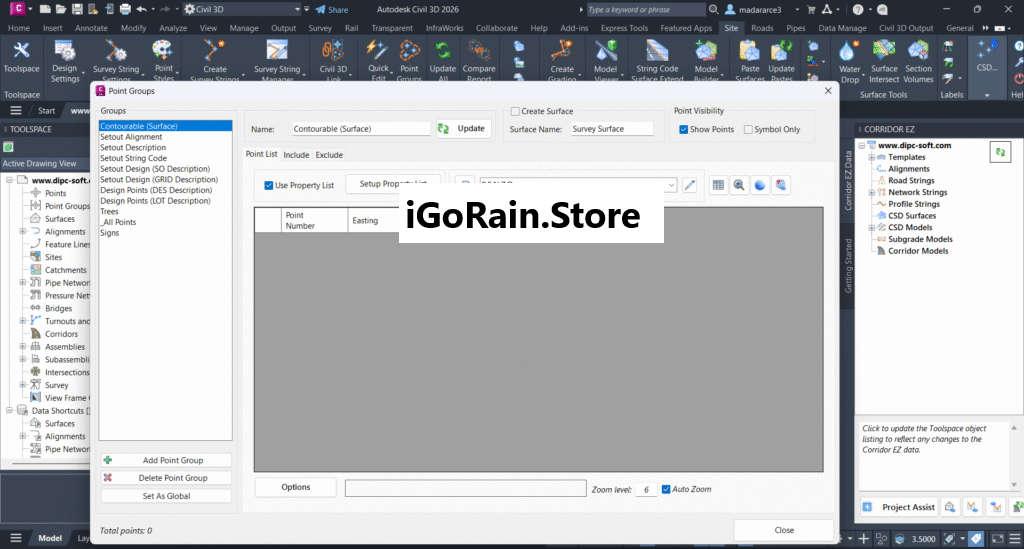
Description
Here is your publish-ready SEO article in a professional software review style.
Civil Site Design for Civil 3D Review: Advanced Road, Rail, and Site Design Software for Civil Engineers
Civil Site Design for Civil 3D – Complete Review
Civil engineering projects require precision, efficiency, and the ability to manage complex design workflows without unnecessary delays. Whether designing roads, rail corridors, subdivisions, drainage systems, or site developments, engineers need software that can streamline calculations while maintaining accuracy.
Civil Site Design for Civil 3D is a powerful civil engineering design solution that extends Autodesk Civil 3D capabilities by providing advanced tools for road design, rail design, grading, intersections, roundabouts, and earthworks modeling. Developed specifically for civil infrastructure professionals, the software helps engineers accelerate project delivery while reducing manual design work.
In this comprehensive review, we explore Civil Site Design for Civil 3D, its key features, practical applications, performance, benefits, limitations, and why it has become a trusted solution for infrastructure design professionals worldwide.
Introduction to Civil Site Design for Civil 3D
Civil Site Design for Civil 3D is an engineering design extension that integrates directly with Civil 3D environments. The software provides intelligent design tools that simplify the creation of transportation infrastructure and land development projects.
Traditional civil engineering workflows often involve repetitive calculations, complex geometric adjustments, and time-consuming design revisions. Civil Site Design addresses these challenges by automating many engineering processes while maintaining full design flexibility.
The software is particularly valuable for:
- Civil engineers
- Transportation engineers
- Infrastructure consultants
- Land development professionals
- Road and highway designers
- Rail engineers
- Municipal engineering teams
- Surveying firms
By combining advanced automation with engineering-grade accuracy, Civil Site Design allows professionals to focus more on design decisions and less on repetitive drafting tasks.
Key Features of Civil Site Design for Civil 3D
Advanced Road Design Tools
One of the strongest capabilities of Civil Site Design is its sophisticated road design module.
Engineers can:
- Design urban roads
- Create highways and freeways
- Generate corridor models
- Design rural road networks
- Manage road widening projects
- Build multi-lane road systems
The dynamic design environment allows modifications to automatically update throughout the project.
Benefits
- Faster road modeling
- Reduced design errors
- Easier revisions
- Improved project consistency
Intelligent Intersection Design
Designing intersections manually can be challenging and time-intensive.
Civil Site Design simplifies this process by allowing users to:
- Create T-intersections
- Build multi-leg intersections
- Design turning lanes
- Manage curb returns
- Adjust alignments dynamically
The software automatically updates geometry when changes occur, significantly reducing redesign efforts.
Roundabout Design Functionality
Modern transportation projects frequently require roundabout implementation.
Civil Site Design provides dedicated tools for:
- Single-lane roundabouts
- Multi-lane roundabouts
- Traffic circle layouts
- Central island creation
- Approach road integration
Engineers can quickly evaluate multiple design options before finalizing layouts.
Rail Design Capabilities
Rail infrastructure projects involve strict geometric requirements.
The software offers:
- Rail alignment creation
- Vertical profile design
- Track geometry analysis
- Corridor modeling
- Superelevation calculations
These features help rail engineers maintain compliance with design standards while increasing productivity.
Dynamic Corridor Modeling
Corridor modeling is essential for infrastructure projects.
Civil Site Design enables:
- Real-time corridor updates
- Surface interaction analysis
- Automated section generation
- Design optimization
- Material quantity calculations
This dynamic workflow minimizes repetitive tasks and improves overall project efficiency.
Earthworks and Grading Design
Accurate earthworks calculations can significantly impact project costs.
Civil Site Design provides:
- Cut and fill analysis
- Grading optimization
- Volume calculations
- Surface balancing
- Site leveling tools
These features help engineers make informed decisions that can reduce construction expenses.
Subdivision and Land Development Tools
For residential and commercial developments, Civil Site Design offers specialized subdivision tools.
Users can:
- Design lot layouts
- Create road networks
- Generate utility corridors
- Manage grading plans
- Produce development layouts
This functionality makes the software highly valuable for urban planning and land development projects.
Automated Quantity Reporting
Estimating project quantities manually often introduces errors.
The software automates:
- Earthwork quantities
- Material calculations
- Corridor volumes
- Surface statistics
- Construction reporting
Automated reporting improves project planning and budgeting accuracy.
Practical Use Cases
Highway Design Projects
A transportation engineering firm designing a new highway corridor can use Civil Site Design to rapidly generate alignments, profiles, corridors, and intersections.
Instead of manually updating every design component after revisions, the software automatically propagates changes throughout the model.
Result:
- Faster design completion
- Improved accuracy
- Better project coordination
Residential Subdivision Development
A land developer planning a new housing community can utilize Civil Site Design to create:
- Street networks
- Residential lots
- Grading plans
- Drainage layouts
The software helps teams evaluate multiple design alternatives before construction begins.
Municipal Infrastructure Projects
Local governments often require upgrades to existing road networks.
Civil Site Design assists engineers in:
- Road widening projects
- Intersection improvements
- Roundabout implementation
- Drainage upgrades
Its dynamic modeling capabilities simplify the redesign process and reduce engineering effort.
Railway Corridor Development
Rail engineers can design complex rail networks while maintaining compliance with industry standards.
The software streamlines:
- Track alignment
- Vertical geometry
- Corridor generation
- Design validation
This improves project efficiency and design confidence.
User Experience and Workflow
One of the reasons engineers appreciate Civil Site Design is its integration with Civil 3D workflows.
Users familiar with Civil 3D can adopt the software relatively quickly because:
- Interface concepts remain familiar
- Design tools integrate directly into existing projects
- Data remains centralized
- Models update dynamically
Experienced users often report significant productivity gains after implementing the software into daily workflows.
For larger infrastructure projects, these time savings can translate into substantial cost reductions.
Performance Analysis
Design Speed
Civil Site Design dramatically accelerates engineering workflows.
Tasks that previously required hours of manual calculations can often be completed within minutes using automated design tools.
Performance advantages include:
- Faster corridor generation
- Rapid geometry updates
- Automated grading calculations
- Reduced drafting effort
Accuracy
Engineering accuracy is critical for infrastructure projects.
The software improves precision through:
- Automated calculations
- Dynamic design updates
- Intelligent geometry management
- Consistent design standards
This reduces the likelihood of costly errors during construction.
Scalability
Civil Site Design performs well across projects of varying sizes.
Whether working on:
- Small site developments
- Residential subdivisions
- Municipal upgrades
- Large transportation corridors
The software remains responsive and capable of handling complex design requirements.
Pros and Cons
Pros
- Seamless integration with Civil 3D
- Powerful road design functionality
- Advanced rail design capabilities
- Dynamic corridor modeling
- Efficient intersection and roundabout tools
- Automated earthworks calculations
- Improved design productivity
- Accurate quantity reporting
- Suitable for large infrastructure projects
- Reduces repetitive engineering tasks
Cons
- Learning curve for new users
- Requires familiarity with Civil 3D workflows
- Advanced features may exceed the needs of smaller projects
- Initial implementation may require training
Pricing and Plans
Civil Site Design pricing can vary depending on licensing models, organizational requirements, and software packages available through authorized providers.
Organizations interested in deployment should evaluate:
- Individual licenses
- Team licensing options
- Enterprise solutions
- Maintenance and support packages
Because pricing structures may change over time, prospective users should obtain the latest licensing information from their software supplier.
Who Should Use Civil Site Design for Civil 3D?
Civil Site Design is an excellent choice for:
- Transportation engineering firms
- Civil infrastructure consultants
- Road design specialists
- Rail engineering companies
- Land development professionals
- Municipal engineering departments
- Surveying organizations
- Construction planning teams
Its comprehensive feature set makes it particularly valuable for professionals managing complex infrastructure projects.
Civil Site Design for Civil 3D Developer
Civil Site Design for Civil 3D 2026 26.0.3.0 Download
Final Verdict
Civil Site Design for Civil 3D stands out as one of the most capable civil engineering design extensions available for infrastructure professionals. Its advanced road design, rail modeling, grading, earthworks, corridor creation, and subdivision planning tools help engineers complete projects more efficiently while maintaining high levels of accuracy.
The software’s greatest strength lies in its ability to automate complex engineering workflows without sacrificing design flexibility. By reducing repetitive tasks and enabling dynamic updates across projects, Civil Site Design empowers engineering teams to focus on delivering better infrastructure solutions.
For organizations already using Civil 3D and seeking to improve productivity, streamline design processes, and enhance project accuracy, Civil Site Design for Civil 3D represents a highly valuable investment.


Reviews
There are no reviews yet.