Description
EP Evaluator Software Review: A Complete Professional Guide for Clinical Laboratory Quality Control
Executive Summary
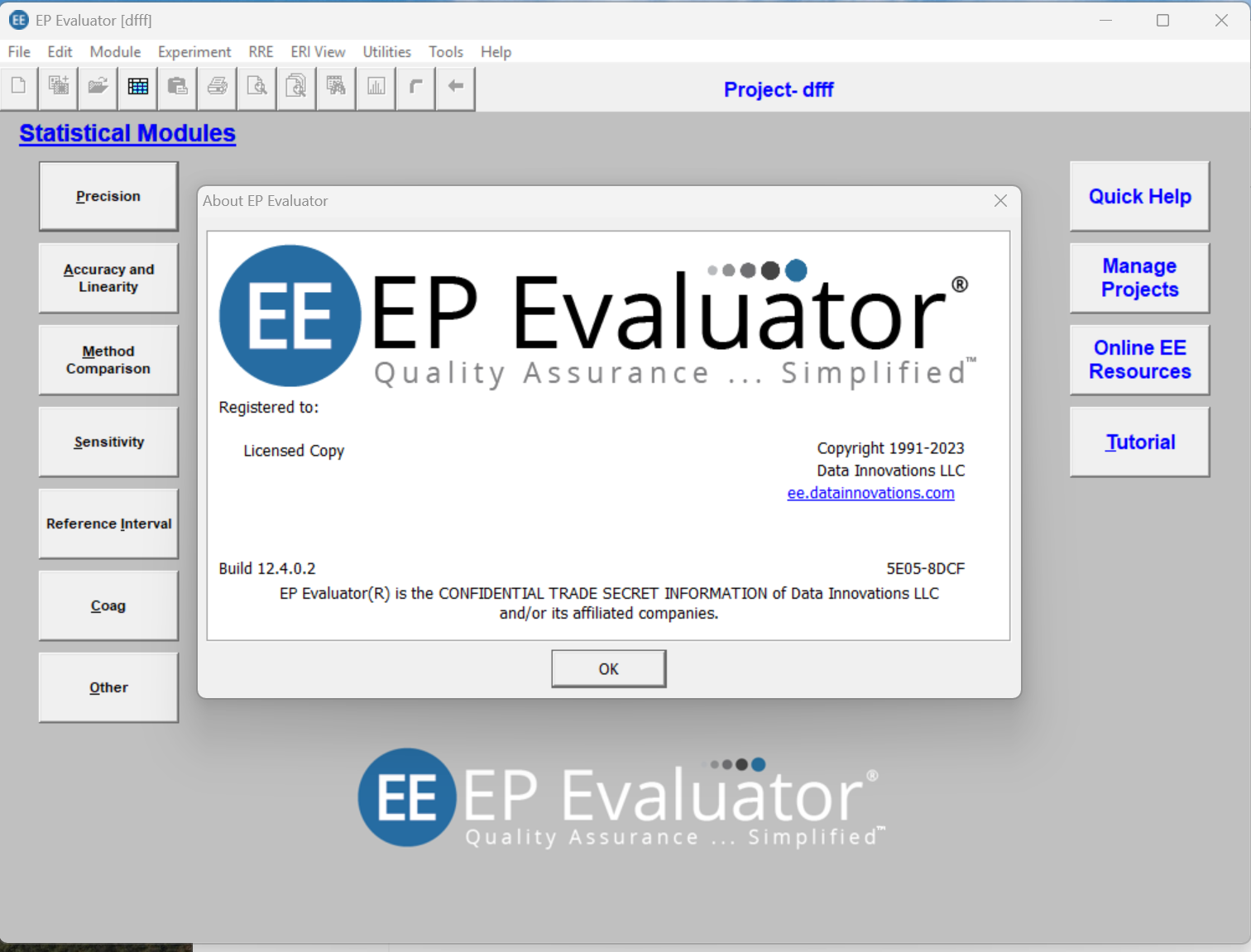
EP Evaluator is a specialized statistical software designed for clinical laboratories, diagnostic centers, and healthcare quality professionals who need precise method evaluation, validation, and quality control analysis. Built to simplify complex statistical calculations used in laboratory medicine, EP Evaluator helps professionals assess accuracy, precision, bias, reference intervals, method comparison, and analytical performance with confidence.
In today’s highly regulated medical environment, laboratories cannot rely on manual calculations or fragmented tools. EP Evaluator stands out as a trusted solution for method validation in clinical chemistry, hematology, microbiology, and molecular diagnostics. It reduces analytical errors, ensures compliance with regulatory standards, and improves decision-making in laboratory workflows.
This article provides a complete, practical, and experience-driven review of EP Evaluator software, including its features, real-world applications, performance insights, advantages, limitations, and pricing considerations.
Introduction to EP Evaluator Software
EP Evaluator is widely recognized in clinical laboratory science as a dedicated tool for statistical evaluation of laboratory methods. Developed specifically for laboratory professionals, it supports method validation, comparison studies, and performance verification tasks that are essential for regulatory compliance and accreditation.
Clinical laboratories must continuously verify new instruments, reagents, and testing methods before clinical adoption. This process involves complex statistical analysis such as regression analysis, bias estimation, total error calculations, and reference interval verification. EP Evaluator simplifies these tasks by automating calculations and presenting results in structured, regulatory-friendly reports.
The software is commonly used in hospital laboratories, diagnostic networks, research institutions, and quality assurance departments. Its core value lies in transforming complex statistical workflows into practical, guided steps that reduce human error and improve analytical confidence.
Key Features of EP Evaluator
EP Evaluator offers a wide range of analytical tools tailored for laboratory professionals. Each feature is designed to support real-world diagnostic workflows.
1. Method Comparison Tools
EP Evaluator provides advanced regression models such as:
- Deming regression
- Passing-Bablok regression
- Linear regression analysis
These tools allow laboratories to compare new diagnostic instruments with established reference methods accurately.
2. Bias and Accuracy Assessment
The software calculates systematic error (bias) between methods, helping labs determine whether a new test method meets clinical acceptability standards.
3. Precision Analysis
EP Evaluator supports evaluation of repeatability and reproducibility through:
- Within-run precision
- Between-run precision
- Total precision estimates
4. Reference Interval Verification
One of the most important features is the ability to verify reference intervals using CLSI guidelines. This ensures patient results are interpreted correctly based on population-specific data.
5. Total Error and Sigma Metrics
Laboratories can calculate total allowable error (TEa) and sigma performance metrics to evaluate analytical quality and process capability.
6. Quality Control Monitoring
EP Evaluator helps in designing and evaluating quality control rules, ensuring consistent analytical performance over time.
7. Automated Reporting
The software generates structured, publication-ready reports suitable for accreditation bodies and internal documentation.
Practical Use Cases of EP Evaluator
EP Evaluator is not just a theoretical tool; it plays a critical role in everyday laboratory operations.
1. Instrument Validation in Hospitals
When hospitals install a new chemistry analyzer, EP Evaluator is used to compare results with existing instruments to ensure consistency before patient testing begins.
2. Diagnostic Laboratory Accreditation
Laboratories seeking accreditation under ISO 15189 or CAP standards use EP Evaluator to generate validation reports required for compliance audits.
3. Quality Assurance Programs
Quality managers use the software to continuously monitor test performance, ensuring that instruments remain within acceptable analytical limits.
4. Research and Clinical Studies
Researchers use EP Evaluator for evaluating new biomarkers, diagnostic assays, and experimental testing methods.
5. Multi-Laboratory Standardization
Large diagnostic chains use it to standardize test results across multiple branches, ensuring consistency in patient reporting.
Performance Analysis and Usability
EP Evaluator is known for its stability and scientific accuracy rather than visual complexity. It is built for laboratory professionals who prioritize precision over design aesthetics.
Ease of Use
The software follows a structured workflow. Users input data step-by-step, and the system guides them through statistical evaluation processes. While it may require basic understanding of laboratory statistics, it reduces manual calculation effort significantly.
Accuracy and Reliability
One of the strongest aspects of EP Evaluator is its adherence to CLSI guidelines and internationally accepted statistical methods. This ensures that results are reliable and defensible in regulatory audits.
Speed and Efficiency
Compared to manual Excel-based calculations, EPEvaluator dramatically reduces analysis time. Large datasets can be processed quickly with consistent output formatting.
Learning Curve
New users may need initial training, especially in understanding regression methods and sigma metrics. However, once familiar, the workflow becomes highly efficient.
Pros and Cons of EP Evaluator
Advantages
- Highly accurate statistical evaluation for clinical laboratories
- Supports international regulatory standards (CLSI, CAP, ISO 15189)
- Automates complex calculations like regression and bias analysis
- Generates structured, audit-ready reports
- Reduces human error in method validation
- Widely accepted in professional laboratory environments
Limitations
- Requires foundational knowledge of laboratory statistics
- Interface is functional rather than modern or visually advanced
- Primarily designed for clinical labs, not general data analysis
- Licensing cost may be high for small laboratories
Pricing and Licensing Overview
EP Evaluator is typically offered under a licensed software model rather than a free or subscription-based consumer app. Pricing varies depending on:
- Number of users or workstations
- Institutional vs individual licensing
- Included modules and features
- Support and update packages
Most hospitals and diagnostic laboratories purchase institutional licenses due to compliance requirements. While the cost may be significant, it is generally justified by the software’s role in regulatory compliance and error reduction.
For smaller laboratories, cost considerations may be a barrier, but the long-term benefits in accuracy and accreditation readiness often outweigh initial investment.
Real-World Experience and Industry Value
In practical laboratory environments, EP Evaluator is often regarded as a “validation backbone.” Laboratory scientists rely on it during critical transitions, such as introducing new analyzers or upgrading diagnostic platforms.
For example, when a clinical chemistry lab switches from one analyzer brand to another, EP Evaluator is used to:
- Compare patient sample results across instruments
- Identify bias or systematic differences
- Confirm that both systems are clinically interchangeable
This ensures patient safety and prevents reporting inconsistencies.
In another scenario, a quality manager in a multi-location diagnostic network uses EP Evaluator to standardize glucose and lipid profile testing across different branches. Without such software, achieving consistent reporting would require extensive manual statistical work and would increase the risk of inconsistency.
These real-world applications highlight why EP Evaluator is considered an essential tool in modern laboratory medicine.
Final Verdict
EP Evaluator is a highly specialized and trusted statistical software solution built for clinical laboratories that require precision, compliance, and efficiency in method validation and quality control. While it is not designed for general-purpose use, its value in healthcare diagnostics is significant.
It streamlines complex statistical evaluations, ensures regulatory compliance, and improves the reliability of laboratory results. For hospitals, diagnostic centers, and research institutions, EP Evaluator serves as a critical tool for maintaining analytical integrity and patient safety.
Although it requires training and comes with licensing costs, its benefits in accuracy, compliance readiness, and workflow efficiency make it a strong investment for professional laboratory environments.
Conclusion
For laboratories aiming to enhance analytical performance and maintain strict quality standards, EP Evaluator provides a dependable and structured approach to method validation and statistical analysis. Exploring this software can significantly improve data accuracy, regulatory compliance, and overall laboratory efficiency.




Reviews
There are no reviews yet.