Description
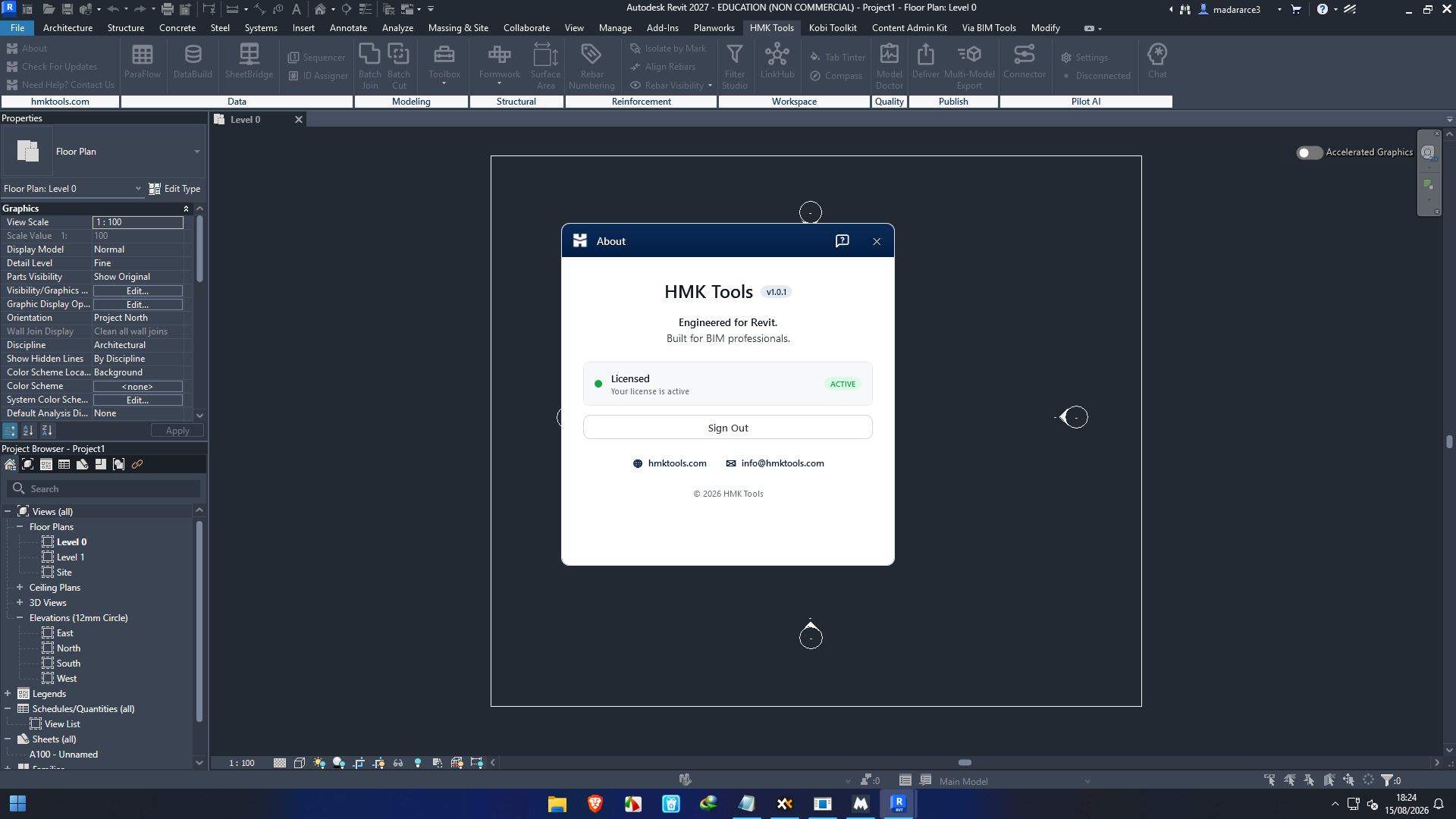
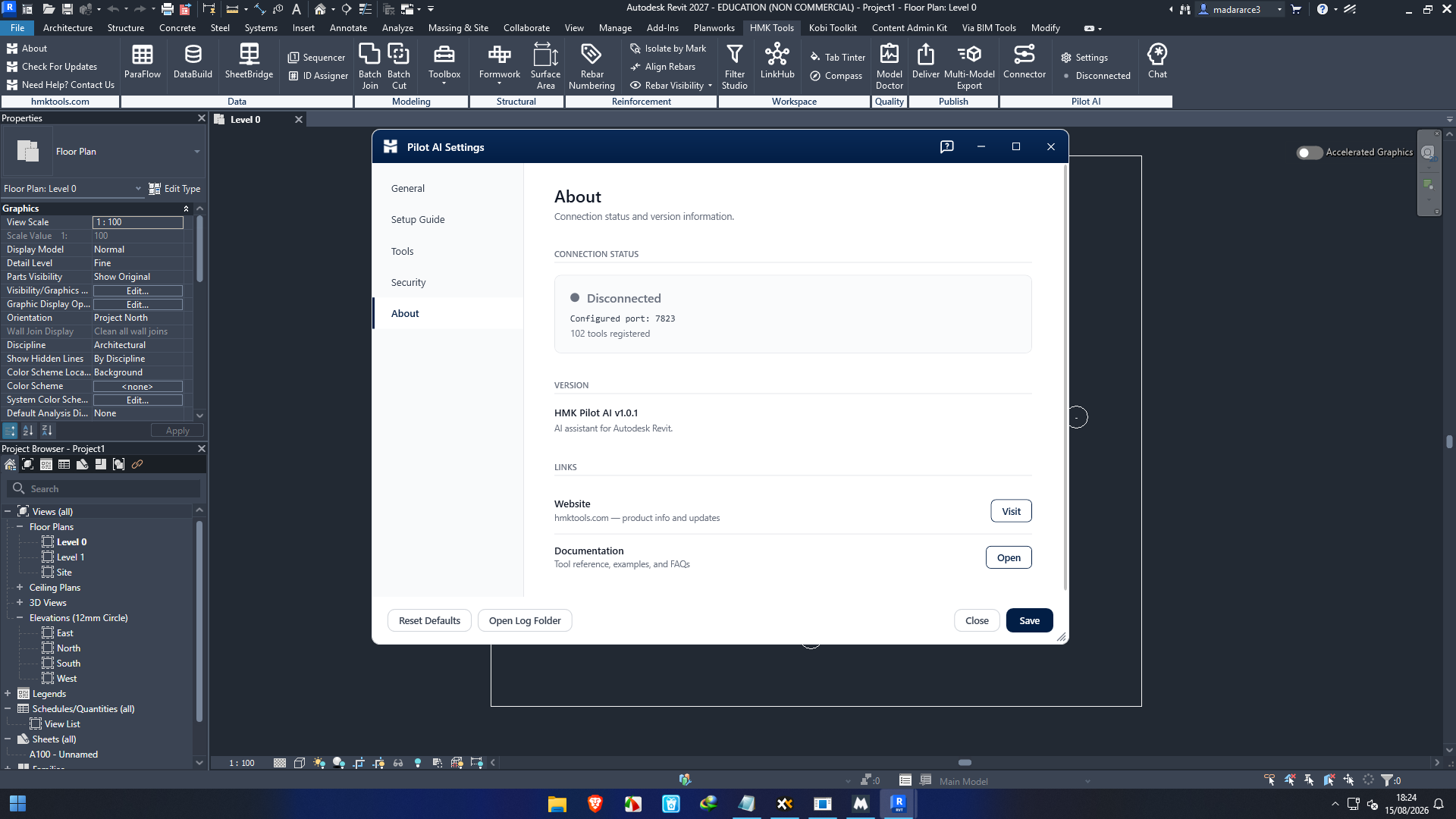
HMK Pilot Ai For Auotdesk Revit 2027 v1.0.1: Software For Performance Analysis
Summary
HMK Pilot Ai For Auotdesk Revit 2027 v1.0.1 is a software solution whose name suggests a focus on artificial intelligence and pilot-oriented workflows. However, its exact capabilities, supported integrations, licensing structure, and intended professional applications should be verified against the specific product edition before making purchasing decisions. Understanding these details is important for businesses and individual users who want to invest in reliable software that meets their operational needs.
For users exploring HMK Pilot AI, the most important evaluation criteria include its primary purpose, available AI features, ease of use, compatibility, workflow automation, data security, and overall value. These factors help determine whether the software can genuinely improve productivity or whether an alternative solution would be more suitable.
This review provides a practical framework for evaluating HMK Pilot AI, discussing potential benefits, relevant use cases, performance considerations, advantages, limitations, and purchasing factors without assuming unverified product specifications.
Introduction
Artificial intelligence is changing how professionals interact with software. Tasks that once required repetitive manual input can increasingly be supported by intelligent assistants, automated workflows, predictive analysis, and context-aware recommendations.
HMK Pilot AI is a product name that may attract users looking for an AI-assisted solution. Before incorporating any unfamiliar software into a professional workflow, however, it is essential to understand what the product actually does, which tasks it supports, and whether its features match the user’s requirements.
For example, a professional evaluating an AI application might want to reduce repetitive administrative work, improve information handling, simplify technical processes, or make everyday operations more efficient. The suitability of HMK Pilot AI depends on whether its verified functionality addresses those needs.
A useful software evaluation should go beyond marketing claims. It should examine practical functionality, system requirements, usability, reliability, integration options, and the total cost of ownership.
This approach helps prospective users make an informed decision rather than relying solely on a product name or broad claims about artificial intelligence.
Key Features to Evaluate in HMK Pilot AI
Because the product’s precise feature set has not been independently established here, the following areas represent important evaluation criteria rather than confirmed HMK Pilot AI capabilities.
1. Artificial Intelligence Capabilities
The first consideration is the type of AI functionality the software provides.
Depending on its intended purpose, an AI application may offer intelligent assistance, automated information processing, recommendations, data interpretation, or support for specific professional tasks.
When evaluating HMK Pilot AI, determine which AI models or capabilities it uses, what inputs it accepts, and what outputs it produces. It is also worth checking whether its results can be reviewed, corrected, and verified by the user.
Reliable AI software should make it possible to distinguish useful assistance from information that requires additional verification.
2. Workflow Automation
Automation can be valuable when users repeatedly perform similar tasks.
Software that supports automation may help reduce repetitive operations, standardize procedures, and allow professionals to concentrate on more demanding responsibilities.
For HMK Pilot AI, investigate whether it offers automated workflows, reusable templates, task sequencing, or other mechanisms for reducing manual work.
The practical benefit depends on the tasks supported and how much human supervision remains necessary.
3. User Interface and Ease of Use
A well-designed interface can significantly influence the value of professional software.
Clear navigation, understandable settings, useful documentation, and straightforward controls make it easier for new users to become productive.
When testing HMK Pilot AI, examine how quickly you can complete a typical task. Consider whether important functions are easy to locate and whether the software explains errors or provides useful guidance when something goes wrong.
A simple interface does not need to sacrifice functionality. Ideally, the software should make common operations accessible without hiding important configuration options.
4. Integration and Compatibility
Software rarely operates in isolation. Businesses often need applications to work with existing systems, documents, databases, or operational tools.
Before choosing HMK Pilot AI, confirm its supported operating systems, file formats, integrations, and hardware requirements.
If the product connects to external services, check whether those connections require additional subscriptions or configuration.
Compatibility should be confirmed before installation, particularly when the software is intended for use in an established business environment.
5. Data Security and Privacy
Security is essential for any application that processes business information or personal data.
Prospective users should review the software’s data-handling practices, access controls, storage arrangements, backup options, and privacy documentation.
If the software uses cloud-based AI services, determine whether submitted information may be stored or used to improve AI models.
Organizations handling confidential material should also assess administrative controls and applicable compliance requirements before introducing the software into their workflows.
Practical Use Cases
The most appropriate applications for HMK Pilot AI depend on its verified purpose. The following examples illustrate how AI-assisted software can create value in professional environments when the relevant functions are available.
Business Productivity
Businesses frequently deal with repetitive tasks, large volumes of information, and tight deadlines.
An AI-enabled application may help with organizing information, preparing initial drafts, summarizing material, or assisting with routine workflows if those functions are supported.
For example, an office employee might use an appropriate AI tool to prepare a first draft of an internal document and then review the result before sharing it with colleagues.
The benefit comes from reducing repetitive effort while preserving human oversight.
Technical and Professional Workflows
Professionals working in technical environments often need to interpret information, follow structured procedures, and prepare consistent documentation.
Where HMK Pilot AI supports relevant technical tasks, it could be evaluated for its ability to simplify those processes.
A sensible testing method is to select one recurring task, compare the existing process with the software-assisted workflow, and measure differences in completion time and output quality.
This provides more meaningful evidence than relying on general claims about AI productivity.
Research and Information Management
AI tools can sometimes help users organize information and identify relevant material more efficiently.
For research-related applications, users should evaluate whether the software provides traceable sources, accurate summaries, and suitable methods for checking its output.
Any important factual, technical, or financial conclusion should be independently verified before being used for business decisions.
Team Collaboration
If HMK Pilot AI includes collaboration features, it may be worth assessing how effectively it supports shared workflows.
Useful evaluation points include permissions, shared projects, revision history, access management, and the ability to exchange information with colleagues.
These features can be particularly important when several people contribute to the same project.
Performance Analysis
Software performance should be assessed through practical testing rather than assumptions based on branding.
For HMK Pilot AI, several factors deserve attention.
Processing Speed
Measure how long the application takes to complete representative tasks. If AI processing is involved, record whether performance changes with larger inputs or more complicated requests.
For cloud-based applications, connection quality and server response times may also influence the experience.
Accuracy and Reliability
Fast results are not necessarily useful results.
Test the software with realistic examples and examine the accuracy, consistency, and completeness of its outputs. Where possible, repeat similar tasks to determine whether results remain dependable.
For AI-assisted work, human review remains important, especially when errors could affect safety, finances, compliance, or professional decisions.
System Requirements
Before installation, check the minimum and recommended hardware specifications.
Depending on the software architecture, performance may depend on processor capability, available memory, storage, graphics hardware, or internet connectivity.
Avoid assuming that a particular computer configuration is sufficient until the vendor’s requirements have been confirmed.
Productivity Impact
The most meaningful performance measure is whether the application improves the overall workflow.
Track factors such as time saved, number of manual steps eliminated, error rates, and the amount of review required.
A short pilot test using actual work tasks can reveal whether the software provides measurable benefits in your environment.
User Experience and Learning Curve
A software application’s everyday usability matters as much as its feature list.
New users generally benefit from clear onboarding, practical tutorials, accessible documentation, and responsive technical support. Advanced users may place greater importance on customization, integration, and control over individual workflows.
When evaluating HMK Pilot AI, begin with a small project rather than immediately making it part of a critical operation.
This approach allows you to understand its interface, identify limitations, and establish a repeatable process before expanding usage.
Document any recurring issues, including confusing settings, inconsistent results, compatibility problems, or unexpected processing delays.
These observations can help determine whether the software is suitable for long-term use.
Pros and Cons
The following assessment distinguishes potential benefits of AI-assisted software from considerations that must be verified for HMK Pilot AI specifically.
Potential Advantages
- AI-assisted workflows may reduce repetitive manual work.
- Automation can improve consistency when tasks are properly configured.
- A suitable interface can simplify routine operations.
- Appropriate integrations may reduce unnecessary switching between applications.
- Reusable workflows may support more standardized processes.
- Measurable time savings can improve productivity when output quality is maintained.
Potential Limitations
- The exact functionality of HMK Pilot AI needs confirmation.
- AI-generated results may require human verification.
- Compatibility may depend on specific operating systems or hardware.
- Cloud-based features may depend on internet connectivity.
- Integration or advanced functionality may involve additional costs.
- Data privacy and security arrangements must be evaluated.
- Learning and configuration may require time before productivity improves.
These points should be treated as evaluation considerations rather than confirmed product-specific defects or advantages.
Pricing and Plans
The current pricing structure for HMK Pilot AI has not been verified. Therefore, a specific subscription price, lifetime license, free trial, or included feature package should not be assumed.
Before purchasing, confirm the available licensing options and determine exactly what each package includes.
Important questions include:
- Is the license subscription-based or perpetual?
- Is a free trial or demonstration available?
- Are updates and technical support included?
- Are advanced features sold separately?
- Is the license limited to one device or user?
- Are commercial-use rights included?
- Are renewal fees or additional service charges applicable?
A low initial price does not necessarily represent the best long-term value. Consider the full cost of ownership, including installation, training, maintenance, renewals, and any additional services.
For business users, the most economical option is generally the one that delivers dependable results and measurable productivity improvements at a reasonable total cost.
System Requirements and Compatibility
System requirements should be confirmed before downloading or purchasing HMK Pilot AI.
Check the supported operating system, processor requirements, memory, storage space, graphics requirements, and internet connection requirements where applicable.
If the software depends on third-party services or specialized hardware, verify those dependencies as well.
For business installations, confirm whether the application supports the organization’s security policies and whether administrators can manage access and updates appropriately.
Testing compatibility on a noncritical device or controlled environment can help identify potential issues before wider deployment.
Who Should Consider HMK Pilot AI?
HMK Pilot AI may be worth evaluating for users whose work aligns with its confirmed capabilities.
Potential audiences could include professionals seeking AI-assisted productivity, businesses investigating workflow automation, or technical users looking for specialized software support. However, the product’s exact target audience should be established through its official specifications and documentation.
It is particularly important to match the software to a defined requirement.
Rather than purchasing an AI application simply because it includes artificial intelligence, identify the task you want to improve, establish measurable success criteria, and test whether the application achieves those objectives.
This process makes it easier to distinguish genuinely useful software from products that offer little practical improvement.
HMK Pilot Ai For Auotdesk Revit 2027 v1.0.1 Download
Final Verdict
HMK Pilot AI requires a feature-level evaluation before a definitive recommendation can be made. Its product name alone does not establish its supported functions, performance characteristics, pricing, or intended audience.
Nevertheless, the evaluation principles discussed in this review provide a practical starting point for prospective users. Focus on verified features, realistic use cases, compatibility, data protection, support availability, and measurable productivity benefits.
For individuals and businesses considering HMK Pilot AI, the best next step is to confirm the product’s official specifications and licensing terms, then test the software against a real task relevant to your work.
If its verified capabilities address your requirements, its performance meets expectations, and the licensing terms offer reasonable value, it may be a suitable addition to your software toolkit.
Ultimately, informed software decisions depend on practical results rather than promises. Evaluate HMK Pilot AI carefully, compare its capabilities with your needs, and choose the solution that provides the most reliable long-term value.


Reviews
There are no reviews yet.