Description
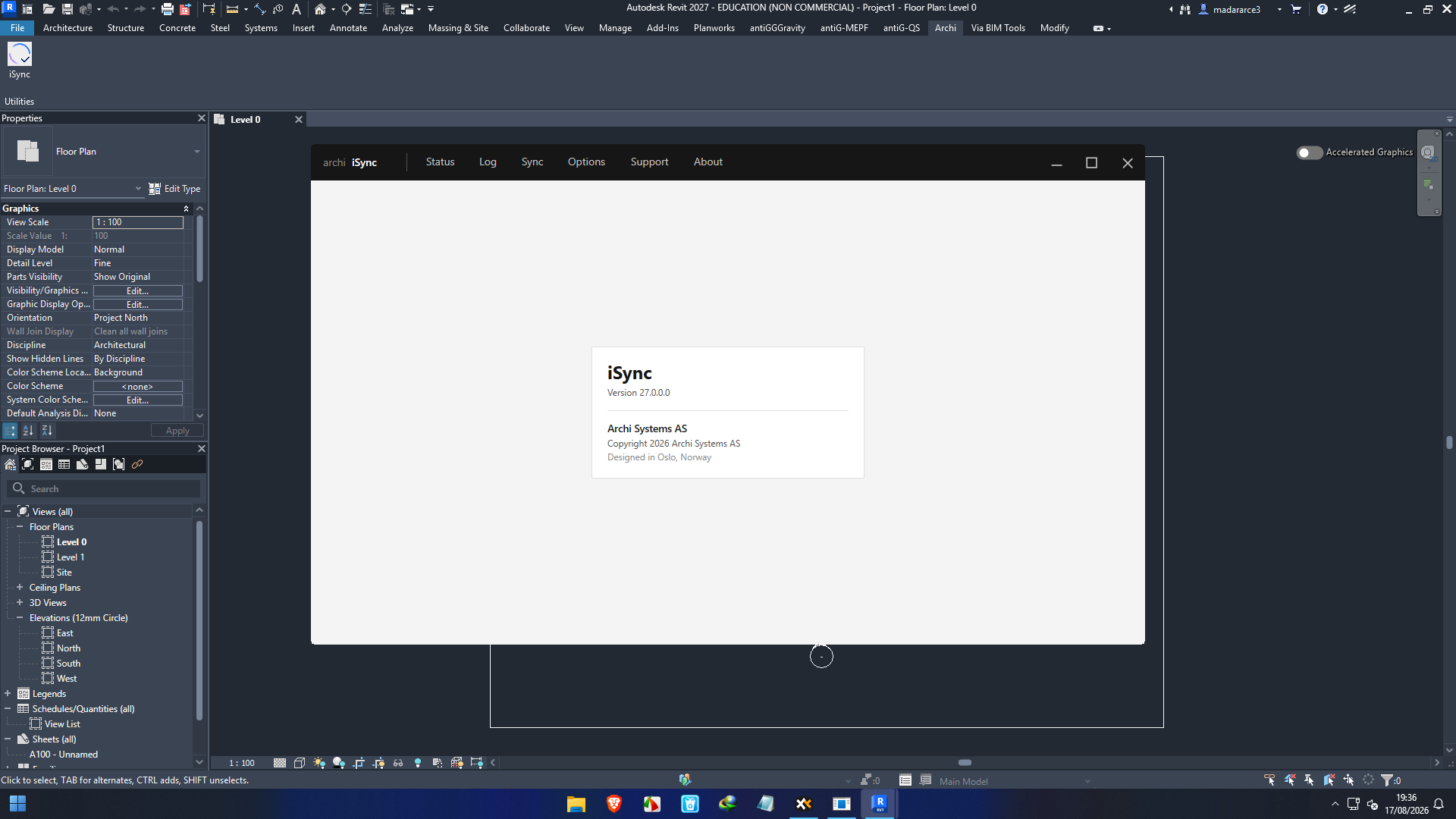
iSync for Autodesk Revit 2027: Features, Benefits, Workflow, and Software
Software Overview
iSync for Autodesk Revit 2027 is a software solution designed to support more efficient information exchange and coordination within Building Information Modeling (BIM) workflows. For architects, engineers, BIM coordinators, and construction professionals, maintaining consistent project information is essential for reducing errors and improving collaboration. Tools that help synchronize data, simplify repetitive tasks, and maintain reliable model information can make a meaningful difference in everyday project delivery.
As BIM projects become increasingly detailed, teams often work with multiple models, datasets, schedules, and project stakeholders. Managing these elements manually can consume valuable time and introduce inconsistencies. iSync for Autodesk Revit is worth exploring for professionals seeking a more streamlined approach to information synchronization and model coordination.
This review examines the software’s potential role in professional BIM environments, its practical applications, expected workflow benefits, performance considerations, advantages, limitations, and purchasing considerations. Because specific product documentation, version details, and verified pricing information may vary, individual capabilities should be confirmed before making a purchasing decision.
Introduction to iSync for Autodesk Revit
Autodesk Revit 2026 is widely used to create intelligent building models containing architectural, structural, and building services information. Unlike traditional drafting tools, Revit connects geometry with associated data, allowing project teams to coordinate building components and manage design information within a shared modeling environment.
However, the value of a BIM model depends on the quality and consistency of its information. When different team members maintain separate datasets or update information through disconnected processes, discrepancies can develop. A room schedule might not match the latest design, an element may contain outdated parameters, or project information may need to be entered repeatedly.
This is where synchronization-focused software can provide value.
iSync for Autodesk Revit is relevant to workflows where exchanging or aligning project information is an important part of the modeling process. Depending on the specific product edition and supported integrations, synchronization tools may help reduce repetitive data handling, support consistent information, and simplify coordination between project resources.
For professionals considering iSync, the first step is understanding the exact version being offered and identifying which data sources, Revit releases, and synchronization processes it supports.
Key Features of iSync for Autodesk Revit
The features available in a particular release should always be checked against its official documentation. The following areas explain the capabilities BIM professionals should evaluate when considering an information synchronization solution.
1. BIM Information Synchronization
Keeping model information consistent is a central challenge in collaborative design. Synchronization-oriented workflows can help teams align information between supported sources and their Revit projects.
For example, a BIM coordinator working with regularly updated project data may need a repeatable process for transferring information into the appropriate model elements. A suitable synchronization workflow can reduce manual handling and make updates easier to manage.
The key consideration is whether the particular iSync release supports the required data types, transfer direction, and update behavior.
2. Autodesk Revit Workflow Integration
A tool designed for Revit workflows should fit naturally into the user’s existing modeling process. Convenient integration can reduce the need to move repeatedly between applications or maintain complicated manual procedures.
Before selecting iSync, users should check compatibility with their installed Revit version, supported operating systems, installation requirements, and any additional dependencies.
A straightforward installation and familiar workflow can be particularly valuable for organizations onboarding multiple BIM professionals.
3. Reduced Repetitive Data Entry
Repeatedly entering the same information across model elements or project records can increase the likelihood of mistakes. Where supported, synchronization and data exchange automation can reduce this administrative burden.
Potential benefits include fewer duplicate entries, more consistent parameters, and less time spent correcting preventable information errors.
However, automation should not be assumed to eliminate every manual task. Users should establish which operations are automated and which still require review or approval.
4. Improved Information Consistency
Consistent BIM information helps project teams produce dependable schedules, drawings, quantities, and coordination outputs.
A well-configured synchronization process can support consistency by establishing predictable update procedures. This is especially useful when several disciplines depend on the same project information.
Teams should also evaluate how the software handles conflicting values, missing information, failed updates, and changes made by different users.
5. Support for Repeatable Project Workflows
Many BIM tasks follow similar patterns across projects. Standardized synchronization procedures can help organizations establish repeatable processes rather than relying entirely on individual working habits.
For example, a BIM manager may develop internal procedures for updating project information at defined milestones. If the software supports the required operations, those procedures can improve consistency across project teams.
The practical value depends on the product’s actual automation options and the complexity of the organization’s existing workflow.
Practical Use Cases of iSync for Autodesk Revit
The usefulness of synchronization software becomes clearer when considered in everyday BIM scenarios.
Architectural Design and Documentation
Architectural teams manage room information, building components, design parameters, schedules, and documentation throughout a project’s development.
When information must be maintained across multiple sources, a supported synchronization workflow may reduce repetitive updates and help keep model data aligned with current design requirements.
For example, an architect revising room information across a large commercial building may benefit from a more controlled process for updating corresponding project records. The time saved depends on the number of elements involved and the specific synchronization functions available.
BIM Coordination and Model Management
BIM coordinators are responsible for maintaining model quality and ensuring that project information follows agreed standards.
A synchronization tool may support these responsibilities by helping establish consistent information exchange procedures. It can be particularly relevant when several disciplines depend on shared parameters or standardized project data.
Nevertheless, synchronization is not a substitute for clash detection, model auditing, or formal coordination reviews unless the specific product explicitly provides those capabilities.
Structural Engineering Projects
Structural engineers frequently work with information describing columns, beams, foundations, slabs, and other building components.
Where supported, synchronized data workflows can help reduce discrepancies between model information and external project records. They may also support more predictable information updates during design revisions.
Before adopting iSync for structural workflows, users should confirm that the relevant element categories, parameters, and data formats are supported.
Mechanical, Electrical, and Plumbing Design
MEP projects often involve extensive equipment schedules, system information, technical parameters, and coordination requirements.
Maintaining accurate information across these resources can become difficult as the model grows. A suitable synchronization process may reduce repetitive data management and help teams maintain consistent records.
However, users should verify whether the software supports the specific MEP data structures and workflows required by their projects.
BIM Standards and Quality Control
Organizations working on multiple projects often need consistent parameter naming, information structures, and documentation procedures.
If iSync supports the necessary synchronization rules, it may form part of a wider BIM information management strategy. The strongest results generally come from combining software with documented standards, clear responsibilities, and regular quality checks.
Performance Analysis
The performance of iSync for Autodesk Revit should be evaluated through practical testing rather than assumptions about speed or productivity.
Ease of Use
A useful synchronization tool should offer a workflow that BIM professionals can understand without excessive training. Clear configuration options, understandable error messages, and predictable update behavior are important indicators of usability.
During evaluation, test the software on a representative project rather than relying exclusively on a small demonstration model.
Workflow Efficiency
The main performance question is whether the software reduces the total time required to complete an information management task.
A simple evaluation can compare the existing manual workflow against the workflow using iSync. Record the time required for setup, synchronization, verification, and correction.
For example, if a team spends substantial time updating recurring project information, even modest improvements may become valuable across many project milestones. Actual savings should be measured because configuration and validation can introduce additional work.
Reliability and Data Accuracy
Accurate information is more important than synchronization speed alone. An update that completes quickly but changes the wrong parameter can create expensive downstream problems.
Testing should cover typical updates, missing values, conflicting information, interrupted operations, and recovery procedures. Always use a copy of the project model when testing unfamiliar synchronization behavior.
Compatibility and Scalability
Large Revit projects may contain thousands of elements and extensive parameter data. Performance can depend on model complexity, hardware, data volume, network conditions, and the software’s implementation.
Confirm compatibility with the intended Revit release and evaluate performance using realistic project sizes before deploying the software across an organization.
Pros and Cons
Pros
- Potentially improved efficiency: Synchronization workflows may reduce repetitive information handling.
- Better information consistency: Supported data exchange processes can help maintain aligned project records.
- More repeatable procedures: Standardized workflows can reduce dependence on individual working habits.
- Useful for multidisciplinary environments: Consistent information management benefits teams working across architectural, structural, and MEP disciplines when their requirements are supported.
- Opportunity for scalable processes: Organizations may be able to establish reusable procedures for recurring project tasks.
Cons
- Feature verification is essential: The exact capabilities of the available iSync release must be confirmed.
- Compatibility requirements: Revit versions, dependencies, and supported data formats may restrict adoption.
- Initial configuration effort: Teams may need to define parameters, mappings, and update procedures before seeing benefits.
- Validation remains necessary: Automated information exchange can still produce errors when configured incorrectly.
- Pricing may be unclear: Reliable purchasing decisions require confirmed licensing terms and product-specific pricing.
- Learning requirements: Users may need training to understand configuration, troubleshooting, and data management procedures.
Pricing and Plans
Pricing for iSync for Autodesk Revit should be confirmed with the software’s authorized seller or publisher. A verified current price, subscription structure, trial policy, or licensing model cannot be established here.
Before purchasing, investigate the following details:
- Whether the license is perpetual or subscription-based.
- Whether licensing is assigned to an individual, device, or organization.
- Whether updates and technical support are included.
- Whether commercial projects are covered by the license.
- Whether the software supports the required Autodesk Revit version.
- Whether a trial, demonstration, or evaluation license is available.
- Whether additional components or third-party dependencies incur separate costs.
For businesses, total cost of ownership matters more than the initial license price alone. Training, deployment, maintenance, and troubleshooting should also be considered when comparing alternatives.
Avoid purchasing until the seller has clearly identified the product edition, license duration, supported versions, activation process, and applicable usage rights.
Tips for Getting the Best Results
A careful implementation process can help teams determine whether iSync meets their needs.
Start with a defined problem. Identify the repetitive information task or synchronization challenge the software is expected to address.
Test with a representative model. Use a controlled copy of an actual project to evaluate functionality and performance.
Document the existing workflow. Record the current process, including manual steps, verification time, and common errors.
Establish clear data rules. Define which source controls each value, how conflicting information is handled, and who approves updates.
Validate the results. Compare synchronized information with the original source and check important schedules, parameters, and model elements.
Train the project team. Make sure users understand the update process, limitations, and recovery procedures before using the software on live projects.
These steps help distinguish genuine productivity improvements from benefits that are merely assumed.
iSync For Autodesk Revit Developer
iSync For Autodesk Revit 27.0 Download
Final Verdict
iSync for Autodesk Revit is worth evaluating for BIM professionals seeking a more organized approach to information synchronization and repetitive data management. In modern building projects, maintaining accurate and consistent information is essential for reliable documentation, effective collaboration, and smoother project delivery.
Its potential value lies in addressing a practical challenge: keeping relevant project information aligned while reducing unnecessary manual work. Architects, engineers, BIM coordinators, and design firms may find synchronization-focused workflows useful when they match their existing processes and data requirements.



Reviews
There are no reviews yet.