Description
JellyErp Review: A Flexible ERP Solution for Growing Businesses
JellyErp Review Summary
Managing business operations becomes increasingly challenging as a company grows. From inventory management and accounting to customer relationships and purchasing, keeping everything organized often requires more than spreadsheets and disconnected software. This is where JellyErp stands out as a practical Enterprise Resource Planning (ERP) solution.
JellyErp is designed to centralize business operations into one unified platform, helping organizations streamline workflows, improve productivity, and make informed decisions through real-time business insights. Whether you’re managing manufacturing, distribution, retail, wholesale, or service-based operations, JellyErp provides the tools needed to simplify complex processes.
In this comprehensive JellyErp review, we’ll examine its key features, practical applications, strengths, limitations, performance, pricing considerations, and why it has become an attractive ERP option for businesses seeking scalable management software.
Introduction to JellyErp
Every successful business eventually reaches a point where manual processes slow growth. Separate accounting software, inventory systems, CRM tools, and spreadsheets create duplicate work and increase the risk of costly mistakes.
JellyErp addresses these challenges by bringing essential business functions together within one integrated ERP ecosystem.
Instead of switching between multiple software solutions, users can manage operations through a centralized dashboard that improves visibility across departments.
From finance teams tracking cash flow to warehouse managers monitoring stock levels, JellyErp creates a connected environment where every department works with accurate, up-to-date information.
Businesses looking for an ERP software solution that balances functionality with usability often consider JellyErp because it supports operational efficiency without requiring overly complicated workflows.
Key Features of JellyErp
JellyErp includes numerous business management features that help organizations automate routine work while improving collaboration.
Centralized Business Management
One of JellyErp’s biggest strengths is its centralized architecture.
Users can manage:
- Sales
- Purchasing
- Inventory
- Accounting
- Production
- Customer records
- Vendor management
- Financial reporting
All information remains connected, reducing duplicate data entry.
Inventory Management
Inventory control plays a major role in operational success.
JellyErp provides tools for:
- Real-time inventory tracking
- Stock movement monitoring
- Warehouse management
- Reorder alerts
- Batch management
- Product categorization
- Inventory valuation
Businesses gain greater visibility into inventory levels while reducing stock shortages and overstock situations.
Financial Management
Financial accuracy is essential for every organization.
JellyErp offers features that support:
- General ledger
- Accounts payable
- Accounts receivable
- Expense tracking
- Budget monitoring
- Financial statements
- Tax reporting
- Cash flow management
Finance teams can monitor business performance using organized reports and real-time financial data.
Customer Relationship Management (CRM)
Strong customer relationships drive long-term growth.
JellyErp integrates CRM functionality that helps businesses manage:
- Customer profiles
- Sales opportunities
- Quotations
- Follow-ups
- Communication history
- Customer purchasing behavior
Sales teams gain better visibility into every stage of the customer journey.
Purchasing and Procurement
Purchasing becomes more efficient through automated procurement workflows.
Capabilities include:
- Purchase requests
- Purchase orders
- Vendor management
- Approval workflows
- Supplier performance tracking
- Goods receiving
This helps reduce purchasing delays while improving supplier coordination.
Reporting and Business Intelligence
Decision-making improves when managers have access to reliable data.
JellyErp offers reporting tools that provide insights into:
- Sales performance
- Inventory trends
- Profitability
- Operational efficiency
- Financial health
- Customer activity
These reports allow business leaders to identify opportunities before problems become costly.
Multi-Department Integration
Unlike standalone business software, JellyErp connects departments together.
Examples include:
- Sales automatically updating inventory
- Purchasing linked with accounting
- Inventory connected to warehouse operations
- Finance synchronized with sales transactions
This integrated workflow reduces manual reconciliation and improves overall accuracy.
Practical Use Cases
JellyErp adapts well across different industries because of its flexible ERP architecture.
Manufacturing Companies
Manufacturers often struggle with production planning and inventory coordination.
JellyErp assists by helping teams:
- Track raw materials
- Monitor production schedules
- Manage work orders
- Control finished goods inventory
- Analyze manufacturing costs
This creates smoother production cycles and better resource utilization.
Wholesale Distribution
Distributors manage large product catalogs and complex order fulfillment.
JellyErp supports:
- Bulk inventory management
- Supplier coordination
- Order tracking
- Delivery planning
- Customer account management
Businesses can process larger order volumes while maintaining inventory accuracy.
Retail Operations
Retail businesses benefit from:
- Inventory synchronization
- Sales reporting
- Customer management
- Purchasing automation
- Financial tracking
Managers gain visibility across multiple operational areas without juggling several software systems.
Service-Based Businesses
Professional service firms can use JellyErp for:
- Project tracking
- Client management
- Billing
- Expense management
- Resource allocation
- Financial reporting
This helps improve profitability while maintaining better customer service.
Real-World User Experience
Imagine a growing wholesale company handling hundreds of daily orders.
Before implementing JellyErp, employees relied on spreadsheets for inventory while accounting maintained separate financial software.
This created frequent problems:
- Inventory discrepancies
- Delayed financial reports
- Duplicate customer records
- Manual purchasing approvals
After adopting JellyErp, departments began working from the same centralized database.
Warehouse staff updated inventory in real time.
Accounting immediately viewed completed sales.
Management generated reports within minutes instead of waiting days.
The result was improved efficiency, faster decision-making, and fewer operational errors.
Although implementation required planning and employee training, users quickly appreciated having every department connected through one system.
Performance Analysis
Performance is one of the most important factors when evaluating ERP software.
JellyErp performs well in several critical areas.
Speed
Routine business operations remain responsive even when processing large datasets.
Tasks such as inventory searches, customer lookups, and financial reporting are generally completed quickly.
Scalability
As businesses expand, operational complexity increases.
JellyErp supports growing organizations by allowing additional users, departments, and business processes to be incorporated without requiring an entirely new system.
Reliability
ERP software must remain dependable because organizations rely on continuous access to operational data.
JellyErp emphasizes stable performance for daily business management across multiple functional areas.
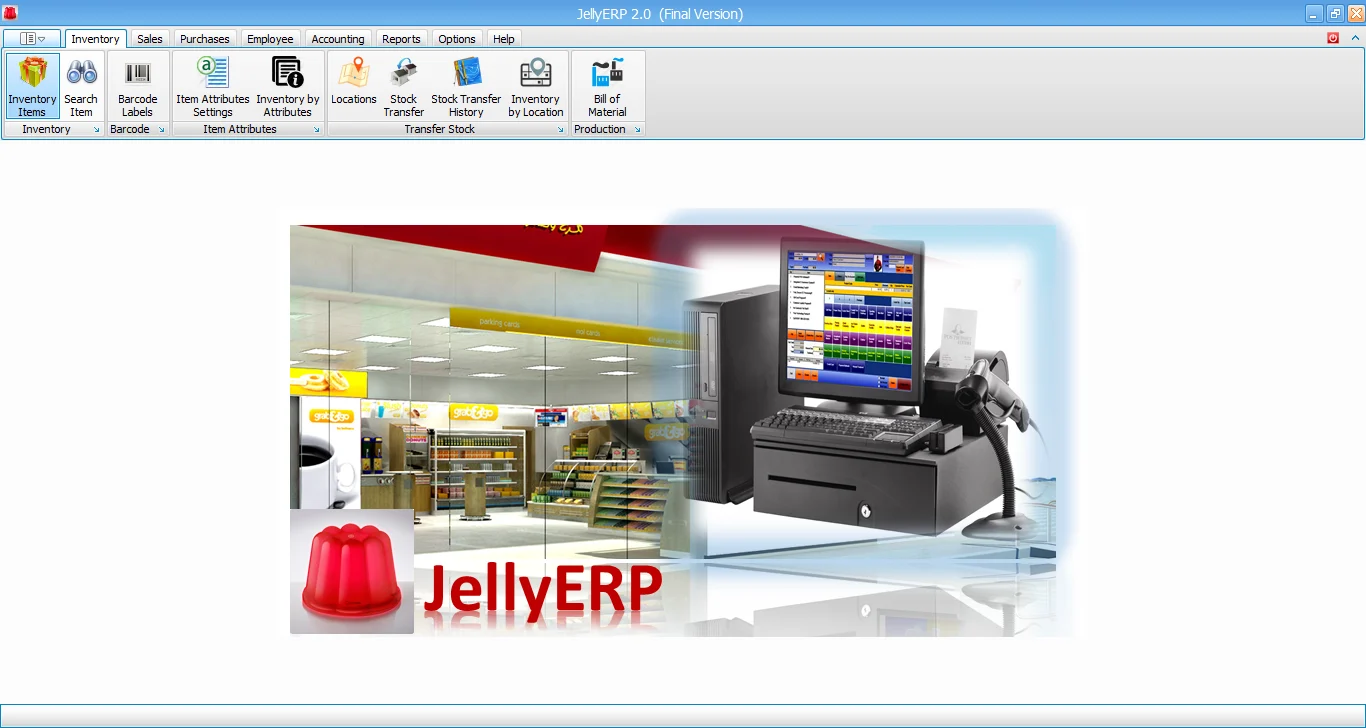
User Interface
The interface follows a structured layout that makes navigation relatively straightforward.
Employees familiar with business software generally adapt quickly after initial onboarding.
Data Accuracy
Integrated workflows reduce duplicate information.
Because departments share the same database, reporting accuracy improves while manual errors decrease.
Pros and Cons
Pros
- Comprehensive ERP functionality
- Centralized business management
- Strong inventory management capabilities
- Integrated accounting and finance
- CRM included within the platform
- Useful reporting and analytics
- Supports business growth
- Improves collaboration between departments
- Reduces manual data entry
- Better operational visibility
Cons
- Initial implementation requires planning
- Employee training may be necessary
- Feature-rich system may feel overwhelming for very small businesses
- Customization may require technical expertise depending on deployment
Pricing & Plans
JellyErp pricing may vary depending on several factors, including:
- Business size
- Number of users
- Deployment model
- Required modules
- Customization requirements
- Support services
Because ERP implementations are often tailored to individual organizations, businesses are encouraged to request a customized quotation based on their operational needs.
When evaluating total investment, companies should also consider implementation, training, maintenance, and long-term scalability.
Who Should Use JellyErp?
JellyErp is particularly suitable for:
- Manufacturing companies
- Wholesale distributors
- Retail businesses
- Multi-location organizations
- Import/export companies
- Growing SMEs
- Medium-sized enterprises
- Businesses replacing disconnected software systems
Organizations seeking an all-in-one ERP business management platform will likely find JellyErp capable of supporting long-term operational growth.
Why JellyErp Stands Out
The ERP software market includes many options, but JellyErp distinguishes itself through its balanced combination of usability, integration, and business management capabilities.
Rather than focusing on a single department, the platform connects finance, inventory, purchasing, customer management, and reporting into one unified system.
This integrated approach helps organizations:
- Improve productivity
- Reduce operational costs
- Increase reporting accuracy
- Strengthen collaboration
- Make faster business decisions
- Support future expansion
Businesses that value operational transparency often appreciate having real-time access to company-wide information from a centralized ERP platform.
Final Verdict
JellyErp delivers a well-rounded ERP solution that brings together finance, inventory, purchasing, customer relationship management, reporting, and operational workflows into one integrated platform. Its centralized approach reduces manual work, improves collaboration, and provides real-time visibility into business performance, making it a practical choice for organizations looking to modernize their operations.
While implementation and staff training require an initial investment of time, the long-term benefits—such as improved productivity, better data accuracy, streamlined processes, and enhanced decision-making—make JellyErp a worthwhile solution for many growing businesses.
If your organization is searching for a scalable ERP platform that can unify business operations, simplify daily management, and support future expansion, JellyErp is well worth exploring. Evaluate its features against your operational requirements and consider a tailored deployment to unlock greater efficiency and sustainable business growth.



Reviews
There are no reviews yet.