Description
ReqView Review 2026: A Smart Requirements Management Tool for Modern Engineering Teams
Quick Summary
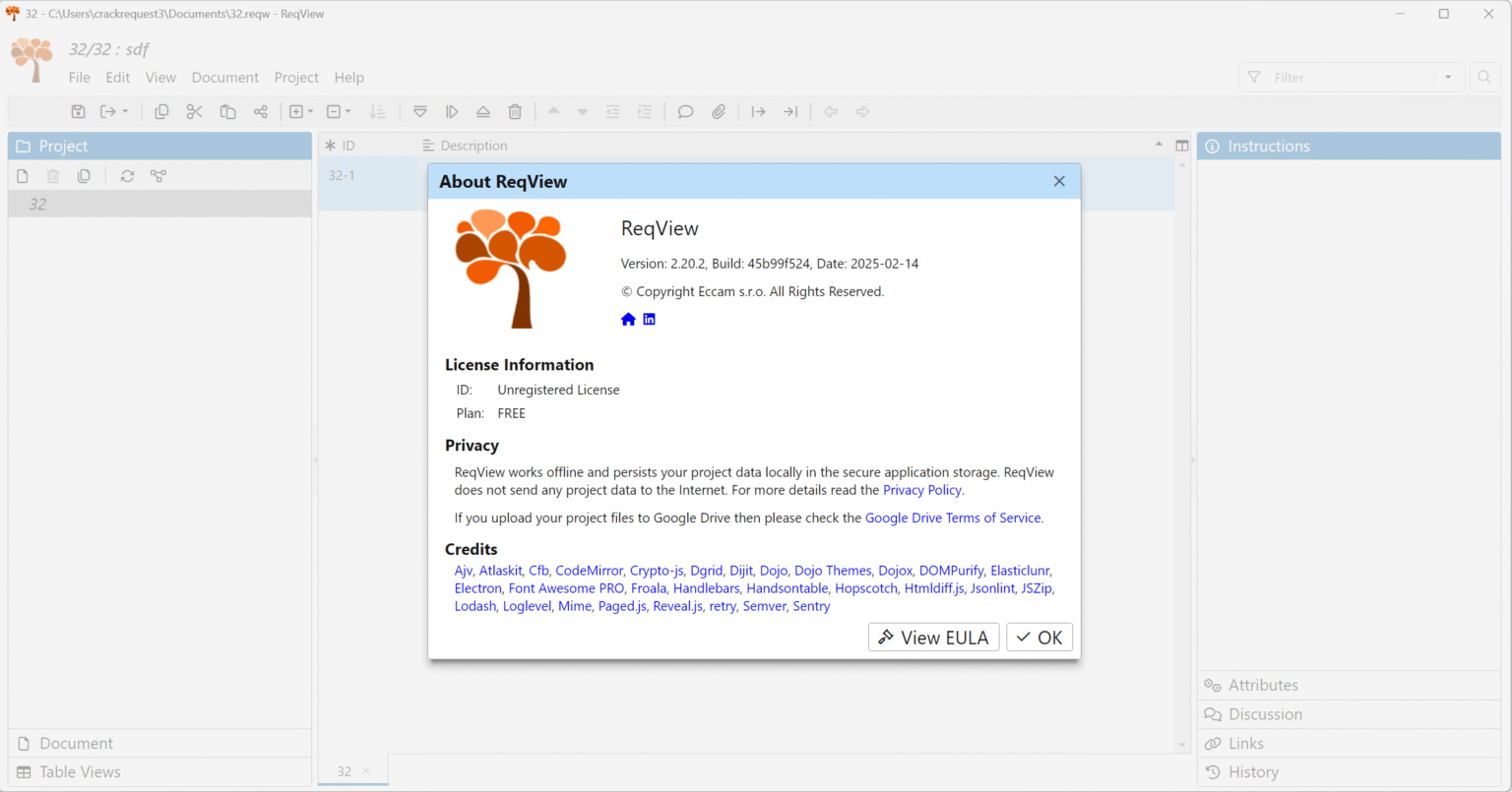
ReqView is a lightweight yet powerful requirements management software designed to help engineering teams, product managers, business analysts, and compliance-driven organizations organize, trace, and manage project requirements efficiently. Unlike traditional enterprise requirement tools that often involve steep learning curves and expensive deployments, ReqView focuses on simplicity, collaboration, and complete requirement traceability.
For companies working in industries such as automotive, aerospace, medical devices, industrial automation, and software development, maintaining requirement consistency and regulatory compliance is critical. ReqView offers an intuitive environment where teams can create structured requirement documents, establish relationships between requirements, and maintain traceability throughout the product lifecycle.
Whether you’re managing a safety-critical engineering project or coordinating software specifications across distributed teams, ReqView provides a practical solution that balances usability with professional-grade functionality.
Introduction
Requirements management has become increasingly important as products grow more complex and regulatory standards become stricter. Organizations that rely on spreadsheets, disconnected documents, or generic project management tools often encounter issues such as missing requirements, inconsistent documentation, and costly development errors.
ReqView was developed to solve these challenges by providing a dedicated platform for requirements engineering.
The software enables teams to:
- Capture requirements systematically
- Create traceability links
- Track changes efficiently
- Collaborate across departments
- Support compliance initiatives
- Reduce project risks
One of the most appealing aspects of ReqView is its accessibility. While many enterprise requirements management systems demand extensive training, ReqView offers a relatively straightforward interface that allows teams to become productive quickly.
This makes it particularly attractive for small and medium-sized engineering organizations that need robust requirement management capabilities without investing in heavyweight enterprise solutions.
Key Features of ReqView
1. Structured Requirements Management
ReqView organizes requirements into hierarchical trees, making it easier to manage large projects.
Users can structure documents based on:
- System requirements
- Functional requirements
- Hardware specifications
- Software specifications
- User requirements
- Safety requirements
- Verification procedures
This organized approach improves document readability and simplifies navigation.
2. Requirement Traceability
Traceability is arguably one of ReqView’s strongest capabilities.
Teams can establish relationships between:
- Customer requirements
- System specifications
- Design elements
- Test cases
- Validation activities
- Risk assessments
Traceability matrices help identify missing links and ensure all requirements are properly implemented and verified.
This feature is especially valuable for regulated industries where audits and certifications require documented proof of requirement fulfillment.
Examples include:
- ISO 26262
- IEC 62304
- DO-178C
- FDA compliance projects
- Medical device development
3. Document Import and Export
Organizations often possess years of requirement documentation stored in Microsoft Word or Excel.
ReqView allows users to:
- Import existing requirements
- Preserve formatting
- Reuse legacy specifications
- Export professional reports
Supported export formats help teams communicate with customers, suppliers, and certification bodies.
Common outputs include:
- PDF reports
- HTML documents
- Word files
- CSV exports
This flexibility reduces migration challenges.
4. Change Management
Requirements frequently evolve throughout development.
ReqView offers tools for:
- Requirement version tracking
- Change identification
- Impact analysis
- Revision management
Project managers can quickly determine how modifications affect downstream activities.
Benefits include:
- Reduced engineering errors
- Faster updates
- Better project visibility
- Improved stakeholder communication
5. Collaboration Features
Modern product development typically involves multidisciplinary teams.
ReqView supports collaboration among:
- Systems engineers
- Software developers
- Test engineers
- Product managers
- Quality assurance specialists
- External suppliers
Shared requirement repositories ensure everyone works with consistent information.
This minimizes misunderstandings and duplicate efforts.
6. Requirement Attributes and Metadata
Each requirement can include additional information such as:
- Priority levels
- Status indicators
- Risk classifications
- Verification methods
- Responsible owners
- Release versions
These attributes enhance reporting capabilities and support project planning.
Managers gain better control over requirement progress.
7. Offline Capability
Unlike some cloud-only platforms, ReqView supports local file-based projects.
Advantages include:
- Greater data control
- Easier deployment
- Enhanced security
- Operation in restricted environments
Organizations with strict cybersecurity policies often appreciate this flexibility.
Practical Use Cases
Medical Device Development
Medical device manufacturers must comply with strict documentation standards.
A development team designing patient monitoring equipment can use ReqView to:
Capture clinical requirements.
Link specifications to software modules.
Associate test procedures.
Maintain audit-ready documentation.
During regulatory inspections, teams can quickly demonstrate requirement traceability.
Automotive Engineering
Automotive projects contain thousands of interconnected requirements.
Engineers working on an Advanced Driver Assistance System may use ReqView to:
Manage safety requirements.
Track sensor specifications.
Connect design outputs.
Monitor validation activities.
This helps satisfy functional safety standards.
Software Product Development
Software companies can benefit significantly from ReqView.
Consider a SaaS provider developing a financial platform.
Business analysts define user requirements.
Developers reference technical specifications.
QA teams connect testing activities.
Product managers monitor implementation status.
The result is better alignment across departments.
Aerospace Programs
Aerospace projects demand rigorous documentation practices.
ReqView assists teams in:
Managing certification requirements.
Tracking subsystem dependencies.
Supporting verification plans.
Preparing regulatory submissions.
This improves project transparency.
User Experience and Workflow
One reason many teams adopt ReqView is its approachable user interface.
After installation, users can quickly begin creating requirement trees.
Typical workflow:
Step 1: Define Project Structure
Create folders for:
- Customer requirements
- Technical specifications
- Verification plans
Step 2: Enter Requirements
Add requirement statements.
Assign identifiers.
Set priorities.
Include comments.
Step 3: Build Traceability
Connect related requirements.
Create dependency relationships.
Validate completeness.
Step 4: Monitor Progress
Review implementation status.
Generate reports.
Analyze gaps.
Update revisions.
Even users without extensive requirements engineering backgrounds can become comfortable with the workflow relatively quickly.
Performance Analysis
ReqView performs well for both small and moderately large projects.
Several aspects stand out.
Fast Navigation
Requirement trees load efficiently.
Users can move through extensive documents without significant delays.
Stable Operation
The software is generally reliable during day-to-day use.
Crashes and unexpected behavior appear uncommon.
Low Resource Consumption
Compared with some enterprise requirement platforms, ReqView is relatively lightweight.
Advantages include:
- Faster startup times
- Reduced hardware requirements
- Better performance on standard workstations
Scalability Considerations
For very large organizations managing hundreds of concurrent projects, specialized enterprise platforms may offer additional integrations.
However, for many engineering teams, ReqView delivers sufficient capability while remaining easier to administer.
Pros and Cons
Pros
Excellent traceability management
Strong support for linking requirements, tests, and specifications.
User-friendly interface
Lower learning curve compared to many enterprise competitors.
Flexible import/export options
Facilitates migration from existing documentation.
Affordable approach
Often appealing for small and medium businesses.
Suitable for regulated industries
Supports compliance-oriented development processes.
Lightweight installation
Runs efficiently without demanding infrastructure.
Cons
Limited enterprise ecosystem integrations
Some organizations may require deeper integrations with large-scale ALM platforms.
Collaboration features may vary by deployment model
Teams should evaluate workflows based on their specific environment.
Advanced customization options can be less extensive than premium enterprise tools
Highly specialized organizations may seek additional configuration capabilities.
Pricing & Plans
ReqView typically offers licensing options suitable for individual professionals, small teams, and larger organizations.
Pricing structures may change over time and can depend on factors such as:
- Number of users
- Commercial usage
- Educational licenses
- Enterprise requirements
- Support options
Prospective buyers should review current licensing information to determine the most suitable plan for their project needs.
Considering its feature set, ReqView is often viewed as a cost-effective alternative to traditional enterprise requirements management systems.
Final Verdict
ReqView successfully fills an important gap in the requirements management market by delivering professional traceability capabilities within an accessible and easy-to-use environment. It provides many of the essential features required by engineering organizations without introducing unnecessary complexity.
Its strengths in requirement organization, traceability analysis, document management, and compliance support make it a compelling choice for industries where documentation accuracy and verification are crucial.
Organizations developing medical devices, automotive systems, industrial equipment, aerospace technologies, or sophisticated software products can benefit from adopting ReqView as part of their development process.
For teams looking to replace spreadsheets, improve requirement visibility, and maintain better control over product development lifecycles, ReqView is certainly worth evaluating. Exploring its capabilities through a trial or pilot project can help determine how effectively it fits into your existing engineering workflow and long-term quality objectives.




Reviews
There are no reviews yet.