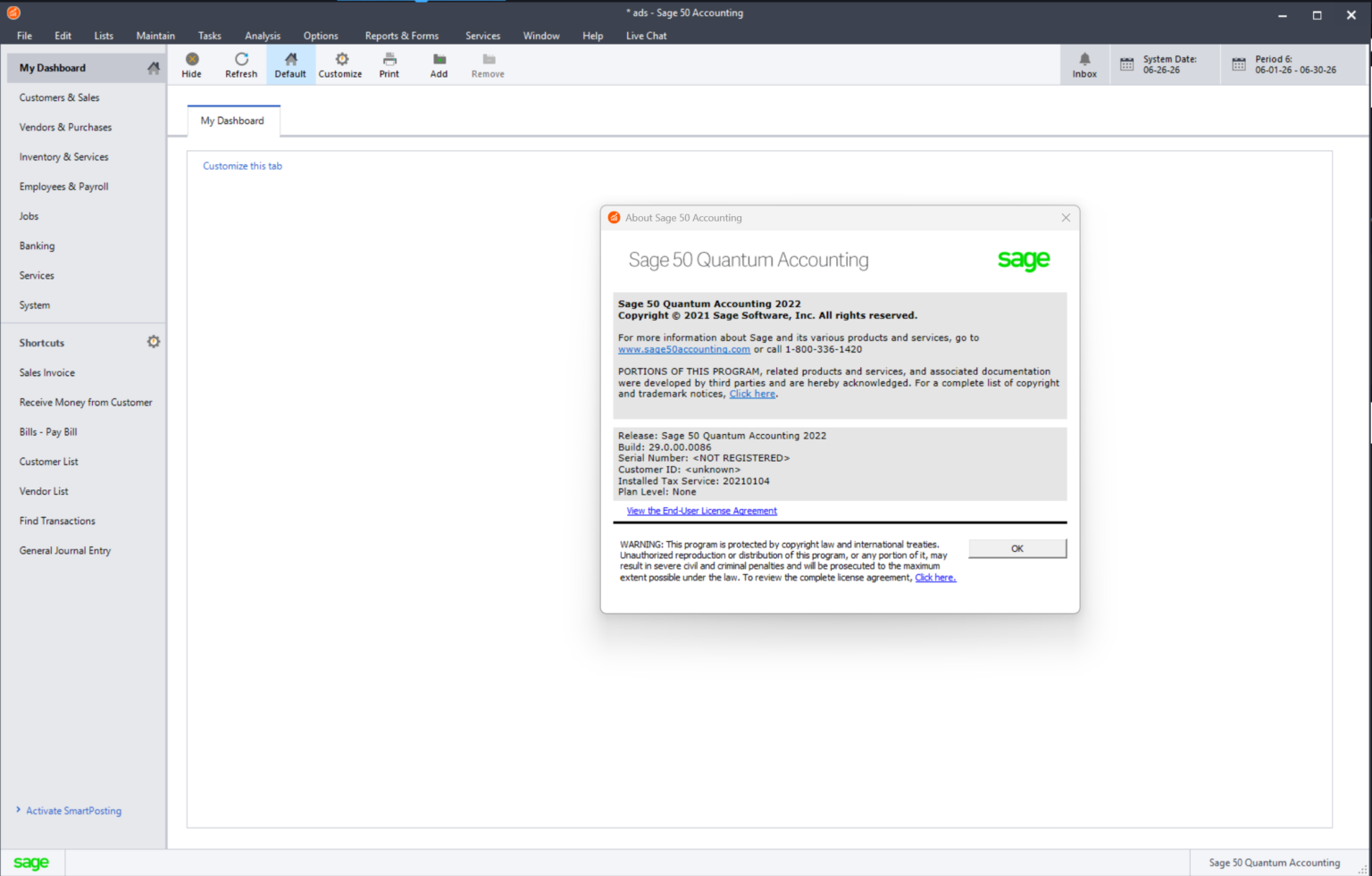
Description
Sage 50 Software Review: A Complete Business Management Solution for Modern Enterprises
Executive Summary
Sage 50 is a globally recognized business management and accounting software suite designed to simplify financial operations, streamline accounting workflows, and support data-driven decision-making for small businesses, mid-sized companies, and large enterprises. Known for its reliability, scalability, and industry-specific solutions, Sage has become a trusted name in financial management software.
Whether you are managing payroll, tracking expenses, 50 download handling inventory, or generating financial reports, Sage provides a centralized platform that enhances operational efficiency. With cloud-based capabilities, automation features, and robust compliance tools, Sage software empowers organizations to reduce manual work, improve accuracy, and maintain financial transparency.
This review explores Sage software in depth, including its key features, real-world use cases, performance strengths, limitations, and pricing structure to help businesses determine whether it is the right financial management solution.
Introduction to Sage Software
saga 50 is a comprehensive accounting and business management platform developed to meet the evolving needs of modern organizations. Originally built for accounting professionals, it has expanded into a full suite of enterprise resource planning (ERP) and financial management tools.
Today, Sage 50 download offers multiple product lines such as Sage Accounting, Sage 50, Sage Intacct, and Sage X3. Each solution is tailored for different business sizes and industries, making it a flexible choice for companies at various stages of growth.
In a competitive landscape where financial accuracy and automation are essential, Sage software stands out for its balance of usability, compliance support, and advanced reporting capabilities.
Key Features of Sage 50 Software
Sage offers a wide range of powerful features designed to simplify financial and operational management.
1. Financial Management and Accounting
Sage provides complete accounting tools including:
- General ledger management
- Accounts payable and receivable
- Bank reconciliation
- Expense tracking
- Automated billing and invoicing
These tools help businesses maintain accurate financial records with minimal manual intervention.
2. Cloud-Based Accessibility
Modern versions of Sage support cloud deployment, allowing users to:
- Access financial data from anywhere
- Collaborate in real time
- Securely store sensitive business information
- Reduce dependency on on-premise systems
3. Automated Reporting and Analytics
Sage includes advanced reporting tools that generate:
- Profit and loss statements
- Balance sheets
- Cash flow analysis
- Custom financial dashboards
These insights help decision-makers understand business performance in real time.
4. Payroll and HR Integration
Many Sage solutions include payroll management features such as:
- Employee salary processing
- Tax calculations
- Compliance reporting
- Benefits management
This reduces HR workload and ensures regulatory compliance.
5. Inventory and Supply Chain Management
For product-based businesses, Sage offers:
- Inventory tracking
- Stock level optimization
- Supplier management
- Order processing automation
6. Multi-User and Role-Based Access
Sage allows organizations to:
- Assign roles and permissions
- Control data access
- Maintain audit trails for security and accountability
7. Integration Capabilities
Sage integrates with third-party tools such as CRM systems, payment gateways, and e-commerce platforms, improving workflow connectivity.
Practical Use Cases of Sage Software
Sage is widely used across industries due to its flexibility and scalability. Below are real-world scenarios where it delivers strong value.
Small Businesses and Startups
Small businesses use Sage Accounting to:
- Manage invoices and expenses
- Track cash flow efficiently
- Automate basic bookkeeping
- Reduce dependency on manual spreadsheets
This helps startups maintain financial clarity from day one.
Mid-Sized Companies
Growing companies often rely on Sage 50 or Sage Intacct for:
- Department-level financial tracking
- Budget forecasting
- Payroll management
- Multi-user collaboration
These features support structured financial growth.
Large Enterprises
Enterprise-level organizations benefit from Sage X3 by:
- Managing complex supply chains
- Handling global financial operations
- Ensuring compliance across regions
- Generating advanced financial analytics
Retail and E-Commerce Businesses
Retailers use Sage for:
- Inventory synchronization
- Sales tracking across channels
- Automated order management
- Profit margin analysis
Accounting Firms
Professional accountants use Sage to:
- Manage multiple client accounts
- Generate audit-ready reports
- Streamline tax preparation
- Improve workflow efficiency
Performance Analysis
Sage software is widely regarded for its reliability and consistent performance across business environments.
Speed and Efficiency
Sage processes financial data quickly, even when handling large datasets. Cloud versions improve speed by distributing workloads across servers.
Accuracy and Automation
Automation reduces human error in bookkeeping and financial reporting. This improves data accuracy and ensures compliance with financial regulations.
Scalability
One of Sage’s strongest advantages is scalability. Businesses can start with basic accounting tools and upgrade to advanced ERP systems as they grow.
User Experience
While Sage offers powerful functionality, its interface may vary depending on the product version. Newer cloud-based solutions provide a more intuitive experience compared to legacy desktop versions.
Reliability and Stability
Sage is known for stable performance in mission-critical financial operations, making it suitable for long-term business use.
Pros and Cons of Sage Software
Pros
- Comprehensive financial management tools
- Suitable for businesses of all sizes
- Strong reporting and analytics capabilities
- Cloud and desktop deployment options
- High level of data security and compliance support
- Excellent scalability with business growth
- Integration with multiple business applications
Cons
- Some versions have a learning curve for beginners
- Advanced features may require training
- Pricing can be high for enterprise-level solutions
- Interface differs across product versions, which may confuse users
Pricing and Plans
Sage offers flexible pricing depending on the product version and business size.
Sage Accounting
Designed for small businesses, typically offered as a monthly subscription with basic accounting and invoicing features.
Sage 50
A mid-range solution that includes more advanced accounting, inventory tracking, and payroll features. Pricing is higher than entry-level tools but offers greater functionality.
Sage Intacct
A cloud-based financial management system aimed at growing and mid-sized businesses. Pricing is customized based on company needs.
Sage X3
An enterprise-level ERP solution with advanced supply chain, manufacturing, and financial management capabilities. Pricing is typically customized and based on deployment scale.
While Sage is not the cheapest option in the market, its value lies in its depth of functionality, reliability, and scalability.
Sage 50 Quantim Accounting Developer
Sage 50 Pro Quantim Accounting
Final Verdict
Sage software remains one of the most trusted and widely used financial management solutions in the global business landscape. Its ability to support businesses from startup stage to enterprise level makes it a versatile and long-term investment.
For small businesses, Sage Accounting provides simplicity and automation that reduce manual bookkeeping effort. For growing companies, Sage 50 and Sage Intacct deliver robust financial control, reporting, and compliance tools. For large enterprises, Sage X3 offers advanced ERP capabilities that manage complex operations with precision.
Although the learning curve and pricing may be considerations, the overall benefits far outweigh these limitations for businesses seeking reliability and scalability in financial management software.
For organizations aiming to improve financial accuracy, automate accounting processes, and gain deeper business insights, Sage stands out as a strong and dependable choice.
Exploring Sage software can be a strategic step toward improving operational efficiency, strengthening financial control, and supporting long-term business growth.


Reviews
There are no reviews yet.